What happened
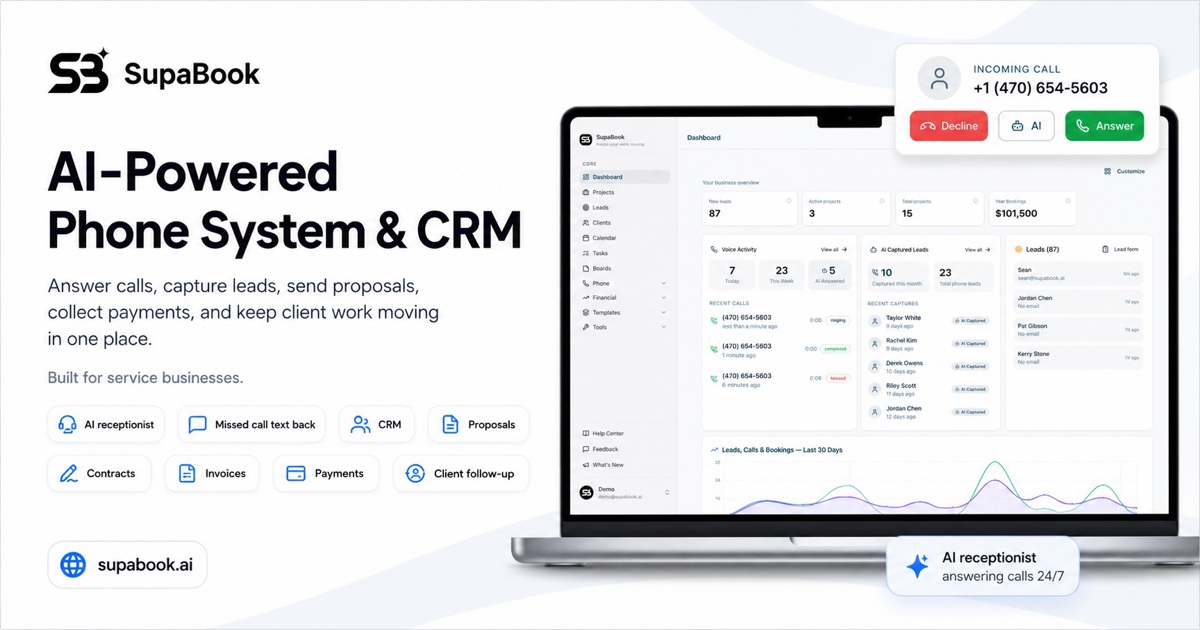
SupaBook released an integrated platform combining a business phone system, CRM, and AI receptionist designed to help service businesses capture inbound calls, qualify leads, and automate follow-up workflows—keeping client work moving even when owners are unavailable.
Why it matters
Service businesses typically lose leads when calls go unanswered or follow-up is delayed across disconnected tools (phone, email, forms, proposals, payments). SupaBook ties call capture, lead qualification, CRM records, proposals, contracts, invoices, and client portals into one workflow, so details don't need to be re-entered and responses can happen automatically via AI answering or instant missed-call text-back.
What to watch
SupaBook offers a free CRM tier and adds phone and AI features on paid plans; it integrates with Stripe payments, Google Calendar, email, SMS, and website forms. The platform is built for photographers, videographers, creative agencies, contractors, home services, wellness providers, and other service businesses that sell through conversation and estimates.
Summaries like this, in your inbox every morning.
SupaBook addresses a concrete pain point in service businesses: the fragmentation of client communication and data across phone systems, email, CRM platforms, payment processors, and project management tools. When an inbound call arrives, details typically get lost in voicemail, manually re-entered into a CRM, or scattered across multiple unconnected systems. The result is delayed follow-up, missed leads, and wasted marketing spend. By connecting the business phone system directly to CRM records and automating initial responses through an AI receptionist or instant SMS text-back, SupaBook reduces the lag between inquiry and response—a critical factor in service businesses where the first person to respond often wins the job.
The platform's positioning targets a specific segment: small and mid-sized service businesses that already understand the value of CRM and payment integration but lack a unified system that treats inbound communication as a first-class workflow. The integration with Stripe, Google Calendar, and email means SupaBook is designed to sit at the center of existing toolchains rather than replace them entirely. A free CRM tier lowers the barrier to entry and allows businesses to validate the lead-capture and proposal workflow before committing to paid phone and AI features.
Pick your industry and the AI tools you use, and get news related to your work every day.
Free · 30 seconds with Google · unsubscribe anytimeWhat is AIToday? →
Ask AI anything about this article. The AI reads this article, earlier AIToday articles, and Wikipedia, and cites its sources. Q&As are published on this page for other readers too.
Chunghwa Telecom president Rong-shy Lin said the shift from conversational AI to autonomous AI agents is resha…
CoreWeave fell 5% in premarket trading Friday and was on track to finish the week down 15%, after rebounding f…
Apple and Meta said they would jointly release a new open-weight AI model designed to run on high-end Macs, ai…

Investors put $38.5 billion into Asian startups in Q3, per Crunchbase data

A writer and entrepreneur opened his daily to-do list and found 156 items, and concluded that an AI assistant…

A longtime Anthropic investor told Fortune he expects shares priced around $1.8 trillion, below the company's…