What happened
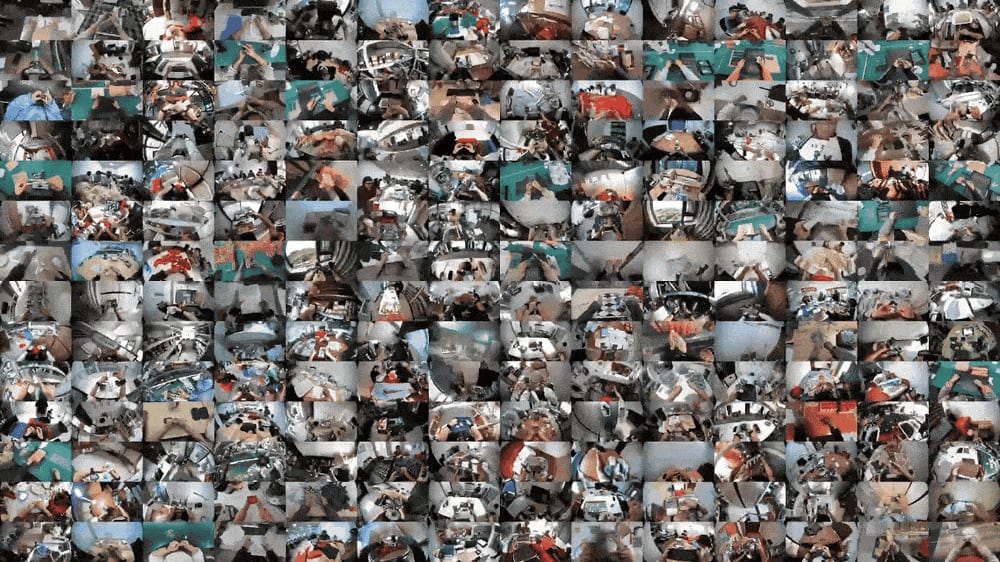
AGIBOT unveiled GO-3 Preview, an embodied foundation model built on its WRAM architecture that ranks first on RoboDojo, RoboTwin and RoboColiseum and will be fully open-sourced by the end of 2026.
Why it matters
The model is designed to learn across pre-training, post-training and post-deployment, and AGIBOT says a robot in a real convenience store kept improving through its own operational experience without human demonstrations or manual tuning, a result the company calls Physical RSI.
What to watch
Full open-sourcing is slated for the end of 2026.
WHO IT HITSRobotics and automation teams evaluating foundation models for manipulation tasks gain a new option, and the planned open-sourcing by the end of 2026 could give researchers direct access to the model.
Summaries like this, every morning.
AGIBOT positions GO-3 Preview as the next step after its earlier GO-1 and GO-2 models. GO-1 introduced the ViLLA framework, and GO-2 pioneered an action chain-of-thought approach. The new model extends scaling beyond pre-training to cover post-training and learning after deployment, an approach AGIBOT calls full-lifecycle scaling.
The system pairs the model with two supporting pieces: a hybrid post-training system that combines a fleet of 100 physical robots with physics simulation and world models, and an embodied agent framework that standardizes how tasks are planned, executed and reviewed. In demonstrations, AGIBOT says a robot practiced tabletop curling for a few hours and achieved a higher win rate than typical human players, and that a robot in a real convenience store identified task failures and adjusted strategies without human demonstrations or manual tuning. AGIBOT describes that convenience-store result as Physical RSI, or recursive self-improvement in the physical world.
The company's broader footprint provides context for the release. AGIBOT says its portfolio spans humanoid robots, quadrupeds, dexterous systems and commercial cleaning solutions, and that its 20,000th robot rolled off the production line in September 2026. The first-place benchmark rankings and the planned open-sourcing by the end of 2026 are likely to shape how the model is evaluated outside the company.
Pick your industry and the AI tools you use, and get news related to your work every day.
Free · 30 seconds with Google · unsubscribe anytimeWhat is AIToday? →
Ask AI anything about this article. The AI reads this article, earlier AIToday articles, and Wikipedia, and cites its sources. Q&As are published on this page for other readers too.
Pudu Robotics presented its 'One Brain, Multiple Embodiments' strategy at its first European Partner Summit in…

Panasonic HD and Panasonic R&D Company of America, with UC Berkeley, NVIDIA, Stanford, Sapienza University of…

Preferred Networks published PLaMo 3 Translate, the translation model behind its PLaMo translation service, as…

Moonshot AI published the weights of Kimi K3.1 Pro on Hugging Face, so anyone can download and use them under…
Preferred Networks released the weights of PLaMo 3 Translate, a translation-focused LLM in 0.8B, 2B, 8B and 31…

The team open-sourced an inference engine that serves GLM-5.3-Flash (320B MoE, 1M-token context) on one trn2.4…