What happened
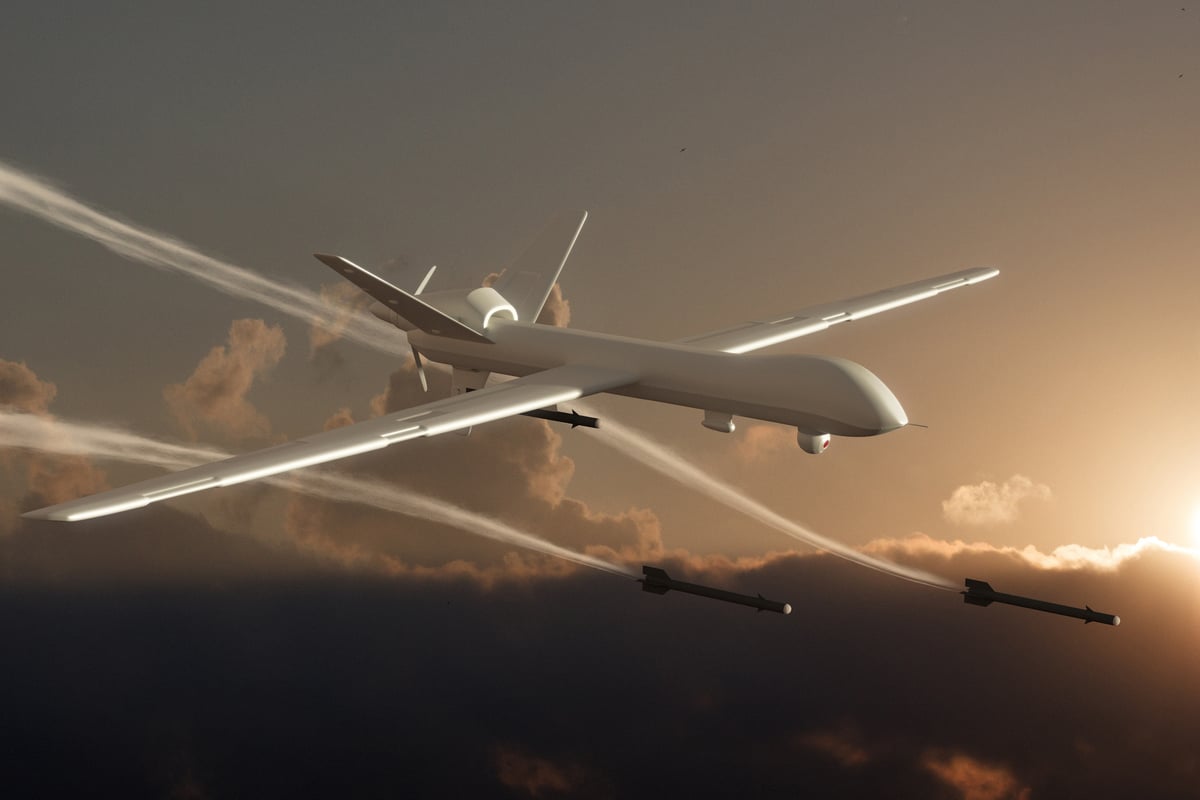
Air Force Secretary Troy Meink named General Atomics' FQ-42A "Vengeance" and Anduril's FQ-44A "Fury," with 150 drones planned in "Increment 1" and 500 by 2032.
Why it matters
A named, numbered drone that survives prototype stage through 2032 signals the Air Force is moving past prototype stage toward production, positioning Anduril for bigger winnings if the program grows.
What to watch
The $5 billion hardware figure hinges on the Air Force's roughly 50-50 split between General Atomics and Anduril holding, and on whether Anduril's Fury prototype pans out.
WHO IT HITSDefense contractors and their suppliers will feel this first, as the Air Force moves from prototype to production on 150 drones. Anduril's private investors also get a clearer read on whether an IPO case is strengthening, though the hardware split and software awards the body flags remain undecided.
Summaries like this, in your inbox every morning.
The ceremony is the Air Force putting a name on an idea it has pursued for years: pairing full-size but uncrewed stealthy Collaborative Combat Aircraft with piloted fighter jets. The piloted jets would control the drones and send them on riskier missions, keeping pilots out of harm's way. Three months ago the service awarded General Atomics and Anduril prototype contracts and gave the drones numbers, FQ-42 and FQ-44. Now they have names, and the Secretary of the Air Force has sketched the path past prototyping.
The numbers around the program are where the story splits in two. The hardware contract is one part; additional funds are set aside for the software that lets the drones fly autonomously and for other software, presumably to operate sensors, communications and weapons. Anduril has already won a separate, unspecified-value autonomy software contract and sits on a shortlist of six bidders for other software work, so its eventual take is not fixed by the hardware side alone.
What the naming actually changes is mostly the frame around that uncertainty: the program now has a public identity and a stated scale, with 150 drones in "Increment 1" and 500 by 2032. Whether Anduril captures the larger share of that, or general Atomics does, will hinge on whether the Fury prototype pans out and on how those software awards fall. For a private company, a clearer production path appears to be the kind of outcome that strengthens the case for an IPO, though the article leaves the final figures unresolved.
For example, today's edition would include:
AI-summarized, only the topics you pick: one digest a day via Email, LINE, or Slack.
Free · 30 seconds with Google · unsubscribe anytimeWhat is AIToday? →
Ask AI anything about this article. The AI reads this article, earlier AIToday articles, and Wikipedia, and cites its sources. Q&As are published on this page for other readers too.
NVIDIA trades at about 24.9x forward earnings versus Broadcom's 19.4x, while consensus expects NVIDIA EPS to r…
Meta's Muse agent rollout extended a multi-day rally over rising agentic-AI compute demand

Microsoft is expanding the features of its AI Copilot, adding the ability to co-edit documents, according to N…

Saxon Chen, founder and CEO of Taiwan's H2U Corp, said in an interview that companies often stress environment…

SpaceX's IPO has already put a price on "AI in space" in the capital markets, while people actually building s…
Nvidia was drawn into a US-China AI rivalry at the September 2026 Trump-Xi summit and UN General Assembly, whe…