What happened
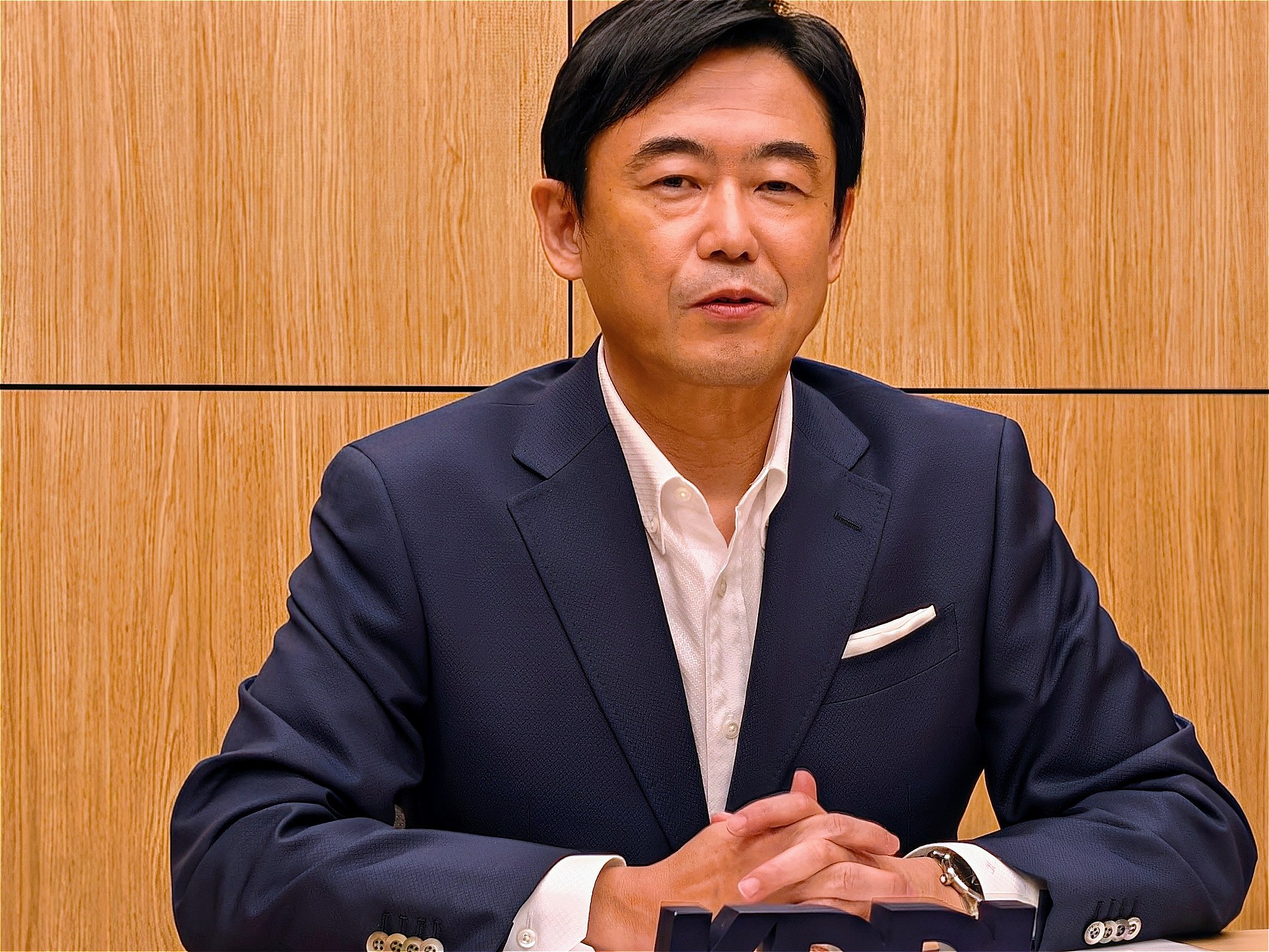
At KDDI SUMMIT 2026, Matsuda said the Sakai data center is adding equipment to shift from AI training to inference, and that a new company, ELYZA Robotics, was established.
Why it matters
Matsuda said the shift may force a rethink of what network quality means — AI processing speed over always-fast speeds — and that ELYZA Robotics, with ELYZA's domestic AI models, uses Sakai GPUs and KDDI's network as a test field.
Summaries like this, every morning.
Matsuda's remarks place KDDI's AI strategy on two tracks that meet in the network. The Sakai data center, now entering what he calls the inference phase, is paired with a planned proof-of-concept with APN, the next-generation all-optical network technology. That pairing matters because Matsuda is questioning the metric the industry has used to sell connectivity. Where once the value was a call that did not drop, and later raw speed, he told staff the "optimization function" may change so that AI processing speed counts for more than a constant 500Mbps.
The physical AI effort is described as deliberately patient. Matsuda said he kept the term out of the current mid-term plan because he wants execution and concrete social implementation rather than following a buzzword, and he framed the next three years as a preparation period. The ELYZA Robotics establishment fits that framing: it is a way to test where a robot's own edge processing, with a brain of hundreds of billions of parameters, is necessary and where heavy processing should go to Sakai.
Tying these together is Matsuda's view of KDDI's role as a combiner rather than a self-contained builder. He cited CDMA and SpaceX's Starlink as cases where KDDI connected technologies that had not reached Japan's last mile, and he applied the same logic to physical AI, where he sees a Japanese advantage in craftsmanship and unspoken on-site know-how. That know-how, he suggested, could be packaged like a swappable cassette on top of outside AI models.
Pick your industry and the AI tools you use, and get news related to your work every day.
Free · 30 seconds with Google · unsubscribe anytimeWhat is AIToday? →
Ask AI anything about this article. The AI reads this article, earlier AIToday articles, and Wikipedia, and cites its sources. Q&As are published on this page for other readers too.
BlackRock's Jean Boivin said a slowdown in AI buildout would have a material real-economy impact, while Morgan…

Amphenol shares have climbed 15.8% year to date versus a 7.1% gain for the Zacks Computer and Technology secto…

Verizon CEO Dan Schulman said AI in customer service delivers a 1,200-basis-point or more improvement in custo…
Uber Engineering detailed a framework with three layers — provisioning through its Uber AI Registry, with sour…

QTS, backed by Blackstone, cut its planned private debt sale by about 60%, raising roughly $300 million instea…

ServiceNow selected Copilot Studio and launched a Microsoft AI Agent Creation Portal, where its makers can bui…