What happened
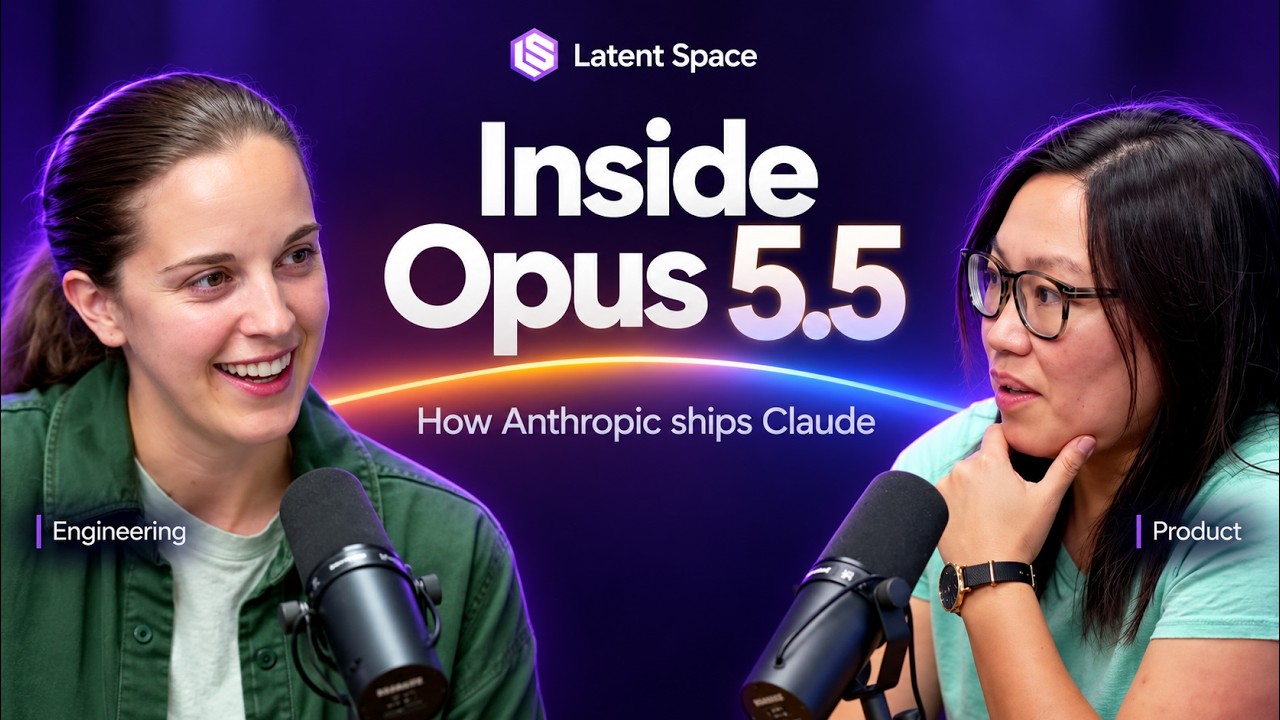
On Latent Space, Anthropic's Katelyn Lesse and Angela Jiang detailed the Claude Platform's architecture, including separating the model's "brain" from the agent's "hands" and the Opus 5.5 launch.
Why it matters
The split is presented as how Anthropic ships its flagship model safely, with separate safety classifiers and model routing deciding which requests reach which system.
Summaries like this, every morning.
The Latent Space conversation is framed around the engineering behind the Claude Platform rather than a single product announcement. Katelyn Lesse and Angela Jiang walk through how Anthropic launches models, how it approaches benchmarks and model personalization, and how it runs managed agents with memory and agent harnesses.
A recurring theme in the episode's chapter list is the split between the model's "brain" and the agent's "hands," paired with segments on protecting credentials and sandboxes and on safety classifiers and model routing. Those pieces suggest the platform's safety story is built into how requests and agent actions are routed, rather than bolted on afterward — an inference from the episode's structure, not a stated finding.
The episode also touches on infrastructure, including CPU constraints and rebuilding the Messages API in Rust, and on the boundary between training incidents and production incidents. It closes with developer relations and a segment on what to try with Opus 5.5.
Pick your industry and the AI tools you use, and get news related to your work every day.
Free · 30 seconds with Google · unsubscribe anytimeWhat is AIToday? →
Ask AI anything about this article. The AI reads this article, earlier AIToday articles, and Wikipedia, and cites its sources. Q&As are published on this page for other readers too.
Paul Gillin said at EVOLVE26 that Cloudera is positioning itself as an "anywhere cloud for AI," extending clou…
At the Bloomberg Invest conference in Dallas, Crusoe CEO Chase Lochmiller called the market angst over neoclou…

Google Deepmind introduced Genie 4, a real-time world model that generates sound directly, including backgroun…

OpenAI released GPT-6.1 Terra, pitched at image and screen understanding, PC operation, and natural writing, a…

Apple's Oct 27 refresh brings the M6 to a $1,499 iMac and $1,999 14-inch MacBook Pro, both shipping Nov 6 with…

Google DeepMind unveiled Genie 4, which it says improves on Genie 3 in almost every way, including better phys…