What happened
AWS published a reference architecture for building multi-tenant agentic document chat applications on Amazon Bedrock Managed Knowledge Base. The solution handles ingestion, retrieval, and isolation for each user's uploaded documents.
Why it matters
Enterprises can avoid building and securing the underlying retrieval infrastructure themselves. The service enforces per-user isolation on every retrieval hop, using verified identity from Amazon Cognito rather than client-supplied values.
What to watch
Direct ingestion through the custom connector makes documents retrievable within seconds. Files up to 6 MB are sent inline; larger files (up to 50 MB for text) are staged to Amazon S3. The repository lets you deploy the code in your own account.
Summaries like this, in your inbox every morning.
The post addresses a common scaling pain point: building a document chat feature where each tenant's data is strictly isolated. AWS shifts the heavy lifting to Bedrock Managed Knowledge Base, which owns ingestion, vector indexing, ranker, planning, and final response generation. The application only needs to handle upload UI, authentication, and per-user logic.
A key design choice is direct ingestion via a custom connector instead of the S3 connector. This avoids scheduled syncs that could overwrite user uploads and allows assigning custom document IDs, enabling in-place updates. The architecture also handles large files by staging them to S3, keeping the upload endpoint responsive via SQS decoupling.
The indexing lifecycle distinguishes between TEXT_INDEXED and INDEXED. For PDFs, text becomes queryable first, while multimodal elements (images, tables) require full indexing. This matters for UX: showing a document as ready at TEXT_INDEXED gives faster feedback but may miss some content in PDFs. The performance figures are only reference, not guarantees.
Pick your industry and the AI tools you use, and get news related to your work every day.
Free · 30 seconds with Google · unsubscribe anytimeWhat is AIToday? →
Ask AI anything about this article. The AI reads this article, earlier AIToday articles, and Wikipedia, and cites its sources. Q&As are published on this page for other readers too.
The Motley Fool argues Amazon is the AI company of the two, since AWS was just 21% of first-half 2026 revenue…

Hewlett Packard Enterprise stock is down 5% at $55.87

Cammarata reinterprets InceptionV1's cat-car neuron as a V-shape detector, not two unrelated concepts

Google Deepmind's Gemini 4 Argon scored 97.5 percent on ARC-AGI-3 at a cost of $4,800, second only to GPT-6 As…
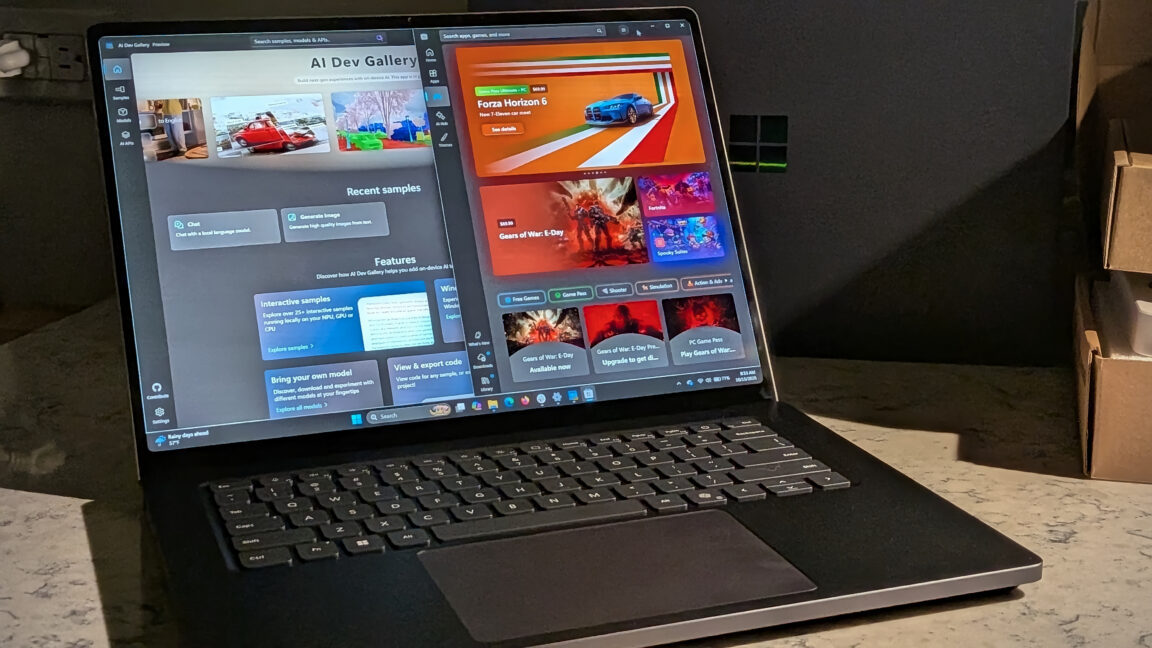
Microsoft's Surface Laptop Ultra, using Nvidia's RTX Spark platform, starts at $2,599 (up to $5,899)
Meta's new commercial terms, effective October 30th, appear to let it crawl and train AI on content from websi…