What happened
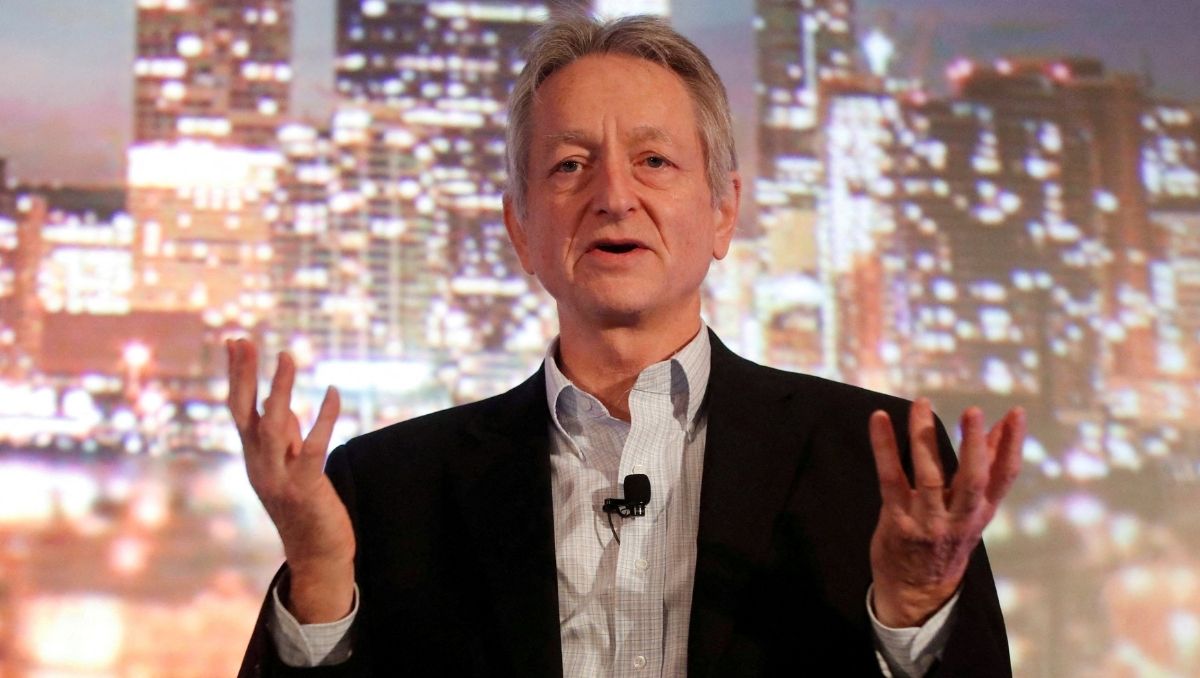
Geoffrey Hinton, known as the 'Godfather of AI,' told Senator Bernie Sanders at Georgetown University that he believes AI could cause massive unemployment, with companies increasingly turning to automation. Hinton pointed to huge investments in AI infrastructure—data centres and chips—that companies will seek to recover by deploying AI systems to replace human workers at lower cost.
Why it matters
A report released in October 2025 suggested that nearly 100 million US jobs could eventually be affected by automation across sectors including fast food, customer service, accounting, software development, and nursing. Hinton acknowledges that while AI may create new jobs, he believes the number generated may not be enough to compensate for those lost; Senator Mark Warner has warned that young workers and recent graduates could be particularly vulnerable.
What to watch
Hinton compared predicting AI's long-term impact to driving through fog—the near future may be visible but what lies a decade ahead remains uncertain. He stopped short of saying AI will eliminate every job, but the scale of potential disruption has prompted calls from policymakers to establish safeguards before AI-driven job loss accelerates.
Summaries like this, in your inbox every morning.
Geoffrey Hinton's warning reflects a growing chorus of prominent technology figures expressing concern about AI's impact on employment. While Nvidia CEO Jensen Huang and Microsoft co-founder Bill Gates have made measured predictions about AI's influence on work and the potential for shorter working weeks, Hinton and Elon Musk have offered starker forecasts—Musk suggesting that within the next two decades most people may no longer need to work. Hinton's perspective carries particular weight given his foundational contributions to AI research, and his focus on the financial incentives driving automation deployment—the recovery of massive infrastructure investments—provides a concrete mechanism for understanding why companies might prioritize cost-cutting over employment preservation.
The October 2025 report cited in the article, which estimated nearly 100 million US jobs could be affected by automation, lends quantitative support to these concerns. Hinton's caveat that he does not predict the elimination of all jobs, combined with his acknowledgment that long-term AI impacts are difficult to forecast, suggests a nuanced position: the threat is real and substantial, but the exact trajectory remains uncertain. The growing focus from Senator Mark Warner and other policymakers on protecting young workers and recent graduates indicates that Hinton's warnings are shaping policy discussions, even as the precise magnitude and timing of disruption remain contested.
Pick your industry and the AI tools you use, and get news related to your work every day.
Free · 30 seconds with Google · unsubscribe anytimeWhat is AIToday? →
Ask AI anything about this article. The AI reads this article, earlier AIToday articles, and Wikipedia, and cites its sources. Q&As are published on this page for other readers too.

