AIToday

DoorDash Builds Drone Airline, Earns FAA Carrier Cert

DRONELIFE9h agoSend on LINE
DoorDash Builds Drone Airline, Earns FAA Carrier Cert

Key takeaway

DoorDash has earned FAA Part 135 certification and launched DoorDash Air, its own drone delivery service, becoming the eighth U.S. operator with that approval. Rather than relying solely on external delivery partners, the company is building a vertically integrated system—aircraft, airline operations, ground infrastructure, routing, and merchant tools—mirroring Amazon's strategy. DoorDash's analysis of its 10 billion lifetime deliveries shows that orders between three and five miles are underserved by human drivers and can be completed by drones in less than 25 minutes on average; pilot partners saw order volume rise by roughly 30%, suggesting drones fill a real gap in local commerce.

Summaries like this, in your inbox every morning.

Sign up free →

3 Key Points

  • What happened

    DoorDash earned an FAA Part 135 air carrier certificate and launched DoorDash Air, becoming the eighth drone operator in the United States with that approval. The company is building its own aircraft, airline operations, ground infrastructure, routing systems, and merchant tools rather than relying solely on delivery partnerships.

  • Why it matters

    DoorDash has completed more than 10 billion lifetime deliveries and identified a key gap: orders between three and five miles take nearly 25% longer to fulfill because they are harder to match with drivers. The company's internal data shows drones can complete deliveries under five miles in an average of less than 25 minutes, and businesses in its pilot programs saw order volume rise by roughly 30%. By owning the full delivery stack—from aircraft to merchant infrastructure to dispatch—DoorDash is positioning itself to scale drone delivery across its existing marketplace more tightly than standalone drone operators can.

  • What to watch

    DoorDash's Autonomous Delivery Platform now assigns each order in real time to a Dasher, Dot (its ground robot), a drone, or an outside delivery partner based on the order, route, and available options. The company is also building merchant tools like SmartScale, which confirms order accuracy and weight to determine drone suitability. As a Part 135 air carrier, DoorDash must now maintain approved operating procedures, maintenance programs, safety systems, training, and regulatory compliance—a larger responsibility than simply partnering with other operators.

In Depth

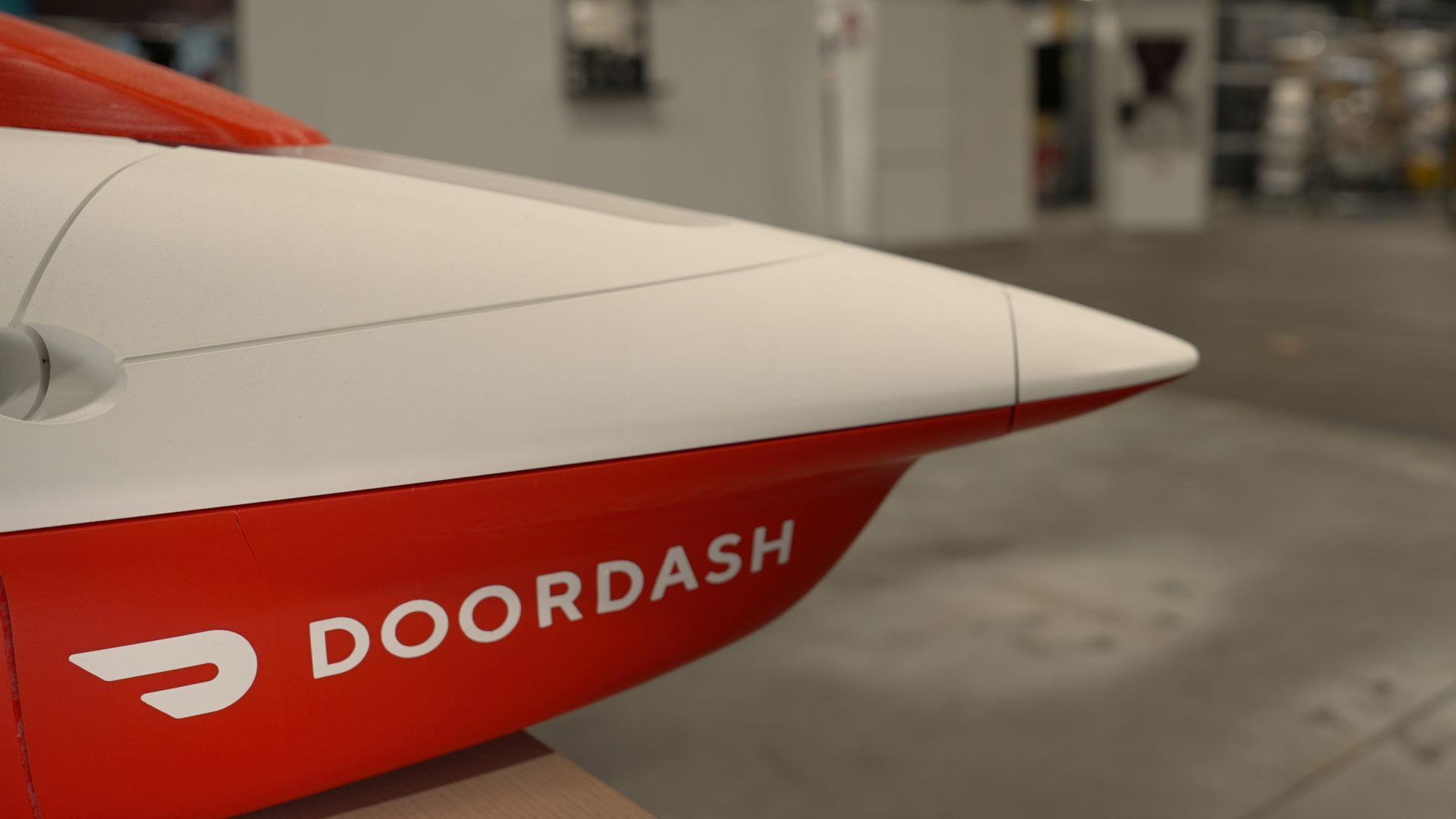
DoorDash has earned an FAA Part 135 air carrier certificate and launched DoorDash Air, becoming the eighth drone operator in the United States to receive that approval. The certification allows the company to operate its own drones for commercial deliveries, marking a significant milestone. However, the more consequential shift is DoorDash's decision to build and operate the entire drone delivery system itself—aircraft, airline operations, ground infrastructure, routing systems, and merchant tools—rather than relying solely on external partners. This mirrors the vertically integrated approach Amazon has taken with Prime Air, which also developed its own aircraft, secured Part 135 certification, and integrated drone delivery into its broader logistics network.

DoorDash developed DoorDash Air through DoorDash Labs, its in-house robotics and autonomy team, which also created Dot, the company's ground delivery robot. The aircraft is American-designed and built, with most components made in the United States. However, DoorDash's public messaging places less emphasis on the aircraft itself and more on the systems surrounding it: merchant handoffs, loading infrastructure, inventory management, dispatch, routing, safety systems, and customer orders. Harrison Shih, Head of DoorDash Air, stated: "We want drone delivery to work for any merchant, anywhere. We're building the full stack to make that possible from the ground infrastructure to the drone itself, and the handoff systems that make it work together seamlessly. Advances in hardware, compute, and AI are creating extraordinary new capabilities for local commerce, and becoming a certified air carrier accelerates everything we're building."

The strategic rationale is rooted in DoorDash's operational data. The company has completed more than 10 billion lifetime deliveries across its network. Analysis by cofounder Stanley Tang revealed that more than 20% of DoorDash orders in 2025 traveled between three and five miles—orders that took nearly 25% longer than shorter trips largely because they required more time to match with the right driver. DoorDash says drones can complete deliveries under five miles in an average of less than 25 minutes. In pilot programs, some businesses saw DoorDash order volume rise by roughly 30%, with that increase continuing during the nine weeks after launch. These results demonstrate that drones address a real gap in local delivery: mid-range orders that are inefficient for human drivers but ideal for aircraft.

DoorDash's Autonomous Delivery Platform is designed to make this orchestration seamless. The system assigns each order in real time to a Dasher, Dot, a drone, or an outside delivery partner, considering the order, route, delivery conditions, and available transportation options. The company is also building merchant-facing tools such as SmartScale, which helps merchants confirm order accuracy and weight—information especially important for determining whether an order is suitable for drone delivery. This orchestration layer represents DoorDash's potential advantage: while any company can build or operate an aircraft, DoorDash controls the marketplace where customers place orders and merchants receive them. The company is not abandoning partnerships; the platform is designed to support both company-owned systems and outside providers like Wing, Flytrex, Manna, and others. DoorDash Air therefore expands the company's options rather than replacing partnerships.

Vertical integration brings greater control over design, routing, merchant integration, and customer experience, but it also creates significant new responsibilities. As a Part 135 air carrier, DoorDash must maintain approved operating procedures, maintenance programs, safety systems, training, and regulatory compliance. The company is building what it describes as the entire airline, not only the aircraft. Recent expansion by Amazon, Wing, Flytrex, Zipline, and other operators shows that drone delivery is moving beyond limited demonstrations. The central question in the industry has shifted: after years of proving drones could deliver safely and reliably, leading companies now confront the challenge of integrating aircraft into existing commerce and logistics networks. That requires more than flight technology; it requires merchant infrastructure, order management, dispatch, routing, loading systems, customer support, and regulatory oversight. DoorDash's bet is that the future of drone delivery belongs to companies that can connect every part of the delivery system, not only those that can fly aircraft.

Context & Analysis

DoorDash's decision to pursue vertical integration in drone delivery reflects a fundamental shift in how the company views the technology. Rather than treating drones as a specialized service bolted onto its existing platform, DoorDash sees them as one transportation mode within a larger delivery network—a perspective the body explicitly compares to Amazon's strategy with Prime Air. The company has spent four years working with drone delivery partners and supported tens of thousands of deliveries through those relationships, yet chose instead to build its own aircraft and airline operations. This pivot is grounded in concrete operational data: DoorDash's analysis of its 10 billion lifetime deliveries revealed a specific problem that drones are well-suited to solve. Orders between three and five miles represent more than 20% of DoorDash orders in 2025 but take nearly 25% longer than shorter trips because they are difficult to match with human drivers. Drones, by contrast, can handle those mid-range deliveries in under 25 minutes on average, and pilot partners saw order volume rise by roughly 30%—a signal that drone delivery addresses real merchant and customer demand.

What distinguishes DoorDash's approach is not the aircraft itself but the infrastructure surrounding it. The company is building merchant handoff systems, loading infrastructure, inventory management, dispatch, routing, and safety systems—what DoorDash describes as "the entire airline, not only the aircraft." This orchestration layer, called the Autonomous Delivery Platform, assigns each order in real time to the most appropriate mode: Dasher, Dot, drone, or external partner. The body suggests this orchestration advantage may be DoorDash's strongest competitive edge, since the company already controls the marketplace where customers order and merchants receive deliveries. Other drone operators can build aircraft, but fewer can integrate drones into a logistics network that spans millions of active merchants and customers. Achieving Part 135 certification carries meaningful new responsibilities—DoorDash must now maintain approved operating procedures, maintenance programs, safety systems, and regulatory compliance. However, the body frames this not as a burden but as a necessary investment to scale drone delivery across diverse merchant types, locations, and product categories.

FAQ

What is DoorDash Air and what approval did it receive?
DoorDash Air is DoorDash's in-house drone delivery program. The company earned an FAA Part 135 air carrier certificate, making DoorDash the eighth drone operator in the United States with that approval. The certification allows DoorDash to operate its own drones for commercial deliveries.
What delivery distance and time is DoorDash targeting with drones?
DoorDash says drones can complete deliveries under five miles in an average of less than 25 minutes. The company identified that more than 20% of DoorDash orders in 2025 traveled between three and five miles, and those orders took nearly 25% longer than shorter trips because they were harder to match with drivers.
How does DoorDash decide which delivery method to use for each order?
DoorDash's Autonomous Delivery Platform assigns each order in real time to a Dasher, Dot (its ground robot), a drone, or an outside delivery partner based on the order, route, delivery conditions, and available transportation options. The platform also uses a tool called SmartScale to help merchants confirm order accuracy and weight, which is especially important for determining drone suitability.

Get the latest Robotics news every morning

AI-summarized, only the topics you pick — one digest a day via Email, Slack, or Discord.

Free · takes 30 seconds · unsubscribe anytime

Discussion

No comments yet. Be the first to share your thoughts!

Log in to join the discussion

Related Articles

Stay ahead with AI news

Get curated AI news from 200+ sources delivered daily to your inbox. Free to use.

Get Started Free

Free · takes 30 seconds · unsubscribe anytime