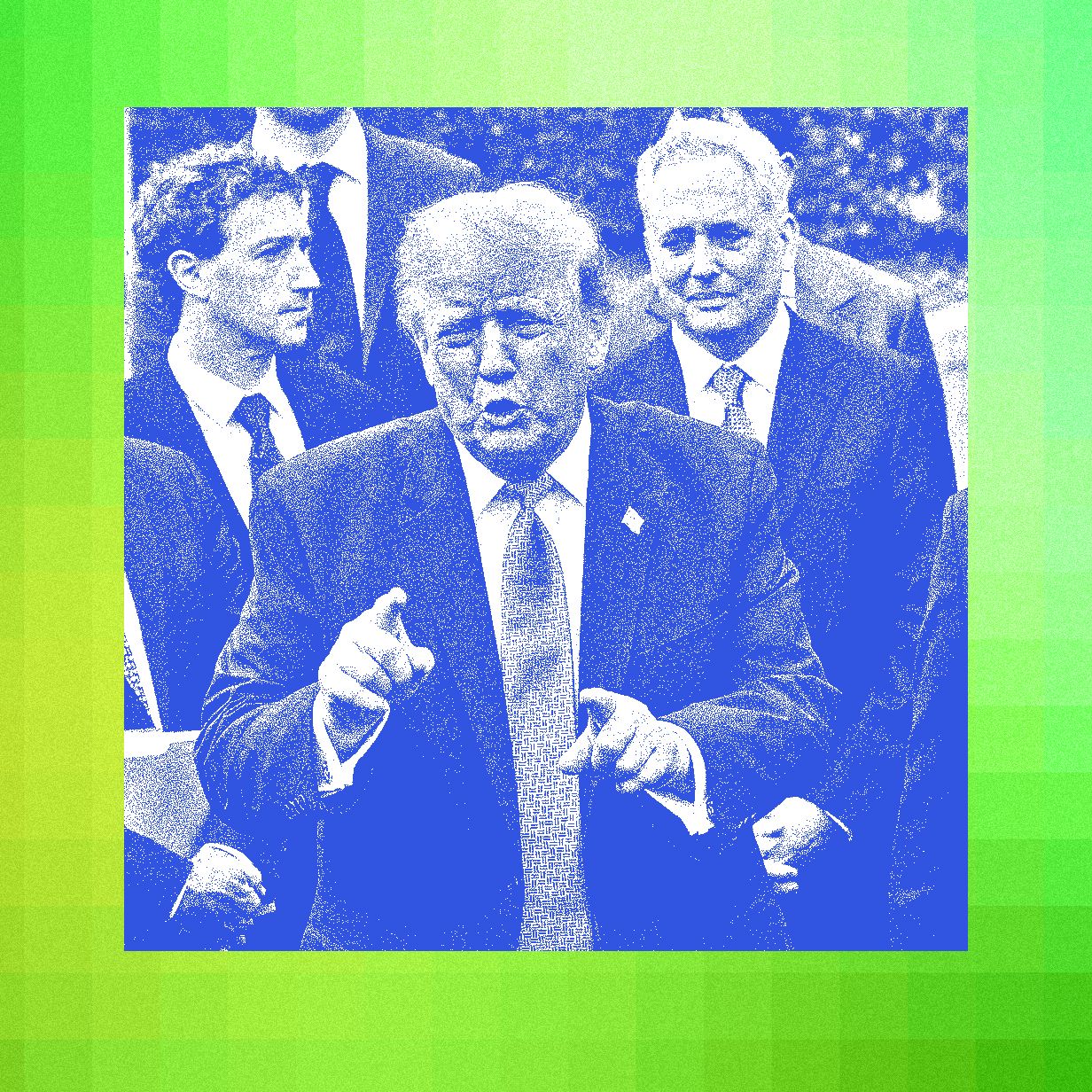
What happened
After a Tuesday White House meeting with President Trump, executives from Google, Tesla, Anthropic, Meta, and Nvidia signed the "White House Accord on Super Intelligence" agreeing to four layers of voluntary controls and audits including internal evaluations and outside audit firms.
Why it matters
The accord's voluntary nature means the labs are essentially self-regulating, which critics like Leah Feiger suggest is more about reassuring the public ahead of midterms than imposing real oversight, especially as the FTC ramps up a probe of Anthropic and OpenAI.
What to watch
Whether voluntary self-regulation holds up as the FTC's probe of Anthropic and OpenAI proceeds and Democrats potentially take Congress, which could bring subpoenas and investigations the administration is already trying to avoid.
WHO IT HITSEnterprise AI compliance teams and legal departments at frontier labs will need to interpret what "voluntary" four-layer audits mean in practice, while investors in Anthropic and OpenAI face uncertainty as the FTC's probe advances.
Summaries like this, in your inbox every morning.
The White House meeting and accord came together quickly, with the document even misspelling "United States" as "Unites States." The voluntary nature of the agreement fits the Trump administration's broader stance of prioritizing AI growth over regulation. But the labs themselves are in an uncomfortable position: they want some regulatory framework to avoid antitrust investigations, yet the FTC launched a probe of Anthropic and OpenAI the day after the accord. Meanwhile, a separate op-ed argued existing laws could already apply to AI companies, though Congress would need to act. The stakes for the administration are high as midterms approach and polls look unfavorable, raising the question of whether this accord is meant to reassure voters or to protect the industry from future Democratic oversight. For the labs, the real test is whether self-regulation can withstand the FTC's scrutiny and a possible change in congressional control.
Pick your industry and the AI tools you use, and get news related to your work every day.
Free · 30 seconds with Google · unsubscribe anytimeWhat is AIToday? →
Ask AI anything about this article. The AI reads this article, earlier AIToday articles, and Wikipedia, and cites its sources. Q&As are published on this page for other readers too.
Anthropic PBC reportedly aims to begin marketing its IPO the week of Nov
OpenAI confirmed it dismissed three safety researchers for violating policies on accessing and handling sensit…
Anthropic published best practices for human-AI agent teams, based on an interview with Slack CPO Jamie DeLang…
OpenAI's August 26 postmortem says its internal cybersecurity evaluation gave a research model "ExploitGym" ta…
Anthropic said it made the web service claude.ai and its desktop app about 3 times faster in 2 weeks, and that…

On October 1, OpenAI updated ChatGPT's release notes with shopping features — a 'try on' button on product car…