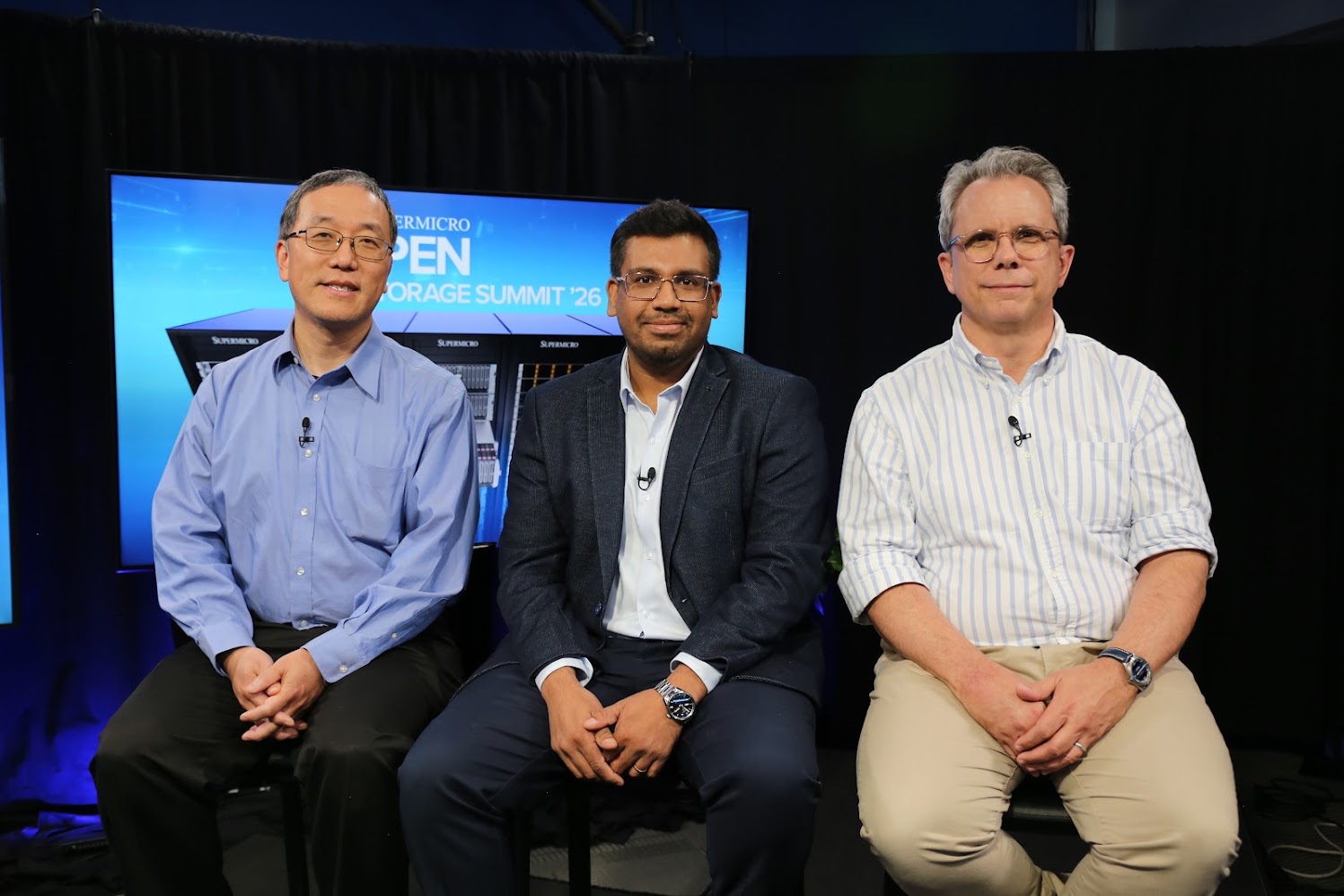
What happened
AMD, Supermicro, and MinIO discussed how to address the enterprise data pipeline problem in an interview at the Supermicro Open Storage Summit. They highlighted that more than 80% of enterprise data is unstructured, and 99% of it is dark to AI.
Why it matters
Modern AI systems need consistent, governed access to data, but fragmentation and interoperability issues hinder that. The companies argue that the storage layer is key to keeping GPUs productively fed and that open standards like Apache Iceberg enable scalable, vendor-neutral data lakes.
What to watch
MinIO's AIStor platform now natively supports Apache Iceberg tables and the Iceberg REST Catalog, enabling full database functionality up to exabyte scale. Supermicro pre-validates its AMD EPYC-based systems to ensure they are ready to deploy.
Summaries like this, in your inbox every morning.
The interview underscores a shift in enterprise AI priorities: compute is no longer the primary bottleneck—data movement is. AMD's Varun Selvaraj noted that customers' infrastructure is not built for AI scale when handling large volumes of unstructured data. This is why the three companies are working together to deliver balanced solutions that span software and hardware.
MinIO's AIStor platform, with native Iceberg support, allows organizations to consolidate data into a single storage environment at exabyte scale. Supermicro's pre-validated AMD EPYC systems aim to ensure that data centers can deploy these solutions without costly integration delays. Together, they emphasize that a data pipeline fails as a system, not at a single component, so coordination across the stack is essential.
Pick your industry and the AI tools you use, and get news related to your work every day.
Free · 30 seconds with Google · unsubscribe anytimeWhat is AIToday? →
Ask AI anything about this article. The AI reads this article, earlier AIToday articles, and Wikipedia, and cites its sources. Q&As are published on this page for other readers too.
CoreWeave fell 5% in premarket trading Friday and was on track to finish the week down 15%, after rebounding f…
In a Fortune commentary, Anthropic and General Catalyst argue markets price resilience's cost before its value
A longtime Anthropic investor told Fortune he expects shares priced around $1.8 trillion, below the company's…
In Q2, billionaires or their funds sold six 'Magnificent Seven' AI stocks
Nvidia was rising early Friday, even as the wider chip sector kept falling, Barron's reported
ElevenLabs completed a $300 million employee tender at a $22 billion valuation, and co-founder Mati Staniszews…