What happened
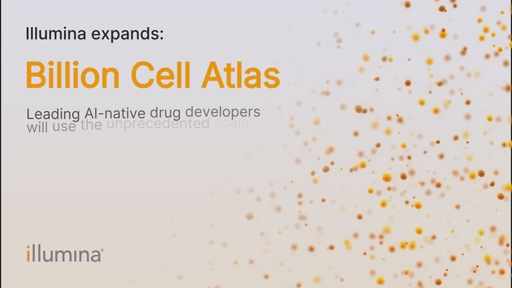
Illumina announced three new members for its Billion Cell Atlas alliance, including AI-native drug developer Formation Bio. The program, launched in January 2026 with founding members AstraZeneca, Merck, and Eli Lilly, has now sequenced over 350 million cells and generated upwards of six petabytes of genomic data.
Why it matters
The alliance gives drug developers unprecedented access to genome-wide perturbation data to identify which patient populations will respond to candidate drugs, validate drug targets, and make better decisions about which medicines to advance—potentially reducing risk and accelerating the path from biological discovery to approved drugs.
What to watch
Formation Bio intends to use the Atlas to credential therapeutic-area hypotheses and target-indication pairs, helping it choose which assets, indications, patients, and trial designs have the strongest probability of clinical success. The program will eventually capture how one billion individual cells respond to genetic changes via CRISPR across more than 200 disease-relevant cell lines.
Summaries like this, in your inbox every morning.
The Illumina Billion Cell Atlas represents a shift in how drug discovery leverages biological data at scale. Launched in January 2026, the program was built to address bottlenecks across drug development: identifying what targets to pursue, understanding why drugs succeed or fail, and selecting the right patient populations for clinical trials. The addition of Formation Bio and two other AI-driven companies signals confidence that machine-learning models trained on large, diverse biological datasets can improve the rigor of asset selection—a critical decision point where many first-in-class medicines fail because their target biology is compelling but clinical evidence is sparse.
Formation Bio's stated model—acquiring promising drugs close to or in the clinic and using AI to develop them faster—aligns directly with what the Atlas enables: using single-cell perturbation data to build more precise models of how candidate drugs interact with disease biology and to identify patient subgroups most likely to respond. By integrating the Atlas's cell-state-specific data with genetic, translational, and clinical evidence, developers can more rigorously credential target-indication pairs before investing in expensive clinical trials. This capability is particularly valuable for first-in-class programs, where the clinical precedent is limited and the stakes are high.
Pick your industry and the AI tools you use, and get news related to your work every day.
Free · 30 seconds with Google · unsubscribe anytimeWhat is AIToday? →
Ask AI anything about this article. The AI reads this article, earlier AIToday articles, and Wikipedia, and cites its sources. Q&As are published on this page for other readers too.
Supermicro Computer appointed Mark Long as chief financial officer, bringing an experienced technology finance…

Holtek Semiconductor unveiled its 2026 product roadmap on October 15, focusing on four core areas: smart prote…

TSMC reported about NT$763.1b in Q3 net profit and confirmed that demand for advanced processors is running ah…

Nvidia-backed CoreWeave steadied Thursday after a sharp slump, as investors worried about the debt financing b…
TOPPAN Holdings and Keio University ran a quantum-computer and generative-AI proof-of-concept from February 1…
Weathernews said on October 15 it implemented its own AI weather-forecasting model, AI-Nowcast, in its Weather…