AIToday

Vermont pharmacy's AI assistant frustrates customers, raises privacy fears

Hacker News9h agoSend on LINE
Vermont pharmacy's AI assistant frustrates customers, raises privacy fears

Key takeaway

Kinney Drugs, a Vermont and New York pharmacy chain, implemented an AI assistant called Burt in May 2026 to handle prescription refill calls, but the tool has been delivering garbled drug names, ordering wrong doses, and causing processing delays. The rollout has sparked privacy concerns because the AI shares customer health data with third-party vendor Synerio, yet Vermont's new data privacy bill does not take effect until two years later, leaving consumers largely unprotected; customers in rural areas say they cannot switch pharmacies and are forced to choose between using an unreliable system or traveling in person to fill prescriptions.

Summaries like this, in your inbox every morning.

Sign up free →

3 Key Points

  • What happened

    Kinney Drugs, a Vermont and New York pharmacy chain, deployed an AI assistant named Burt (built by Synerio) for prescription refill calls in May 2026. Customers report the tool delivers incomprehensible drug names, requests wrong refills, causes delays in processing, fails to locate accounts, and orders incorrect dosages—prompting some to switch pharmacies or visit in person to avoid it.

  • Why it matters

    The rollout exposes a regulatory gap: Vermont's new data privacy bill S.71 (signed June 16, 2026) does not take effect until two years later, leaving consumers unprotected while the AI tool shares their health data with a third-party vendor. Lawyers and privacy experts say consent-based regulations are flawed when terms span 11 documents, and patients in rural areas lack alternative pharmacies, forcing them to choose between the flawed system or going without medication.

  • What to watch

    Vermont's S.71 data privacy law takes effect in two years; privacy advocates say it already contains too many exemptions. The Kinney Drugs case may become a test of how effectively these emerging laws protect consumers from AI tools in healthcare—and whether patients can realistically opt out when pharmacy choices are limited.

In Depth

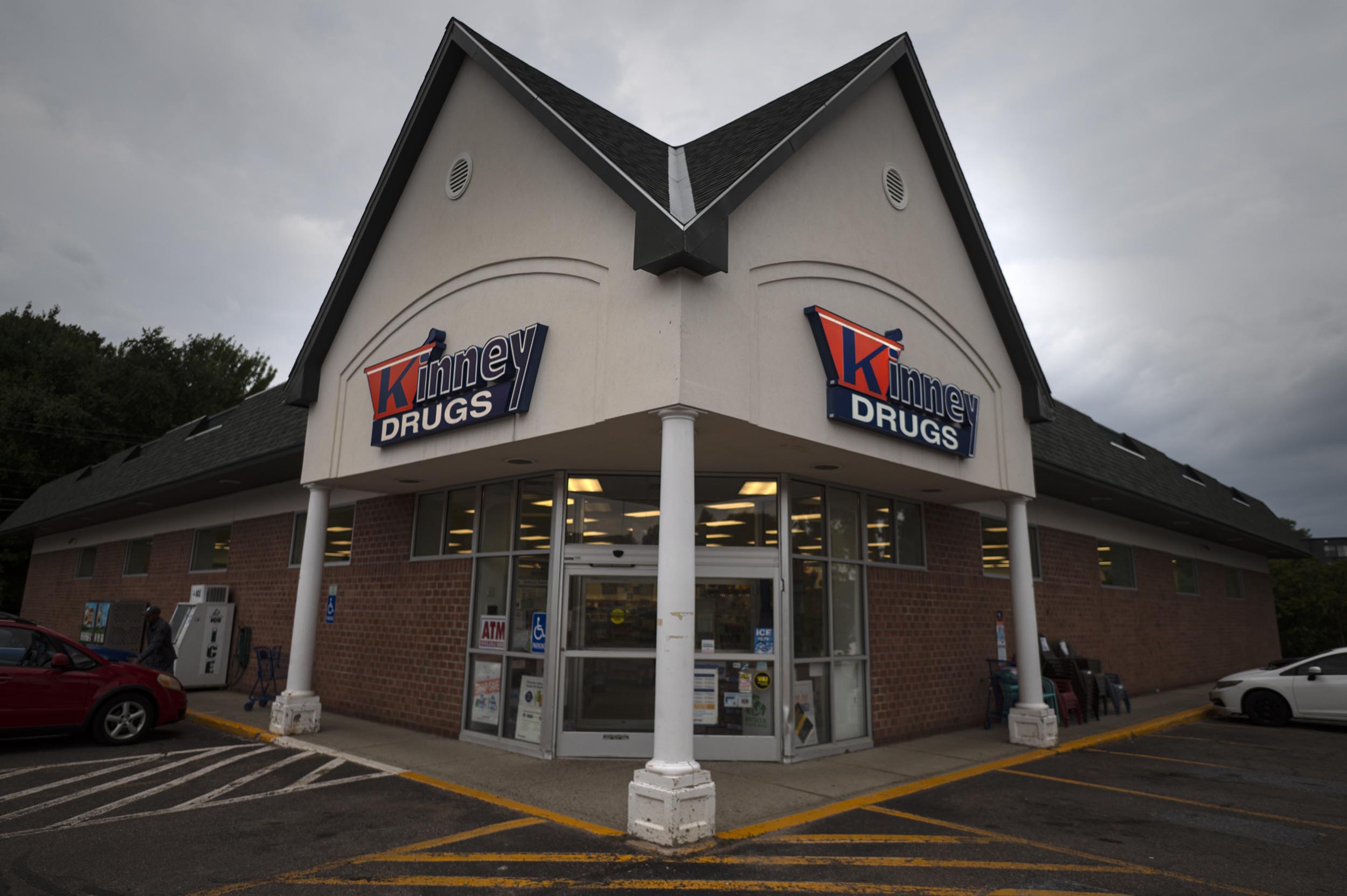
On May 2026, Kinney Drugs, a pharmacy chain operating in Vermont and New York, deployed an AI virtual assistant for patient communication and prescription refill services. The tool, named Burt after the pharmacy's founder, was built by Synerio, a Texas-based pharmaceutical AI company. Kinney Drugs leaders promoted the change as a way to improve efficiency by eliminating repetitive phone calls and freeing pharmacists to focus on higher-value work. One company director stated that Burt was "definitely doing the trick and handling those phone calls in such a nice manner that it's reducing the calls to our pharmacy."

However, customers quickly reported widespread problems. Kathy Callaghan, a Vermont customer, described receiving frequent incomprehensible voicemails from the AI, listing drugs incoherently and requesting refills she did not need. Confused by the garbled speech, she sometimes approved refills thinking they were legitimate, only to discover later she had four bottles of a medication she takes twice a week sitting unused at home. Matt Penney, another customer of two years, found the new system "more complicated and cumbersome than the previous recording and service." Dave Bellini stated it had "absolutely no value, no benefit to the customer" and wastes time. According to nearly a dozen customers who spoke to VTDigger, the AI rollout coincided with delays between physician orders and pharmacy processing, inability to locate longtime customer accounts, incorrect dosages, and failure to notify customers when refills were ready for pickup.

Maria Aveni, a Vermont customer and anesthesiologist who works in healthcare, noted that unlike the old touch-tone keypad system, Burt "demands that you talk to him" with "no option to use a keypad." She described the choice as "talk to Burt or don't get your drugs." When she experienced a delay in receiving medication her physician had ordered, she began visiting the pharmacy in person to avoid AI interactions. But for rural customers without reliable transportation, this workaround is impossible.

The rollout also raised privacy concerns. The pharmacy's privacy policy, released the same month as Burt, discloses that customers' protected health information may be used in AI tools to improve operations. Tuan Green, a former customer, said that after reading the policy in-store, he was "shocked" and immediately transferred prescriptions to UVM Hospital. Stephen McArthur said, "These days, privacy is just about out the window." Joseph Near, a UVM computer science professor, noted that the tool is worse than the previous system privacy-wise because Synerio now has access to health data in addition to the pharmacy. Bradley Malin, a professor of biomedical informatics at Vanderbilt University Medical Center, explained the expanded risk: "If I just interact with my healthcare provider, I'm relying on the security that they have. If they now start interacting with many other organizations, I now have to start worrying about all the security issues with each of them."

Kinney Drugs' terms state that Burt "may not be accurate, complete or up-to-date and may be misleading or contain errors and omissions." Any customer who provides a phone number automatically consents to the tool, though they may later opt out. However, many customers said they did not realize the company had implemented Burt until they called for a refill. According to the Kinney Drugs representative, the company is "aware that some patients have experienced frustration with Burt, especially during rollout" and is reviewing each concern. The representative also stated the company maintains "multiple layers of security controls" and appropriate HIPAA business associate agreements with Synerio, though declined to share the contracts.

The situation highlights a regulatory gap. Vermont's new data privacy bill S.71, signed by Governor Phil Scott on June 16, takes effect in two years, leaving a compliance gap during which Burt is already in use. Cody Venzke, a senior staff attorney at the ACLU, told VTDigger: "There's a delay in laws that are coming onto the books, so we've not seen a detailed picture of how companies are going to comply or how states are going to enforce the laws." Ryan Kriger, a Vermont lawyer who testified on the bill, said that "even if it were in effect, I'm not sure that it would necessarily cover the situation." Zach Tomanelli, a privacy advocate with the Vermont Public Interest Research Group, argued the law should have gone further because it gives too many exemptions to companies collecting data. Joseph Near pointed out that regulations based on consumer consent are flawed: Kinney Drugs spreads its terms across 11 documents, making informed consent unrealistic. Stacey Tovino, a University of Oklahoma professor who teaches HIPAA, noted that while patients can petition to correct inaccurate health information, the process is so cumbersome she herself would simply switch pharmacies—a luxury rural customers often do not have.

Meanwhile, the AI's failures have generated the opposite of the intended efficiency gain. As customers encounter problems, many turn to pharmacists for help, adding to workload in an already understaffed environment. Maria Aveni said the AI is "slowing down productivity of an already stressed staff," and expressed loyalty to the pharmacy and its people despite her frustration. Others said they do not want to leave the small-scale chain they can walk to and trust, but will do so if the problems persist.

Context & Analysis

Kinney Drugs' deployment of Burt reflects a broader trend of AI entering healthcare systems across the country, but the execution has revealed both technical and regulatory failures. The pharmacy cited efficiency gains—eliminating repetitive calls so pharmacists could focus on higher-value work—yet customers report the opposite: they are now calling pharmacists more frequently to resolve the AI's errors, adding stress to an already overburdened workforce facing chronic shortages in Vermont.

The privacy dimension compounds the problem. By routing customer health data through Synerio, a third-party vendor, the pharmacy has multiplied the attack surface for a data breach. Joseph Near, a University of Vermont computer science professor, notes that customers must now trust not only Kinney Drugs' security but also Synerio's—a fundamental shift that increases risk. Vermont's new data privacy law S.71, signed June 16 and taking effect in two years, is meant to address such concerns, but it exempts many categories of data collection and relies on consumer consent. Experts argue this approach is unrealistic: Kinney Drugs' terms span 11 documents, and customers often do not realize they have agreed to AI interaction until they hear Burt's voice during a refill call.

Rural customers face an additional bind. Those who distrust the system cannot easily switch to another pharmacy, so they either accept the AI or travel in person—an option unavailable to those without reliable transportation. This structural constraint means consent, in practice, is not a choice.

FAQ

When was the AI tool deployed and who built it?
Kinney Drugs implemented the AI assistant, named Burt, in May 2026. It was built by Synerio, a Texas-based technology company.
What are the main problems customers have reported?
Customers report that Burt delivers incomprehensible drug names, requests incorrect refills on sensitive medications, causes delays between physician orders and pharmacy processing, fails to locate longtime customer accounts, orders wrong dosages, and fails to notify customers when refills are ready for pickup.
When does Vermont's data privacy law take effect?
Vermont's data privacy bill S.71 was signed by Gov. Phil Scott on June 16 and takes effect in two years, leaving a compliance gap during which the AI tool is already in use.

Get the latest AI in Healthcare news every morning

AI-summarized, only the topics you pick — one digest a day via Email, Slack, or Discord.

Free · takes 30 seconds · unsubscribe anytime

Discussion

No comments yet. Be the first to share your thoughts!

Log in to join the discussion

Related Articles

Stay ahead with AI news

Get curated AI news from 200+ sources delivered daily to your inbox. Free to use.

Get Started Free

Free · takes 30 seconds · unsubscribe anytime