What happened
Goldman Sachs reported second-quarter fiscal 2026 earnings of $20.98 per share, well above the consensus estimate of $14.40, and net revenue rose 39% year over year to $20.34 billion(約3.3兆円), beating the estimate of $16.13 billion(約2.6兆円). The firm's alternatives platform reached $459 billion(約73兆円) in assets and raised a record $59 billion(約9.4兆円) in alternatives during the quarter.
Why it matters
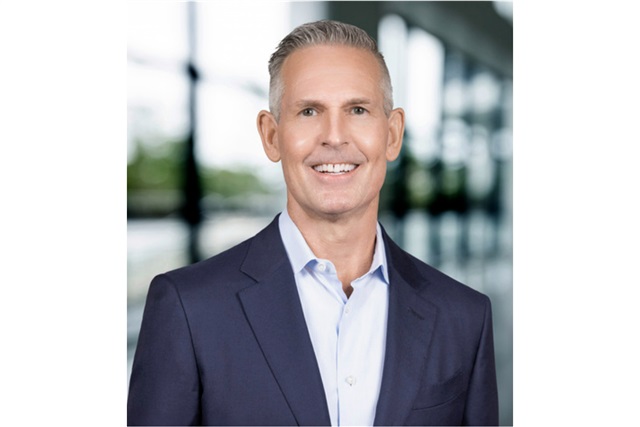
CEO David Solomon stated that the AI investment cycle is driving capital demand beyond core technology into infrastructure, energy, and data centers—signaling that major financial institutions see sustained runway for AI-related spending across multiple sectors. Goldman Sachs' record fundraising and strength in M&A (the firm retained its position as the leading M&A advisor with $1 trillion(約160兆円) in announced deal volumes in the first half of 2026) suggest that corporate clients are investing heavily in this infrastructure wave.
What to watch
Management raised its full-year alternatives fundraising outlook to above $125 billion(約20兆円). The firm also increased its quarterly dividend by 25% to $5 per share and repurchased $4 billion(約6400億円) of stock, reflecting confidence in sustained growth.
Summaries like this, in your inbox every morning.
Goldman Sachs' second-quarter results reflect a bank significantly benefiting from current market dynamics centered on AI infrastructure investment. The 39% year-over-year revenue growth and earnings per share of $20.98—far exceeding analyst consensus of $14.40—signal robust client activity across the firm's key divisions, particularly in Global Banking & Markets. The alternatives platform's record $59 billion(約9.4兆円) in quarterly fundraising and revised full-year outlook of above $125 billion(約20兆円) show that institutional capital is flowing aggressively toward alternative investments, likely driven in part by appetite for AI-related opportunities.
CEO David Solomon's characterization of the AI cycle as still in its "early innings" is significant because it frames the current investment boom not as a peak but as an early-stage acceleration. By noting that capital demand is spreading into infrastructure, energy, and data centers—sectors beyond pure technology companies—Solomon suggests that the AI spending wave will remain broad-based and sustained. For Goldman Sachs, this translates into continued advisory work on strategic transactions, capital raising, and M&A, as corporations and investors position themselves for long-term AI buildout.
Pick your industry and the AI tools you use, and get news related to your work every day.
Free · 30 seconds with Google · unsubscribe anytimeWhat is AIToday? →
Ask AI anything about this article. The AI reads this article, earlier AIToday articles, and Wikipedia, and cites its sources. Q&As are published on this page for other readers too.
In Q2, billionaires or their funds sold six 'Magnificent Seven' AI stocks
Nvidia was rising early Friday, even as the wider chip sector kept falling, Barron's reported
ElevenLabs completed a $300 million employee tender at a $22 billion valuation, and co-founder Mati Staniszews…

On October 15, OpenAI announced the Rosalind Academic Plan, giving approved US university labs free access to…
Neostellar Capital principal Evan Schlossman said CoreWeave's $103.7 billion in remaining performance obligati…
Supermicro Computer appointed Mark Long as chief financial officer, bringing an experienced technology finance…