What happened
Jessica Wachter of Wharton and co-authors estimate hyperscaler spending will reach nearly 1.1兆ドル by 2027, and that a 2.7x productivity gain is needed to recoup it by 2030.
Why it matters
Wachter says missing that target would mean delayed interest payments and bankruptcy risk, making the buildout the largest misallocation of capital in history.
What to watch
The test is whether AI-related revenue, projected at only 1500億~2000億ドル in 2026, catches up with spending; watch Alphabet's 59億ドル free cash flow deficit.
WHO IT HITSThis lands hardest on pension funds and life insurers now absorbing data-center debt risk, and on hyperscaler finance teams weighing borrowing costs and GPU depreciation against revenue that has not yet arrived.
Summaries like this, in your inbox every morning.
Wachter's approach sidesteps the usual arguments about how capable AI models will become. Instead, she starts from what she calls a "fact worth noting": that a handful of cloud hyperscalers are already committing enormous sums to AI data centers. From there, she and her co-authors work backward, asking how fast revenue must grow to justify spending that they estimate will approach 1.1兆ドル by 2027. Their answer — a 2.7x productivity gain by 2030 — is described as difficult but not impossible, and as the kind of growth the US enjoyed during the IT boom that ran for roughly a decade from the mid-1990s.
The tension is that the spending side is already moving. Hyperscalers are set to invest about 7500億ドル in 2026 alone, with some forecasts putting AI-related capital spending at Alphabet, Microsoft, Amazon, Meta, and Oracle — which partners with OpenAI — above 5兆ドル over the next four years, even as total AI-related revenue is projected at only 1500億~2000億ドル in 2026. MIT Sloan's Gary Gensler, a former SEC chair, calls this a parlay bet in which hyperscalers must generate huge revenue, AI must drive broad economic growth, and expensive frontier models must fend off cheaper rivals.
What makes the arithmetic harder is how the money is being raised. Borrowing is rising, free cash flow across the group is expected to turn negative, and Alphabet's own roughly 59億ドル free cash flow deficit — its first since the 2004 Google IPO — shows even the strongest balance sheets are feeling the strain. As loans are moved through various financial structures, the risk appears to be spreading to pension funds and life insurers. Whether this ends as a durable boom or a write-down seems to hinge on whether productivity statistics, which the article notes have shown little AI-driven improvement so far, eventually move.
For example, today's edition would include:
AI-summarized, only the topics you pick — one digest a day via Email, LINE, or Slack.
Free · 30 seconds with Google · unsubscribe anytimeWhat is AIToday? →
Ask AI anything about this article. Q&As are published on this page for other readers too.
Anthropic released Claude Opus 5.5 today and cut its price 20%, with input at $4 per million tokens and output…

Firecrawl announced it has raised $75 million in a Series B round led by Smash Ventures, with participation fr…
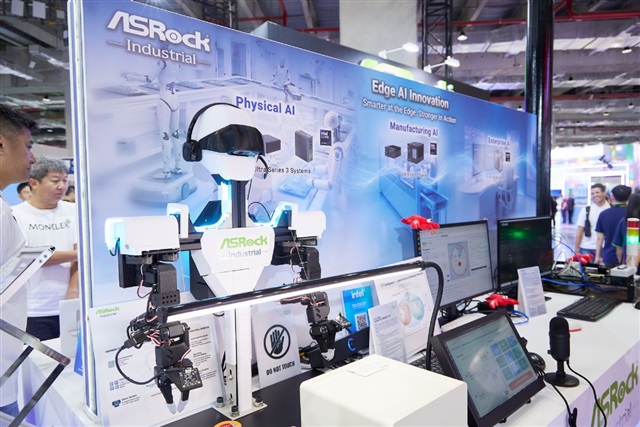
ASRock is shifting its business focus toward AI
Anthropic and OpenAI, which spent early September warning that model capabilities are outrunning the safeguard…

OpenAI released GPT-6 Sol and GPT-6 Luna on September 22, trained the same way as its top-tier GPT-6 Astra, an…

In September 2026, Amazon Web Services and Salesforce announced that Salesforce CRM data will be usable from A…