What happened
DeepSeek unveiled V4 Flash Vision Exp, a multimodal model derived from its V4 Flash algorithm released in April. The new model beat Anthropic's Opus 4.8 on two visual benchmarks—ALE, which contains more than 1,000 multi-step tasks requiring code writing and media interpretation, and ZeroBench, which has 100 image analysis tasks designed to challenge frontier LLMs. V4 Flash Vision Exp outperformed V4 Flash across all seven text-based benchmarks except Cybergym, which evaluates software vulnerability detection.
Why it matters
The debut signals DeepSeek's competitive positioning in multimodal AI at a time when enterprises increasingly require models that handle both text and images. V4 Flash Vision Exp's stronger performance on image analysis—scoring more than 10% higher on two visual benchmarks—shows the company is closing gaps with established competitors. The model's foundation, V4 Flash, uses a mixture-of-experts architecture with 284 billion parameters that activates only the neural network best suited to each prompt, reducing hardware demands compared to activating the entire model.
What to watch
V4 Flash Vision Exp is currently available only via DeepSeek's paid developer platform, though the company may release a free version later, consistent with its practice of open-sourcing earlier models. DeepSeek has not disclosed V4 Flash Vision Exp's architecture details. V4 Flash was trained on 32 trillion tokens of data and uses compression techniques (HCA and CSA) that reduce computing power needed to process 1 million-token prompts by 73%.
Summaries like this, in your inbox every morning.
DeepSeek's V4 Flash Vision Exp represents an incremental but substantive advance in the company's multimodal capabilities. The model is built on V4 Flash, released in April, which the company has optimized specifically for visual understanding while maintaining text performance. What distinguishes this release is DeepSeek's demonstration of competitive parity with Anthropic's Opus 4.8, a widely used enterprise model, on two concrete image-understanding benchmarks—ALE and ZeroBench. This matters because visual reasoning remains a key differentiator in enterprise AI applications, where models must navigate interfaces, parse diagrams, and interpret screenshots.
The architecture beneath V4 Flash offers insight into DeepSeek's efficiency strategy. By training on 32 trillion tokens and employing a mixture-of-experts design that activates only necessary components per prompt, the model reduces computational overhead relative to dense architectures. The company's use of KV cache compression techniques—reducing computing power for 1 million-token processing by 73%—suggests DeepSeek is competing not just on accuracy but on cost and inference speed, factors that matter to developers and enterprises operating at scale.
The current availability model—paid developer platform only—departs from DeepSeek's stated practice of open-sourcing earlier models, though the company has indicated a free release may follow. This gatekeeping may reflect commercial timing or a desire to gather production feedback before broader release.
Pick your industry and the AI tools you use, and get news related to your work every day.
Free · 30 seconds with Google · unsubscribe anytimeWhat is AIToday? →
Ask AI anything about this article. The AI reads this article, earlier AIToday articles, and Wikipedia, and cites its sources. Q&As are published on this page for other readers too.
ElevenLabs completed a $300 million employee tender at a $22 billion valuation, and co-founder Mati Staniszews…
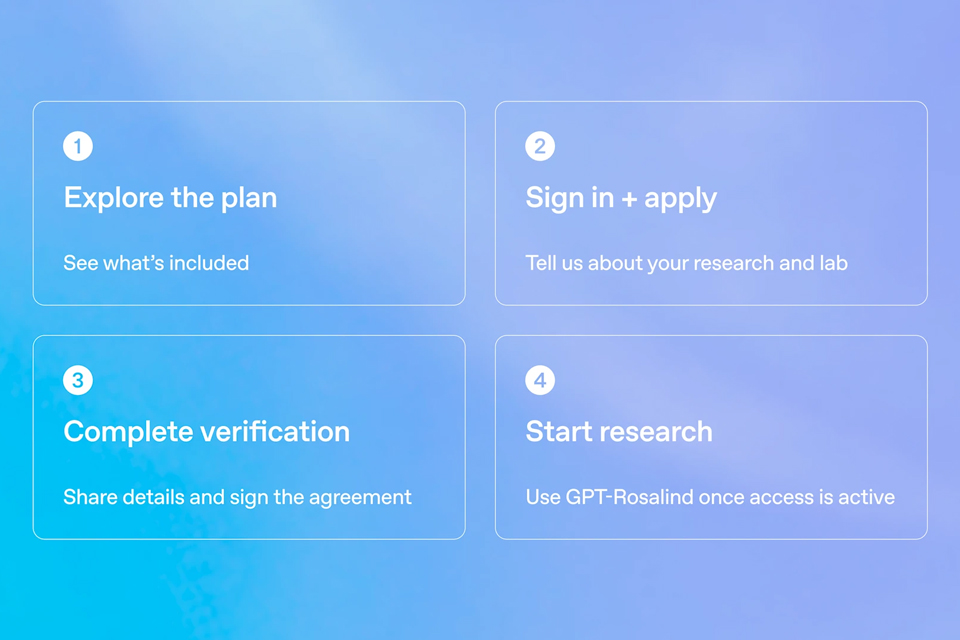
On October 15, OpenAI announced the Rosalind Academic Plan, giving approved US university labs free access to…
A Qiita article compared automated red-teaming methods for LLM apps — GCG, PAIR, and TAP — using mock implemen…

Liquid AI released d1-ultra on October 15, 2026, an upgraded open-weights decision model that averaged 76.7 ac…
Circlia started a proof-of-concept for TASTE SIGNAL: visitors to Holland Village Cafe FUKUOKA taste cookies an…

TOPPAN Holdings and Keio University ran a quantum-computer and generative-AI proof-of-concept from February 1…