What happened
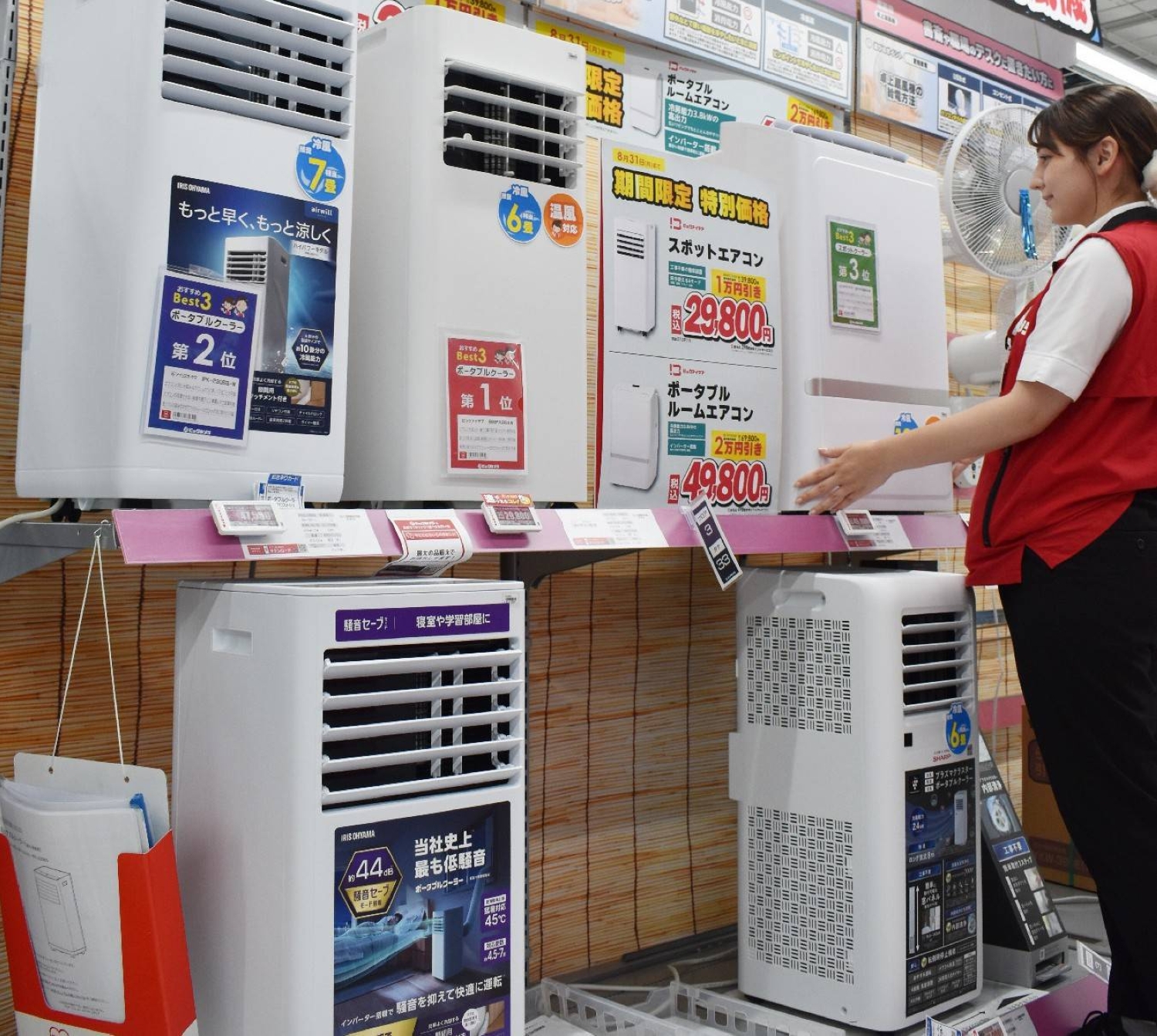
Japanese electronics makers and retailers are experiencing strong demand for portable air conditioners, driven by recent temperatures of 40 degrees Celsius or higher in some areas. Bic Camera's Tokyo outlet is selling portable models priced between ¥30,000 ($183) and ¥50,000 well, while new entrants like Bic Camera's private-brand line, Nitori Holdings, and Sharp's high-performance model (around ¥90,000) are expanding the market.
Why it matters
Portable units appeal to consumers because they have relatively low prices, require no installation work, and can serve as second or third air conditioners for homes. Installation delays for conventional air conditioners—now running about a month due to demand surge ahead of stricter 2027 energy-efficiency standards—make portable models attractive for immediate cooling needs, including in kitchens and washrooms where traditional air conditioners are absent.
What to watch
A Don Quijote official said price competition is likely to intensify and product differentiation will become necessary. Portable models may sell out sooner than expected, though they are less energy-efficient than conventional air conditioners. Sales are particularly robust in Hokkaido, where air conditioners are not widely used.
Summaries like this, in your inbox every morning.
The surge in portable air conditioner sales reflects a convergence of immediate climate pressure and structural market timing. Recent temperatures of 40 degrees Celsius or higher have created urgent demand for cooling, while conventional air conditioner installation faces a month-long backlog. This delay is partly driven by consumers rushing ahead of stricter energy-efficiency standards scheduled for 2027, which industry sources indicate could push up prices. Portable units capitalize on this window by offering immediate deployment without installation work—a significant advantage when cooling is needed now.
The market's expansion is being driven not only by consumer urgency but also by retailers and manufacturers recognizing an opportunity. Bic Camera, Nitori Holdings, and Sharp have all entered or expanded their portable lineups, signaling that the category has moved from niche to mainstream. Geographic variation is also notable: sales are particularly robust in Hokkaido, where air conditioners are not widely used, suggesting that portable models are opening demand in regions that historically had less air conditioning penetration. However, retail officials acknowledge that as competition heats up, price pressure will mount and differentiation through features—such as Sharp's air-purifying function—will become essential.
For example, today's edition would include:
AI-summarized, only the topics you pick — one digest a day via Email, Slack, or Discord.
Free · 30 seconds with Google · unsubscribe anytimeWhat is AIToday? →
Ask AI anything about this article. Q&As are published on this page for other readers too.

