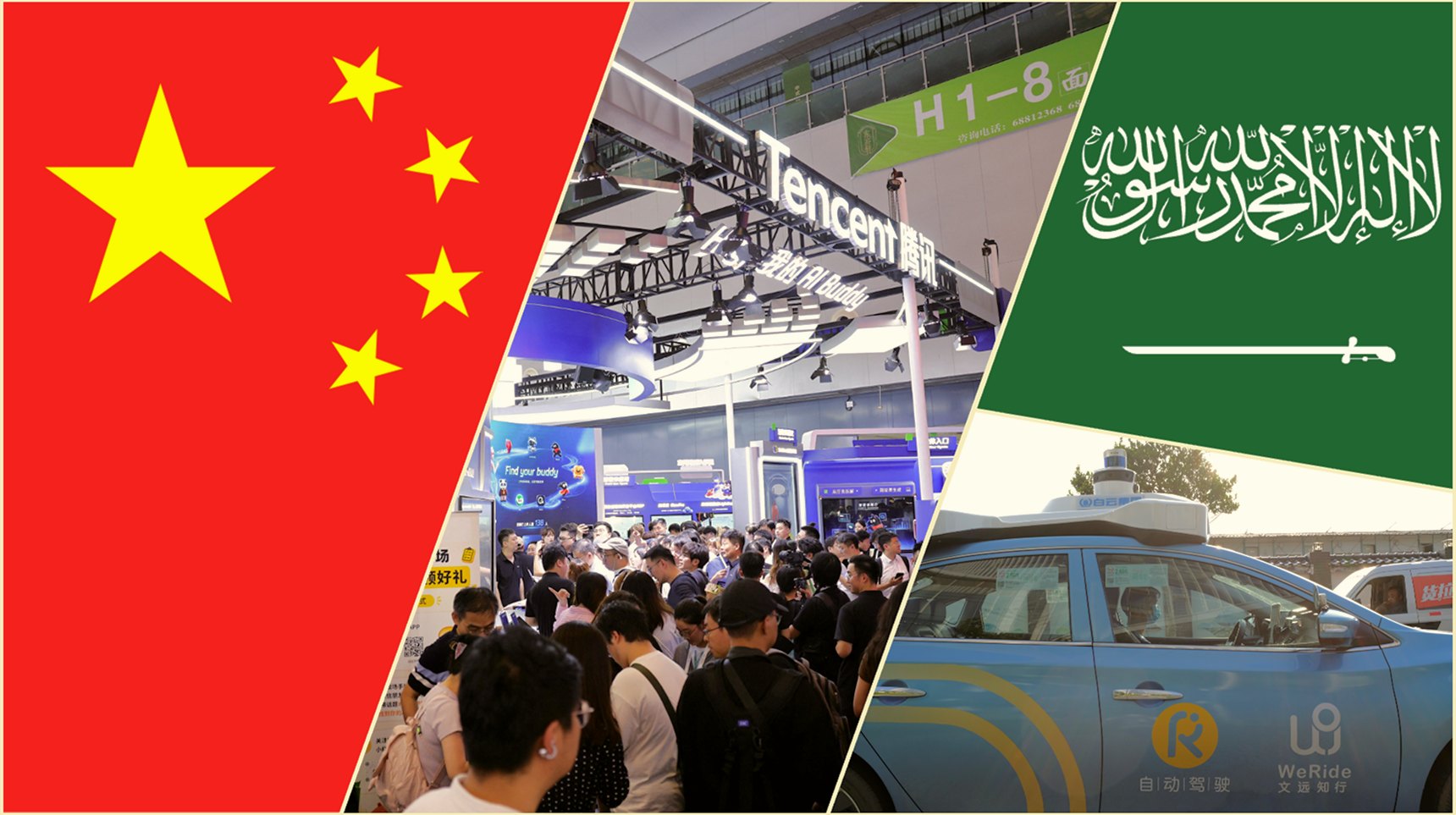
Chinese tech firms are entering Saudi Arabia through LEAP deals. Saudi Arabia is a crucial showcase for China's tech.
The kingdom is investing billions under Vision 2030 to build a tech ecosystem.
Competition with US tech is intensifying in the Gulf.
What happened
Chinese companies announced deals at Riyadh's LEAP tech event to bring robotaxis, laptops, AI models, and data centers to Saudi Arabia. The kingdom's senior official pledged to deepen ties with China, touting a 'great wave' of scientific innovation from China.
Why it matters
Saudi Arabia, once only a capital source, now entices tech firms to operate locally under Vision 2030, with Crown Prince Mohammed bin Salman investing billions. Gulf ties are a 'vital importance' for China's tech outreach, showcasing that its tech can out-compete US tech globally.
What to watch
The competition between China and the US for tech dominance in the Gulf may intensify, as Chinese companies use the region as a node to prove their tech's global competitiveness. Saudi's mega-projects are delayed, yet tech ecosystem development continues.
Ask the AI about this article →
The LEAP event in Riyadh has become a stage for Chinese technology companies to secure deals in Saudi Arabia, marking a shift from the kingdom's past role as merely a source of capital. With Crown Prince Mohammed bin Salman pouring billions into a domestic tech ecosystem under Vision 2030, Saudi Arabia is now actively courting foreign tech firms to operate locally, despite some mega-projects being delayed. The kingdom's young, gaming- and smartphone-obsessed population creates a strong demand for apps and computing power, making it a lucrative market.
This wave of deals carries strategic significance beyond commerce. According to James Kynge of Chatham House, the Gulf is a crucial focal point for China to demonstrate to the world that its technology can out-compete American tech. By landing robotaxis, AI models, and data centers in Saudi Arabia, Chinese firms are not just expanding their reach—they are testing and showcasing their ability to operate globally. The presence of Chinese state media at the event, where a Saudi official praised Chinese scientific innovation, underscores the political dimension of these business ties.
For US tech companies, this development highlights the intensifying rivalry in a region that is pivotal for global influence. The deals announced this week could serve as a benchmark, indicating which country's tech approaches gain favor in the Gulf and beyond. However, the long-term impact depends on the execution of these projects and Saudi Arabia's ability to sustain its investment pace, especially with some mega-projects facing delays. As the competition between China and the US for tech dominance plays out, the Gulf represents a visible arena where choices have global implications.
For example, today's edition would include:
AI-summarized, only the topics you pick — one digest a day via Email, Slack, or Discord.
Free · takes 30 seconds · unsubscribe anytimeWhat is AIToday? →
Ask AI anything about this article. Q&As are published on this page for other readers too.
Infosys, a founding partner of CrowdStrike's Project QuiltWorks, is bringing enterprise context to CrowdStrike…
Cisco has announced a target to have zero engineers writing code by the end of October
Opti9 Technologies has acquired Hut 8's Canadian managed cloud business

Cecilia Ziniti, former general counsel at Replit, left the company in November 2023 and founded GC AI, an AI s…

John Ternus replaced Tim Cook as Apple's CEO after Cook's 15-year tenure
Nvidia announced Thursday it has agreed to acquire Hugging Face, a major platform for open-source AI models, d…