AIToday

Robotics makers shift to commercializing dexterous hands for factories and homes

DIGITIMES Asia12h agoSend on LINE
Robotics makers shift to commercializing dexterous hands for factories and homes

Key takeaway

The robotics industry is moving beyond experimental AI demonstrations to deploy robots in real commercial environments like factories, logistics, and food service. The key focus is on building dexterous robotic hands as repeatable products customers will buy, rather than impressive prototypes that simply perform walking, environment recognition, or command-following tasks.

Summaries like this, in your inbox every morning.

Sign up free →

3 Key Points

  • What happened

    The robotics industry is shifting from AI demonstrations to commercial deployments across factories, logistics, retail, food service, and homes, with vendors focusing on dexterous robotic hands as the key product.

  • Why it matters

    The fundamental challenge is whether robots can be built as repeatable products that customers will actually buy, rather than as impressive but non-commercial machines that simply walk, recognize environments, or follow commands. This shift determines whether Physical AI becomes a viable business.

  • What to watch

    The success of this transition will depend on whether vendors can deliver hands and robots that solve real, repeatable customer problems in these specific verticals—moving from one-off demonstrations to scalable, purchasable products.

In Depth

The robotics industry is undergoing a decisive shift in strategy and focus. For years, the sector has concentrated on demonstrating impressive AI capabilities—robots that could navigate environments, recognize objects with growing accuracy, and follow complex commands. While these breakthroughs proved that the technology was advancing rapidly, they did not translate into commercial viability. The industry faced a fundamental question: was robotics primarily a research endeavor, or could it become a business built on repeatable, purchasable products?

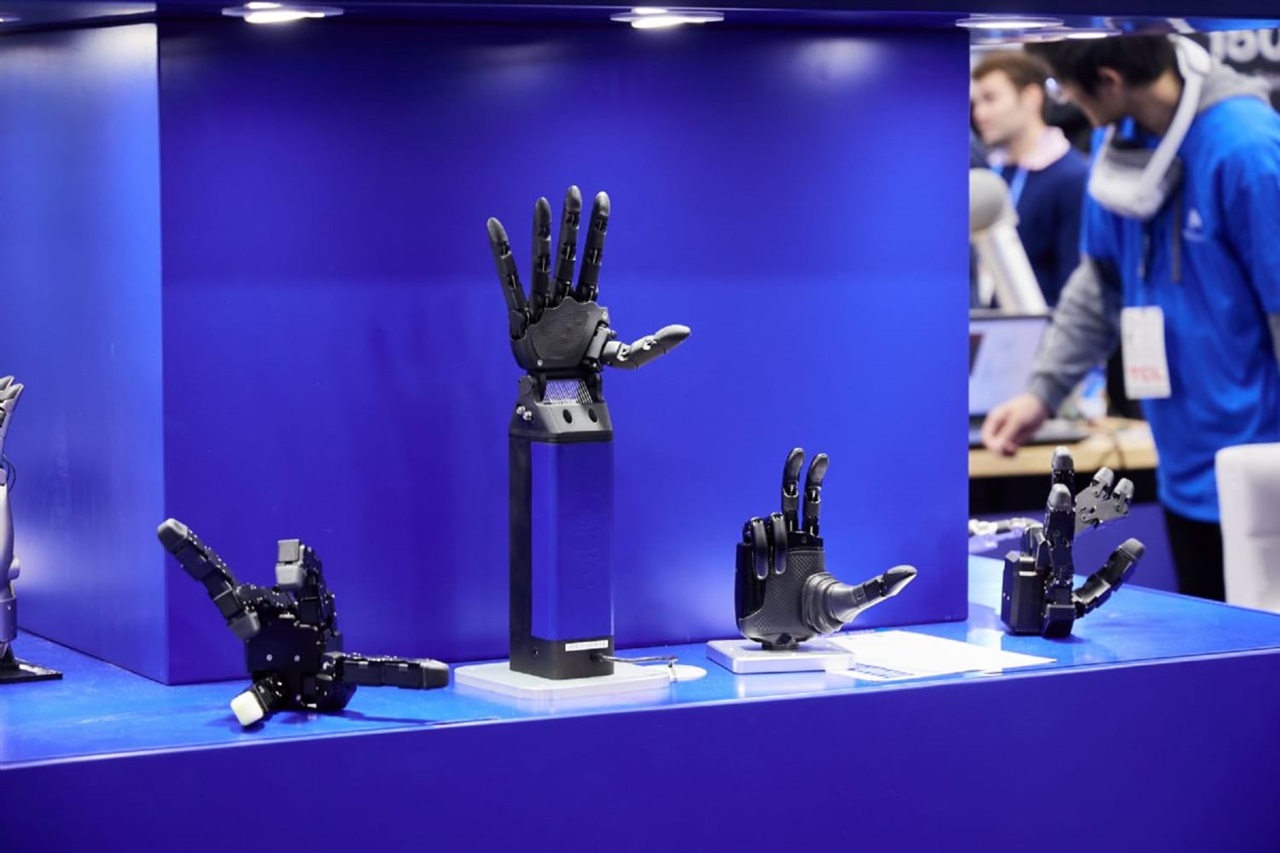
Vendors are now answering this question by moving from demonstrations to commercial deployments. The focus is spreading across multiple verticals: factories seeking to automate assembly and material handling; logistics companies looking to improve warehouse and delivery operations; retail environments needing shelf-stocking and inventory management; food service businesses seeking to automate preparation and service; and homes where robots could assist with routine tasks. Within this diversification, dexterous hands have emerged as the central focus. Rather than building robots that simply walk or recognize their surroundings, vendors are investing in hands—the critical interface between intelligent systems and the physical work that needs to be done.

The strategic shift reflects a hard-won realization: impressive AI demonstrations do not equal market adoption. Customers do not buy robots for their ability to recognize environments or follow voice commands in a lab. They buy them to solve specific, recurring problems—and they buy them repeatedly, in volume. This is the true test of Physical AI: can robots be engineered as products rather than prototypes, products reliable and flexible enough that a customer can purchase one, deploy it in their operation, and see it pay for itself? The industry's movement toward dexterous hands and commercial deployment across specific verticals is a bet that the answer is yes—and that the companies that can deliver repeatable, affordable products will define the next decade of robotics.

Context & Analysis

The robotics industry has long struggled with the gap between impressive demonstrations and viable commercial products. For years, vendors showcased robots performing isolated tasks in controlled environments—walking smoothly, recognizing objects, responding to voice commands—but these remained proof-of-concept machines rather than products customers could deploy at scale. The shift toward Physical AI and dexterous hands marks a transition from pure capability demonstration to business viability. By targeting specific, high-value use cases across factories, logistics, retail, food service, and homes, vendors are implicitly betting that robotic hands—the interface between intelligent systems and physical work—are the missing link. The question now is not whether robots are smart, but whether they can be manufactured as reliable, repeatable products that solve genuine customer problems. This move from labs to commercial deployments will separate vendors that can build viable products from those that produce only impressive prototypes.

FAQ

What is the robotics industry focusing on now?
Vendors are focusing on dexterous robotic hands and deploying robots in commercial settings such as factories, logistics, retail, food service, and homes.
What is the main challenge robotics makers face?
The central challenge is whether robots can be built as repeatable products that customers will purchase, rather than as machines that only demonstrate isolated capabilities like walking, environment recognition, or command execution.

Get the latest Robotics news every morning

AI-summarized, only the topics you pick — one digest a day via Email, Slack, or Discord.

Free · takes 30 seconds · unsubscribe anytime

Discussion

No comments yet. Be the first to share your thoughts!

Log in to join the discussion

Related Articles

Stay ahead with AI news

Get curated AI news from 200+ sources delivered daily to your inbox. Free to use.

Get Started Free

Free · takes 30 seconds · unsubscribe anytime