What happened
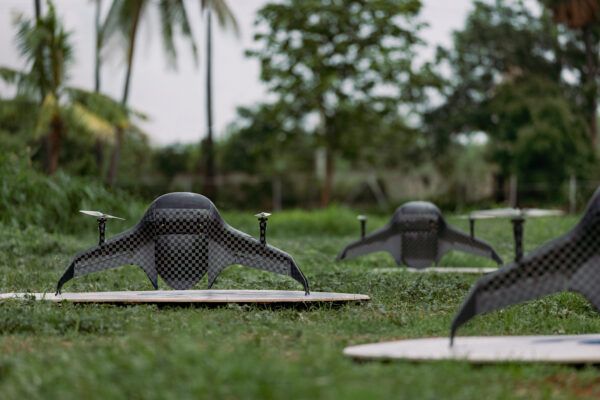
Bengaluru-based Airbound closed a $37 million Series A round on August 25, 2026, led by Greenoaks with participation from DoorDash, Lachy Groom, Lightspeed and Humba Ventures. The company also signed a commercial drone delivery agreement with the Indian state of Andhra Pradesh.
Why it matters
Airbound's aircraft has a payload-to-aircraft ratio three times better than the industry norm of 4:1, and it has flown more than 13,000 autonomous missions with zero failures. The Andhra Pradesh agreement calls for an aerial network across three districts that scales to 10,000 flights per day, serving retail, e-commerce and healthcare deliveries.
What to watch
Airbound has scaled production from two aircraft per month to two per day in under a year, and targets 20 per day. The network will serve retail, e-commerce and healthcare deliveries across three districts in Andhra Pradesh.
Summaries like this, in your inbox every morning.
Airbound's funding and expansion come as it has already demonstrated its technology in commercial operations. The company has flown more than 13,000 autonomous missions with zero failures, supporting Narayana Health, India's fourth largest hospital network, on a corridor in Bengaluru that has operated since January 2026. This track record likely built confidence among investors like Greenoaks and DoorDash, who participated in the round.
The Andhra Pradesh agreement represents a significant scale-up from current operations, moving from a single 4-kilometer corridor to a network across three districts with 10,000 daily flights. Airbound has already shown it can ramp production, scaling from two aircraft per month to two per day in under a year. The company targets 20 per day, which would support the ambitious flight volume.
The company's technology approach—a blended-wing-body tailsitter that takes off vertically and cruises on fixed wings—aims to break the trade-off between speed and cost in goods delivery. As founder and CEO Naman Pushp notes, the Indian market sets a high bar of 10-minute delivery at extremely low cost, and if the system works there, it tends to work anywhere.
Pick your industry and the AI tools you use, and get news related to your work every day.
Free · 30 seconds with Google · unsubscribe anytimeWhat is AIToday? →
Ask AI anything about this article. The AI reads this article, earlier AIToday articles, and Wikipedia, and cites its sources. Q&As are published on this page for other readers too.
Supermicro Computer appointed Mark Long as chief financial officer, bringing an experienced technology finance…
Holtek Semiconductor unveiled its 2026 product roadmap on October 15, focusing on four core areas: smart prote…

TSMC reported about NT$763.1b in Q3 net profit and confirmed that demand for advanced processors is running ah…
Nvidia-backed CoreWeave steadied Thursday after a sharp slump, as investors worried about the debt financing b…
TOPPAN Holdings and Keio University ran a quantum-computer and generative-AI proof-of-concept from February 1…
Weathernews said on October 15 it implemented its own AI weather-forecasting model, AI-Nowcast, in its Weather…