
What happened
World Labs, the AI startup co-founded by Fei-Fei Li, released Atlas, a multimodal world model that creates detailed 3D simulated environments from a single 2D image. It generates up to a minute of 1440p video with precise camera control and can output 3D assets like point clouds and Gaussian splats.
Why it matters
Atlas aims to bridge simulated environments and physical reasoning, fulfilling Li's theory of spatial intelligence—AI must reason about 3D objects, people, and interactions to understand the physical world. The startup has raised $1.2 billion from backers including Nvidia, AMD, and Autodesk, and sees robotics training as its real target.
What to watch
In blind tests, Atlas was overwhelmingly preferred over competitors like Gemini Omni Flash and FLUX for camera-path adherence. It is available in early access now for select enterprises, but no general release date has been announced.
Summaries like this, in your inbox every morning.
World Labs' debut of Atlas marks a concrete step toward Fei-Fei Li's vision of spatial intelligence. Li, who led Stanford's AI Lab and co-founded the Stanford Institute for Human-Centered AI, launched World Labs in February 2024, arguing that AGI is impossible without understanding the physical world. Atlas, built on a multimodal autoregressive diffusion transformer architecture, goes beyond early video generators by treating camera trajectories and geometry as native inputs, not afterthoughts.
The startup's $1.2 billion in funding from Nvidia, AMD, and Autodesk shows strong investor confidence in this approach. However, Atlas faces a crowded field, with competitors like Odyssey, AMI Labs (founded by Yann LeCun), and Niantic Spatial each focusing on different aspects of world modeling. Atlas's bet is that a single base model can unify simulation, reconstruction, and camera control, offering a more integrated solution.
The real proof will come when wider availability lets users test whether early impressive results hold up in complex, real-world scenarios. Until then, the initial benchmark wins—especially the overwhelming preference over Gemini Omni Flash and FLUX for camera-path adherence—offer promising signs, but the market remains highly competitive.
Pick your industry and the AI tools you use, and get news related to your work every day.
Free · 30 seconds with Google · unsubscribe anytimeWhat is AIToday? →
Ask AI anything about this article. The AI reads this article, earlier AIToday articles, and Wikipedia, and cites its sources. Q&As are published on this page for other readers too.
Tesla revealed its next-generation Roadster at SpaceX's McGregor, Texas test site on October 15, presented as…

Cisco Systems heads a sample of three AI networking and server hardware stocks, with its Computer Networks seg…

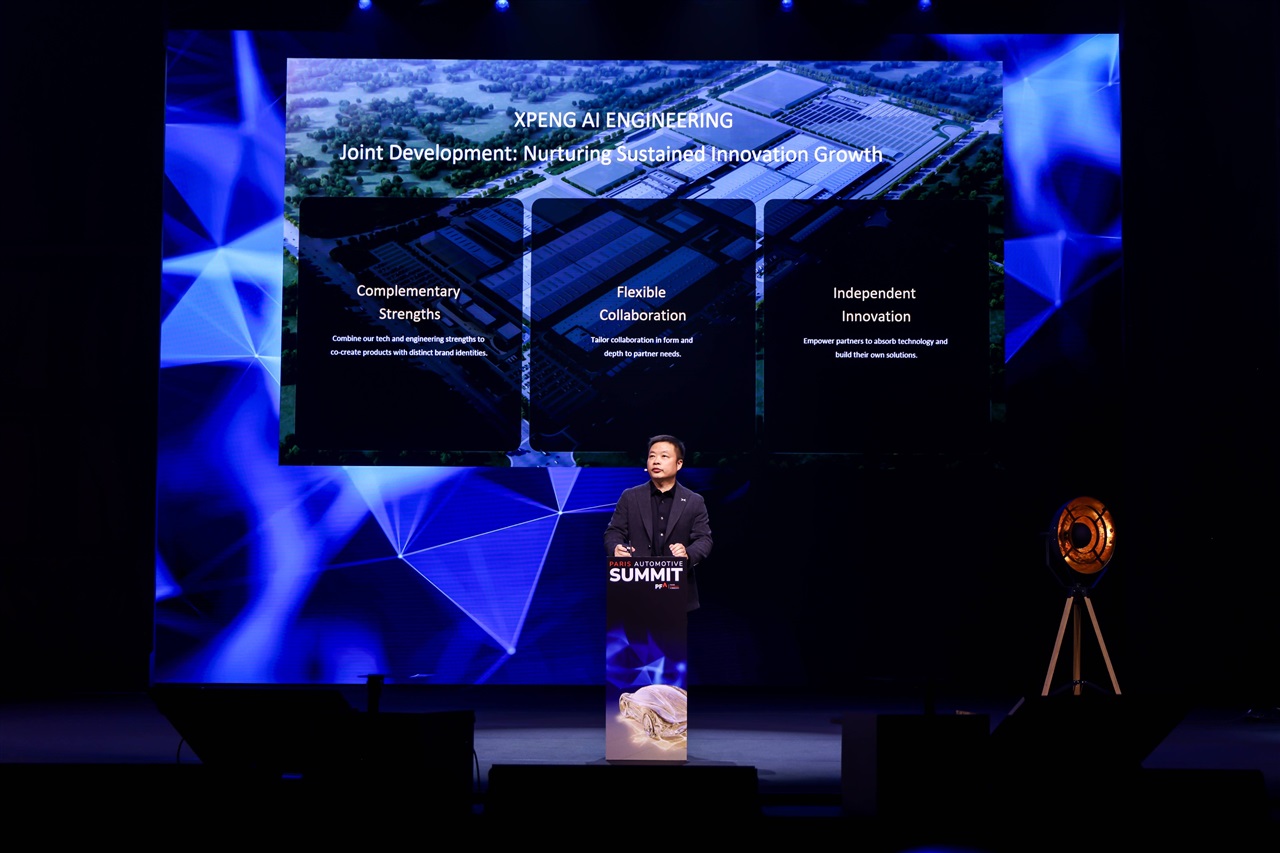
XPeng appeared at the Paris Automotive Summit, presenting not only automotive expertise but a broader technolo…
kaazu published vrm-charsheet, an MIT-licensed browser tool that drags in a VRM file and exports six preset co…

Itaú's ia.i, a text- and voice-activated assistant spanning accounts, credit, cards and insurance, reached abo…
Forbes reports that Coca-Cola is using AI to reinvent its marketing, and presents the company's approach as a…