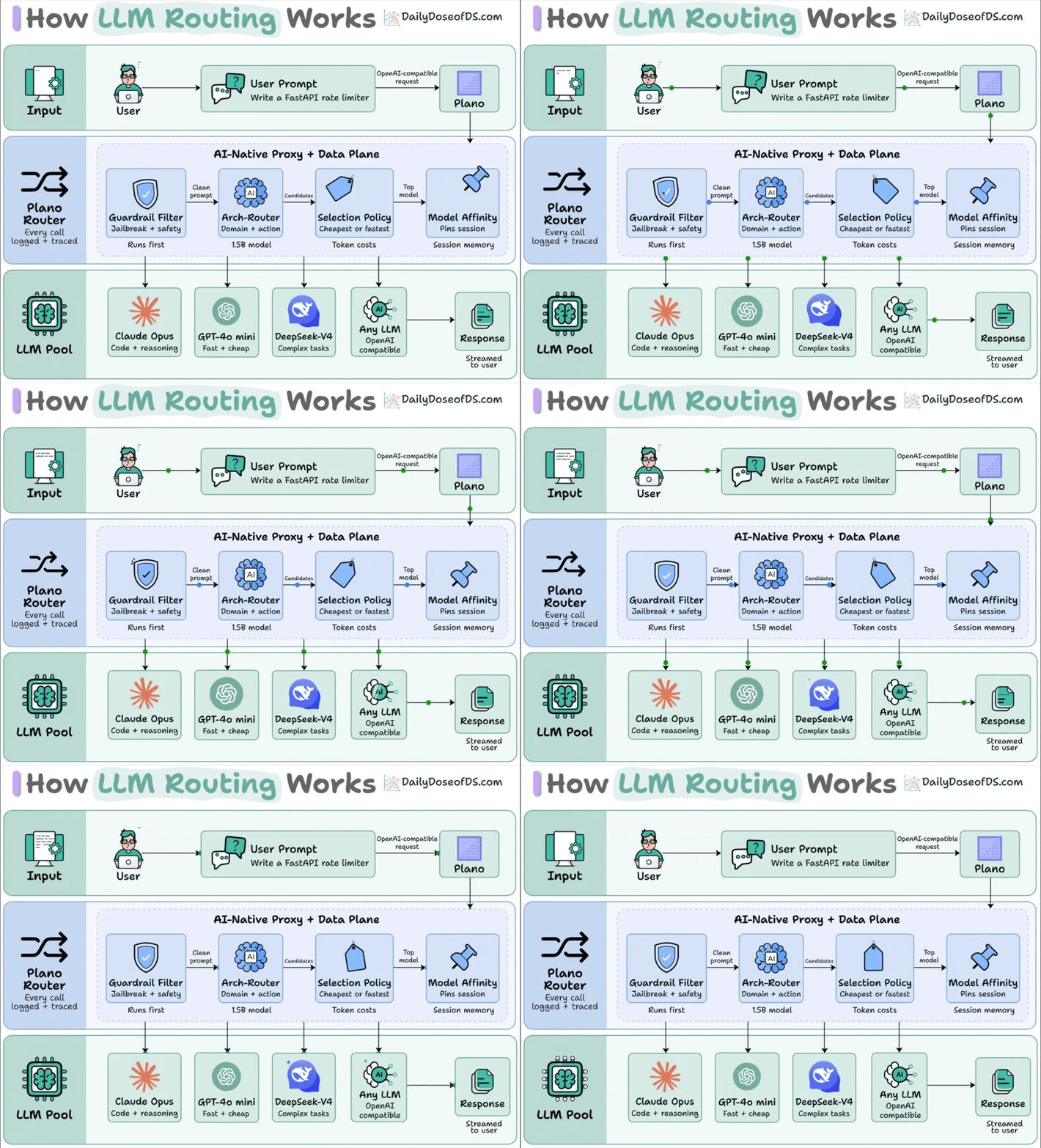
What happened
DigitalOcean launched the Inference Router, which uses a small AI model to classify each request and send it to a cheaper or faster model. The router includes session pinning, which keeps an agent on the same model throughout a session to preserve cache savings.
Why it matters
Naive routing can increase costs in agent loops because of extra inference calls, model-switching cache loss, and imperfect classification. In a test, the routed response was 94% cheaper and 77% faster to first byte than sending a difficult request directly to a top model.
What to watch
The router's value hinges on its ability to match requests to the right model pool without losing cache benefits. If it misroutes or switches models too often, costs could rise instead of fall.
Ask the AI about this article →
Summaries like this, in your inbox every morning.
The article addresses a real problem in AI development: sending all requests to the most powerful model is wasteful. Routing is an obvious solution but naive implementations can fail in complex agent sessions. The issue is that routing logic, when built in-house, requires maintaining a classifier, decision rules, and cache behavior, which many teams abandon.
DigitalOcean's approach moves routing into the infrastructure layer. By using a small, specialized model for intent classification and a ranking engine that pulls live cost and latency data, it attempts to make routing practical without a large engineering effort. The key innovation is session pinning, which acknowledges that dynamic routing can break the cache benefits that make multi-turn conversations affordable.
Whether this succeeds depends on whether the router can generalize across a wide range of requests and adapt as models and prices change. The article cites a 94% cost reduction in a test, but the long-term value will hinge on how well the router performs with real-world, diverse traffic patterns and whether teams find the preset tasks and custom configurations sufficient for their needs.
For example, today's edition would include:
AI-summarized, only the topics you pick — one digest a day via Email, Slack, or Discord.
Free · 30 seconds with Google · unsubscribe anytimeWhat is AIToday? →
Ask AI anything about this article. Q&As are published on this page for other readers too.
Visa has introduced new AI fraud tools and a cybersecurity push, signaling a shift in its investment narrative

GE Vernova unveiled a new medium-voltage uninterruptible power supply on August 24, 2026, in Paris, designed t…
Intel is pushing on-premises AI, a move that could quietly change how investors view its core AI investment na…

Optiwise.ai, an AI-powered marketplace optimization platform, announced The Digital Pen Race 2026, a 90-day di…

John Ternus, Apple's next leader, faces a key question: whether the organizational model that made Apple succe…

Morgan Stanley is watching several House and Senate races in the November midterms, saying outcomes could impa…