What happened
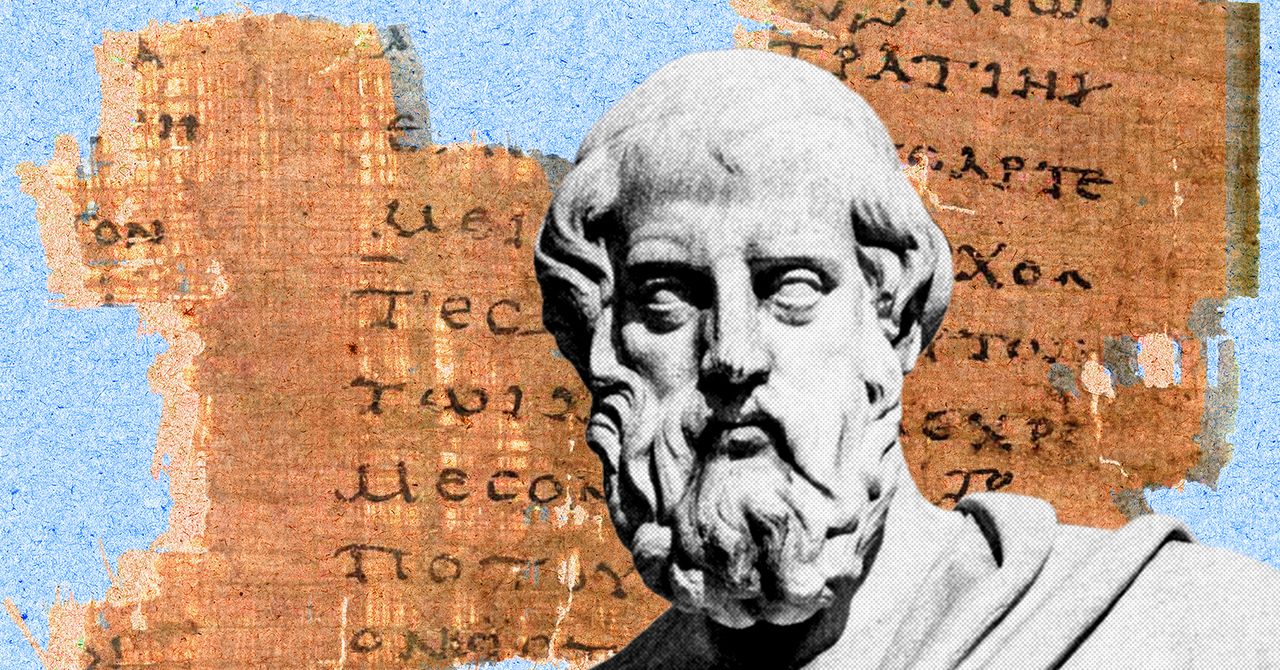
The Austrian Academy of Science will release Apollo on Wednesday, built with Mistral and Sail Reply, trained on roughly 600 million historical Greek words and free to academics via a chatbot.
Why it matters
Apollo is built to suggest the most statistically likely missing words in tattered papyri, work that once required rare specialists and now could speed up how scholars read damaged documents.
What to watch
The test is whether scholars trust the suggestions, since Apollo offers a set of word options rather than one answer, leaving the final choice to a human reader.
WHO IT HITSClassics scholars, papyrologists, and historians working with damaged Greek manuscripts stand to gain faster draft readings, letting them focus on interpreting documents rather than decoding them, though the body notes human competence is meant to remain central.
Summaries like this, in your inbox every morning.
Academic libraries hold hundreds of thousands of Ancient Greek papyrus fragments, many damaged enough that their meaning is probably lost. Restoring a single tattered piece has meant identifying word divisions in a script with no gaps, dating the document, weighing its socio-political context, and consulting references to choose replacement words. Few people in the world are skilled enough at Greek history to do this, as University College London's Stephen Colvin puts it. Apollo is meant to bake that specialized knowledge into a model: Anna Dolganov of the Austrian Academy of Science says that when it sees Homer it supplements Homeric Greek, and when it sees a Doric inscription it uses Doric dialect.
The article places this within a wider run of AI results in research, citing OpenAI's claim that its models solved a 200-year-old math problem and Google DeepMind's dataset mapping how genetic mutations affect molecular biology. Vlitas of Sail Reply says unlocking knowledge this way was unthinkable a year ago, and that the technique could be extended to Latin or Egyptian, or any discipline that benefits from indexing a large body of material. Oxford's Armand D'Angour, whose university holds the world's largest ancient papyrus collection, says a machine offering three possible words for a gap would speed up matters considerably.
The stakes seem to hinge on how the tool is used rather than what it can output. Because a language model deals in probabilities, there is a concern that machine-filled gaps could pollute the historical record; Apollo is built to propose a selection of word options for a scholar to choose between, and Dolganov argues human competence needs to remain, warning that total reliance on AI transcriptions and interpretations is where problems start. Gains are likely to be incremental — small details about life in antiquity and support for existing scholarly assumptions — rather than headline discoveries, but for the small group of specialists able to read these fragments, the bottleneck Apollo targets is a real one.
For example, today's edition would include:
AI-summarized, only the topics you pick — one digest a day via Email, LINE, or Slack.
Free · 30 seconds with Google · unsubscribe anytimeWhat is AIToday? →
Ask AI anything about this article. Q&As are published on this page for other readers too.
Meta surged 11 percent, Bloomberg reported, after its free AI agent Muse topped download charts following its…
At its Apsara conference in Hangzhou, Alibaba Group said it is developing an AI model up to four times larger…
Anthropic is building a biology lab in the San Francisco area, where Claude will guide robots through experime…
Moxie Marlinspike, who created Signal, launched Confer, an AI chatbot using Nvidia-based trusted execution env…

Xiaomi released and open-sourced its MiMo-V2.6 series on September 22, after livestreaming the reinforcement l…

At the 2026 Apsara Conference opening Sept