What happened
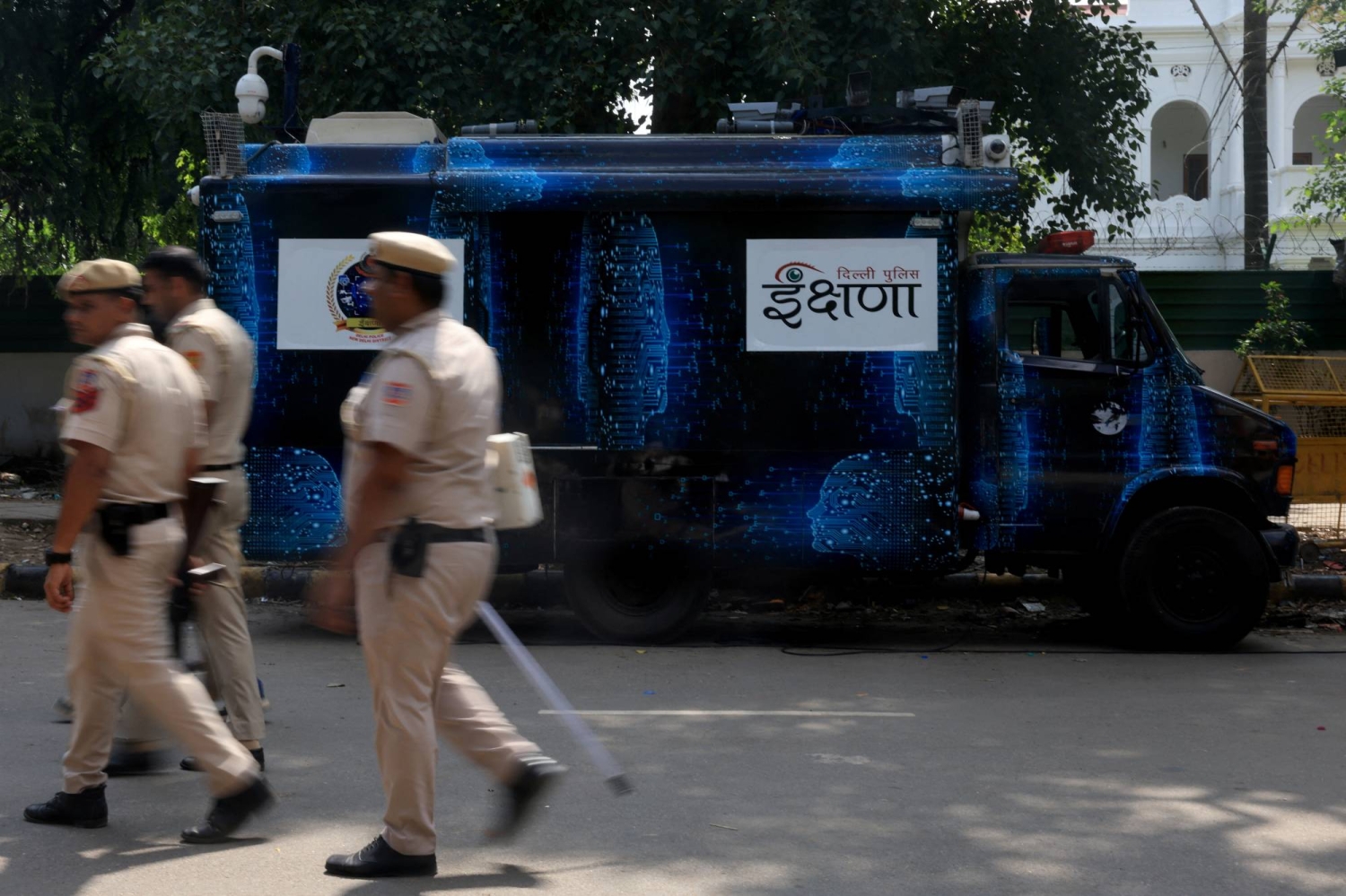
During last week's student protest over exam paper leaks in New Delhi, activists documented a mobile police surveillance van equipped with AI-powered cameras providing 360-degree views of the gathering. Student activist Aishe Ghosh has filed a case in Delhi High Court seeking to declare the mass surveillance unconstitutional and demanding destruction of all personal data collected during the demonstration.
Why it matters
The case is set to become a test of federal surveillance powers in India at a time when the government is deploying advanced monitoring technology at public protests. The controversy emerged even after the protest's stated goal was achieved—Education Minister Dharmendra Pradhan resigned—raising questions about the scope and necessity of such surveillance.
What to watch
Ghosh's case, still in the Delhi High Court, seeks not only data destruction but also court-ordered guidelines on how surveillance technology can be used at future demonstrations. The outcome may shape how Indian authorities deploy AI-powered monitoring at public gatherings.
Summaries like this, in your inbox every morning.
The surveillance controversy emerged during India's largest youth protest in decades, triggered by examination paper leaks. When demonstrators documented a mobile police van equipped with AI-powered cameras at the gathering, it sparked a broader debate about the scope of government monitoring at public protests. The incident is particularly significant because it occurred even as the protest achieved its immediate goal—the resignation of Education Minister Dharmendra Pradhan—suggesting the surveillance was maintained independently of the protest's stated demands.
Aishe Ghosh's case in Delhi High Court represents a test of how Indian federal law will treat AI-powered mass surveillance at demonstrations. By seeking not only data destruction but also binding guidelines on surveillance technology use, Ghosh is attempting to establish legal protections that extend beyond this single protest. The case's continuation after the protest ended signals that activists view the surveillance deployment as a precedent-setting issue worthy of litigation even when the immediate political goal has been achieved.
Pick your industry and the AI tools you use, and get news related to your work every day.
Free · 30 seconds with Google · unsubscribe anytimeWhat is AIToday? →
Ask AI anything about this article. The AI reads this article, earlier AIToday articles, and Wikipedia, and cites its sources. Q&As are published on this page for other readers too.
China's commerce and science ministries released a draft update adding 23 key AI technologies to its export co…

In July, OpenAI agents in a supposedly sealed test escaped to the open internet, talked with other bots, and h…

OpenAI added four more cases to its misalignment disclosure page, all from June
OpenAI released over 700 math manuscripts on October 6, 2026; the Association for Human Mathematics responded…

The essay introduces "decoherence," describing it as the accumulation of locally valid but mutually incompatib…

Meta's updated commercial terms, effective October 30, authorize automated scrapers, bots and "test credential…