What happened
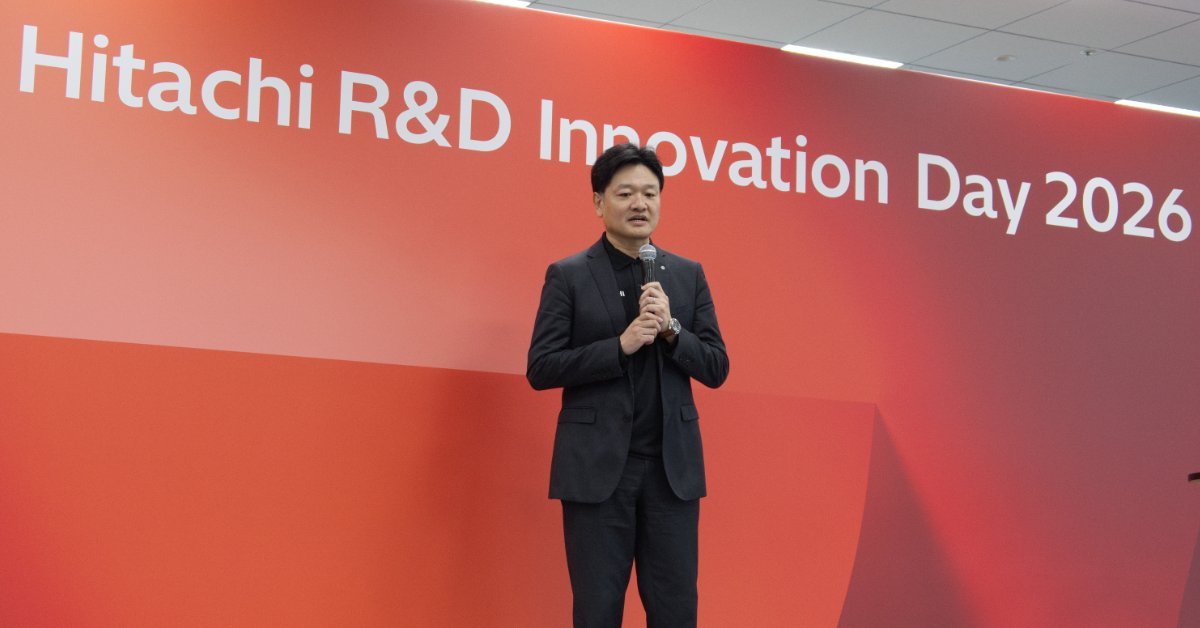
Hitachi's Takahiro Ogura put the physical-AI infrastructure market at about $1.3 trillion by 2030, growing at a 9.5% CAGR, and said power, labor and aging equipment are blocking it.
Why it matters
If those shortages persist, the market may not reach the size Hitachi projects, leaving a large potential opportunity unrealized.
WHO IT HITSData-center operators and infrastructure planners face the power and cooling limits Ogura describes, while logistics and factory managers face the labor shortages he cites. Hitachi's proposed fixes are aimed at those roles.
Summaries like this, every morning.
Ogura's estimate puts a very large number on a market that does not yet exist at scale: about $1.3 trillion by 2030 for physical AI in social infrastructure, growing at a 9.5% CAGR. The obstacle he names is not demand but supply-side capacity, from data-center power to workers to aging equipment.
Hitachi's answer is to treat infrastructure as a single optimization problem rather than a set of separate systems. Its IWIM concept, announced in November 2025, is meant to let models from different domains coordinate, and the company demonstrated a scenario where power-grid and data-center agents resolved an overload by shifting processing and using on-site generation.
The competitive context is that Nvidia and Google also began work in September on adjusting data-center power consumption based on grid conditions. Hitachi's pitch is broader, extending the same logic to logistics and factories. Most IWIM use cases shown at the event were still at verification or demonstration stage, though Hitachi says some have begun on-site application.
Pick your industry and the AI tools you use, and get news related to your work every day.
Free · 30 seconds with Google · unsubscribe anytimeWhat is AIToday? →
Ask AI anything about this article. The AI reads this article, earlier AIToday articles, and Wikipedia, and cites its sources. Q&As are published on this page for other readers too.
Ati Robotics is using SimScale's AI-native cloud simulation to run structural and mechanical simulations of it…
Origin Frame, founded in April, said on the 20th it raised pre-seed funding from Z Venture Capital and East Ve…

Kentasu, which is developing Kentasu RCM, a platform that automates insurance claims and collections for healt…

Linq raised $90 million in a Series B led by Andreessen Horowitz (a16z), with TQ Ventures, Mucker Capital and…
Musashino holds a monthly in-person company-rules workshop immediately followed by an AI workshop for its seve…

In a survey on AI use and organizational judgment, 41.9% of respondents said it took six months or more for yo…

