What happened
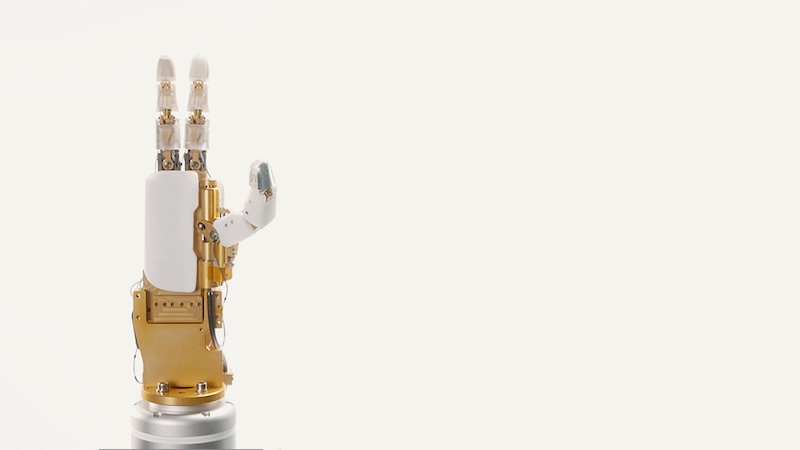
Tacta Systems launched TactaBot, a robotics platform combining a 15-joint robotic hand, a wearable skill-capture glove, and an AI engine designed to perform complex manufacturing tasks. The company plans to begin deploying the technology with manufacturing customers in early 2027.
Why it matters
The system addresses three longstanding obstacles in industrial robotics—building a hand capable of industrial-scale performance, giving robots tactile feedback, and collecting human manipulation data to train AI. This may open automation to precision electronics assembly, connector insertion, and wire harness assembly, tasks that have remained difficult for robots to perform reliably.
What to watch
Tacta has raised $75 million from investors including SoftBank, Matter Venture Partners, and Woven Capital. The company plans to launch first with electronics, AI infrastructure, and automotive manufacturing, then expand into medical devices, aerospace, and defence.
Summaries like this, in your inbox every morning.
Tacta Systems is tackling a fundamental barrier to industrial robotics: the inability of machines to perform tasks that require both precision and tactile feedback. The company has built what it calls an integrated stack—the Tacta Hand with proprietary Fluidic Tendon actuation technology, tactile sensing, and the Dexterous Intelligence AI model. The hand itself features 15 independently actuated joints and is human-sized, designed to deliver the precision, strength and durability needed for millions of manufacturing cycles. The approach to training differs from purely synthetic methods: Tacta developed the Tacta Glove, a wearable device that records force, motion, temperature and video as workers perform real manufacturing tasks, feeding that human manipulation data directly into the AI models so robots can learn new skills more quickly and adapt to changing production requirements.
Co-founder and CEO Vikram Pavate frames the challenge clearly: "The hand is the hardest problem in robotics, and it can't be solved without touch." While the broader robotics industry discusses a trillion-dollar market opportunity, Tacta's argument is that existing robots lack the dexterity and sensing to unlock that potential. The initial target applications—precision electronics assembly, inserting connector cables, assembling wire harnesses—are traditionally difficult for robots because they demand both fine control and sensitivity to forces and temperatures. The planned timeline (early 2027 deployments) and the investor backing (SoftBank, Woven Capital, and others) reflect confidence that this technical approach may be viable at manufacturing scale.
Pick your industry and the AI tools you use, and get news related to your work every day.
Free · 30 seconds with Google · unsubscribe anytimeWhat is AIToday? →
Ask AI anything about this article. The AI reads this article, earlier AIToday articles, and Wikipedia, and cites its sources. Q&As are published on this page for other readers too.
The Motley Fool argues Amazon is the AI company of the two, since AWS was just 21% of first-half 2026 revenue…

Hewlett Packard Enterprise stock is down 5% at $55.87

Vercel data published Thursday shows TypeSafe AI's Jev, a lightweight decision model for choosing among predet…

Chunghwa Telecom president Rong-shy Lin said the shift from conversational AI to autonomous AI agents is resha…
CoreWeave fell 5% in premarket trading Friday and was on track to finish the week down 15%, after rebounding f…
Apple and Meta said they would jointly release a new open-weight AI model designed to run on high-end Macs, ai…