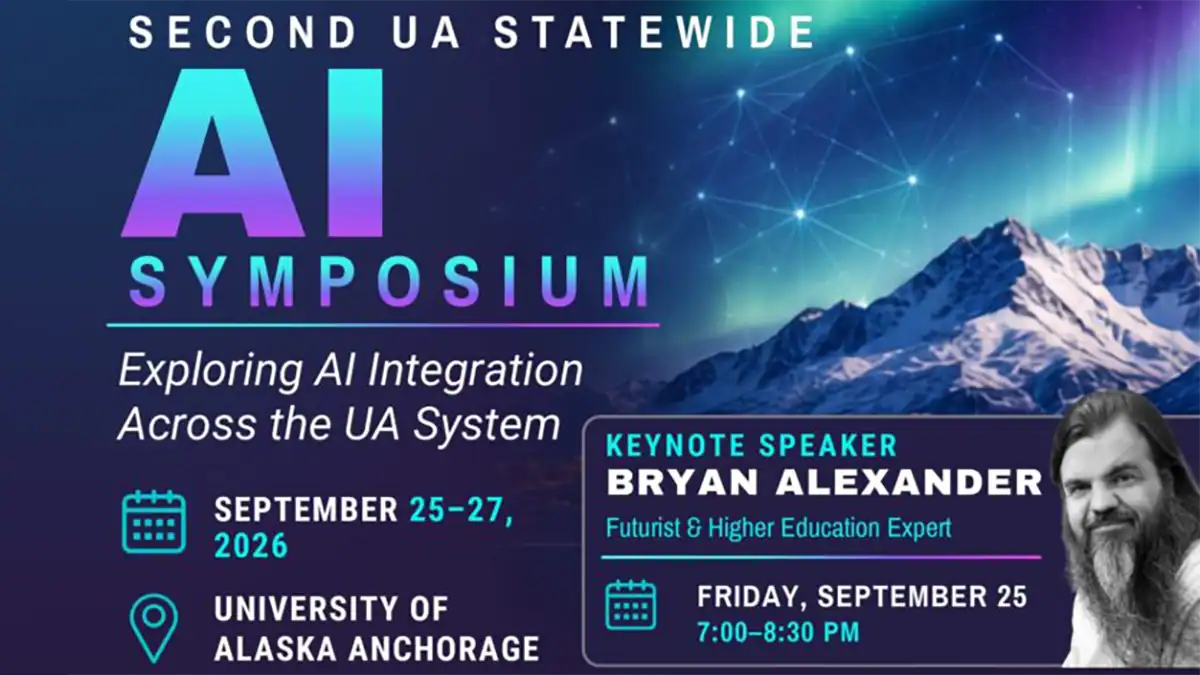
The University of Alaska will host a free, three-day AI symposium from September 25–27 in Anchorage, bringing together university professors, civic leaders, teachers, and business representatives to discuss how AI is reshaping Alaska's sectors.
The event features a keynote by futurist Bryan Alexander, a student and faculty innovation showcase, and panels on community engagement and workforce development, with separate programming tailored to university-specific questions around teaching, research, and security.
What happened
The University of Alaska will hold a statewide AI symposium from September 25–27 at the ConocoPhillips Integrated Science Building in Anchorage, bringing together civic leaders, teachers, nonprofit and business representatives, and university faculty and students to discuss AI's impact across sectors.
Why it matters
The symposium addresses how AI is reshaping Alaska's key sectors—government, education, and business—by creating a forum for civic and community voices alongside university expertise, with particular attention to workforce development and the implications for higher education institutions.
What to watch
The keynote on Friday will be delivered by Bryan Alexander, a national futurist and higher education writer, and the event is free to attend; Saturday's sessions focus on university-specific challenges (teaching, research funding, information security), and Sunday concludes with a strategy session for the UA statewide AI advisory council.
Ask the AI about this article →
The University of Alaska's statewide symposium reflects a growing institutional effort to ground AI discourse in local and regional contexts rather than treating it as a purely technical or abstract challenge. By convening civic leaders from the Municipality of Anchorage, the Anchorage School District, and nonprofit and business sectors alongside university faculty, the symposium positions the university as a neutral platform for dialogue about AI's real-world implications across Alaska's economy and society. The three-day structure acknowledges distinct constituencies: the first two days invite broad community participation, while Saturday's internal sessions and Sunday's advisory council meeting indicate that the university is also using the symposium to grapple with institutional questions—how to teach in an AI-transformed landscape, how to secure funding for research, and how to protect sensitive information—that will shape university operations regardless of broader adoption trends.
For example, today's edition would include:
AI-summarized, only the topics you pick — one digest a day via Email, Slack, or Discord.
Free · takes 30 seconds · unsubscribe anytimeWhat is AIToday? →
Ask AI anything about this article. Q&As are published on this page for other readers too.
BHP, the world's largest mining company by market capitalization, has deployed AI across its operations
Team Liquid announced a new five-year extension of its long-running collaboration with Dell Technologies' Alie…

A University of Mississippi study published in Journal of Interactive Advertising found that AI ads succeed wh…

Goldman Sachs Research says AI supply and demand won't balance until the first half of 2028
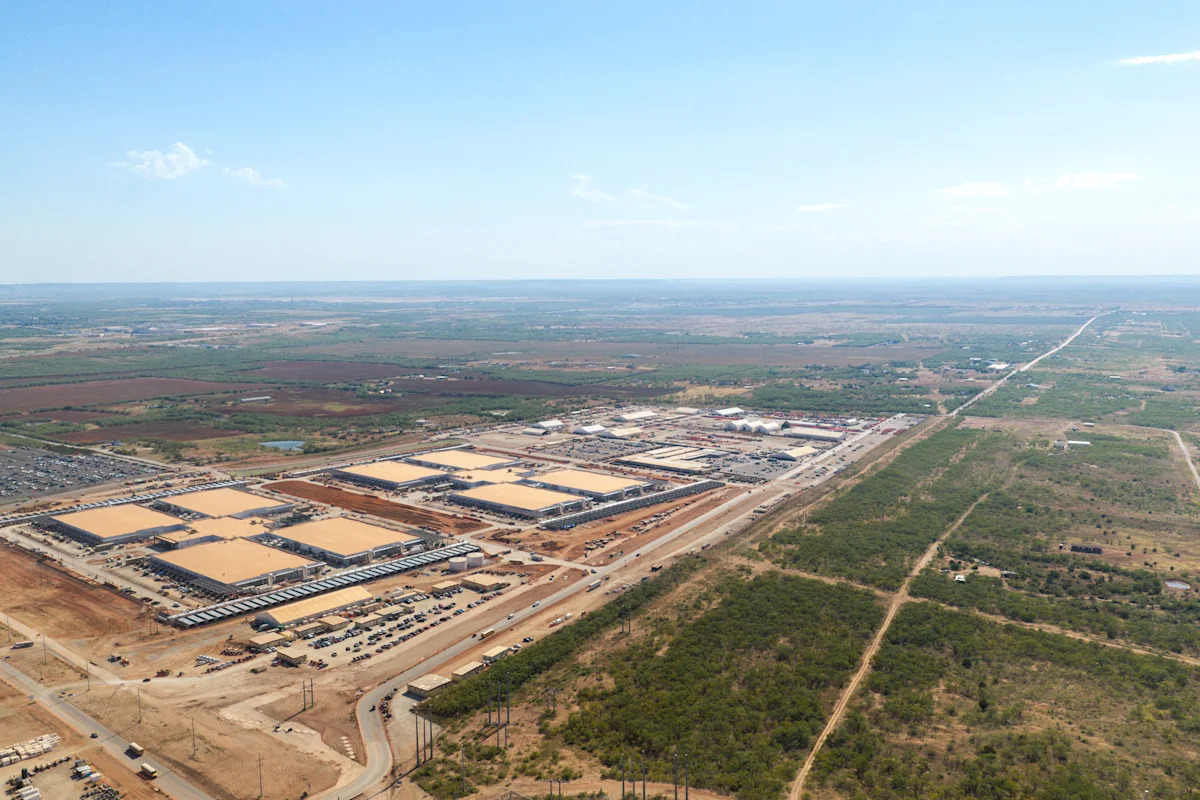
Lam Research broke ground yesterday on a new lab in Tualatin, Oregon

Visa, Mastercard, and Fiserv joined the Agentic Payments Alliance (APA), a 26-company coalition led by stablec…