Apple has opened pre-orders for new Mac mini and Mac Studio models.
They ship on September 22 with prices starting at US$899.
These devices aim to bring AI compute out of data centers.
What happened
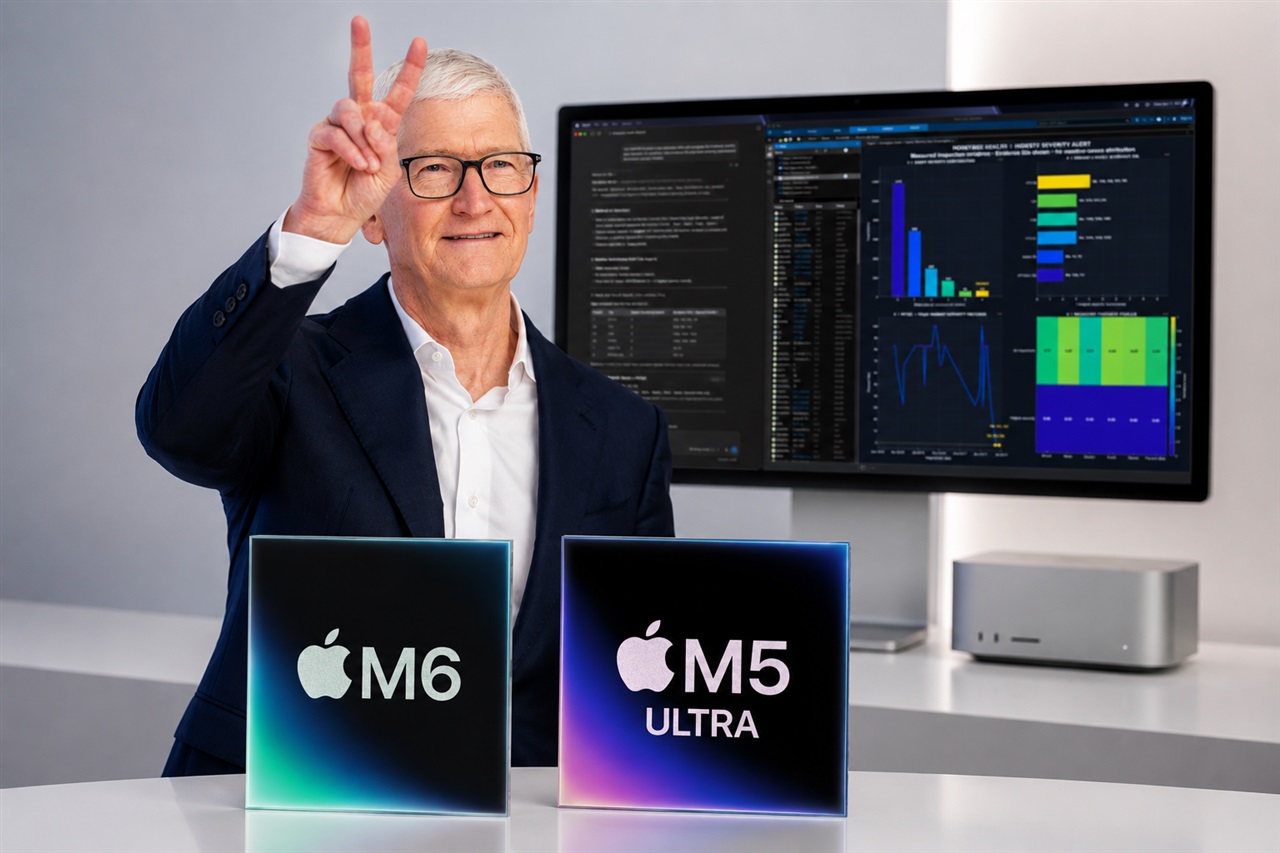
Apple took pre-orders on August 25 for a new Mac mini and Mac Studio, with shipments starting September 22. The Mac mini starts at US$899 with the M6 chip, or $1,699 with the M5 Pro; Mac Studio starts at $2,499 with M5 Max and $5,499 with M5 Ultra.
Why it matters
This move signals Apple's push to handle AI compute on-device, reducing reliance on data centers. For business readers, it highlights a shift toward local processing for AI tasks, potentially lowering cloud costs and improving privacy.
What to watch
With these new models, watch for how Apple positions on-device AI performance against cloud-based rivals. The pricing tiers suggest a premium for higher performance, which may influence enterprise adoption decisions.
Ask the AI about this article →
Apple's introduction of the M6 and M5 Pro/Max chips in the new Mac mini and Mac Studio represents a strategic step toward more powerful on-device computing. By offering AI compute capabilities directly in consumer hardware, Apple reduces the need for cloud-based AI processing, which can lower latency and enhance data privacy. The pricing structure—from $899 to $5,499—targets a range of users, from prosumers to professionals, suggesting Apple aims to cover various performance needs. The September 22 ship date indicates a quick turnaround from pre-order, reflecting Apple's supply chain readiness. For businesses, this could mean more efficient AI workloads without heavy cloud dependency, though the higher-end models come at a premium. As Apple continues to emphasize on-device AI, it may challenge the dominance of cloud-centric AI providers, offering an alternative that prioritizes local processing and security.
AI-summarized, only the topics you pick — one digest a day via Email, Slack, or Discord.
Free · takes 30 seconds · unsubscribe anytime
Ask AI anything about this article. Q&As are published on this page for other readers too.
The Linux Foundation announced the contribution of TRACE (Trust, Runtime Attestation and Compliance Evidence)…

On August 25, 2026, OpenAI unveiled Jalapeño, its first custom inference chip, claiming 1.5–1.9x more AI work…

A new Stanford research paper warns that AI chatbots and agents may let advertising dollars influence what the…

The Wall Street Journal published an op-ed by billionaire investor Stanley Druckenmiller that was written with…

OpenAI unveiled benchmarks for its Jalapeño inference chip on Tuesday, showing it competes with Nvidia’s best…

Researchers from Bytedance Seed developed EdgeBench, a benchmark measuring how AIs improve on tasks over multi…