
What happened
Sparxity, formerly SpiNNcloud, closed a Series A led by ICM HPQC Fund, with Lockheed Martin Ventures, GlobalFoundries, GS Futures and others participating, lifting total funding to $90 million.
Why it matters
The backing gives a sparse-computing chipmaker strategic investors, and the company targets up to 44x faster inference on ultra-sparse models with a next-gen chip still in development.
WHO IT HITSThe funding affects Sparxity's engineering and hiring plans as it works toward a new chip tapeout and production, and it gives defense and semiconductor investors a stake in sparse-native AI hardware.
Summaries like this, every morning.
Sparxity, which began as SpiNNcloud, a spin-out from Prof Christian Mayr's group at TU Dresden, has mostly relied on public funding until now. A €2.5 million EIC Transition grant in February 2023 and €10 million in combined grant and equity from the EIC Accelerator announced in June 2025 helped build its track record. The company says it has completed 3 chip designs, made over 70k chips, has 12 racks in place and has signed over 30 customers, with revenue increasing 4x from 2024 to 2025. Its named deployments so far are at research centres or universities: Sandia National Labs, Leipzig University, the University of Texas at San Antonio and the Jülich Supercomputing Centre.
The Series A brings in strategic investors from defense and semiconductor manufacturing, Lockheed Martin Ventures and GlobalFoundries, alongside ICM HPQC Fund. Sparxity and Deutsche Telekom have signed a Letter of Intent, with the first deployment due in 2028. The company says its own performance figures include 10x faster sparse solvers, 18x lower energy use for event-based machine learning and 20x shorter runtimes on optimisation problems. The primary aim of the new funding is to get up to 44x faster inference on ultra-sparse models with a next-gen chip still in development.
Even with its grants and the new round, Sparxity's total is still less than what some inference-chip startups have raised in a single round, such as Axelera AI's over $250 million in February or Fractile's $220 million Series B in May. Gonzalez frames the competition as Moffett AI, a Shenzhen company he calls the first mover in sparse computing processors. Sparxity's success appears to depend on model builders adopting sparsity faster than GPU makers can adapt, and on developing the new chip still in progress.
Pick your industry and the AI tools you use, and get news related to your work every day.
Free · 30 seconds with Google · unsubscribe anytimeWhat is AIToday? →
Ask AI anything about this article. The AI reads this article, earlier AIToday articles, and Wikipedia, and cites its sources. Q&As are published on this page for other readers too.
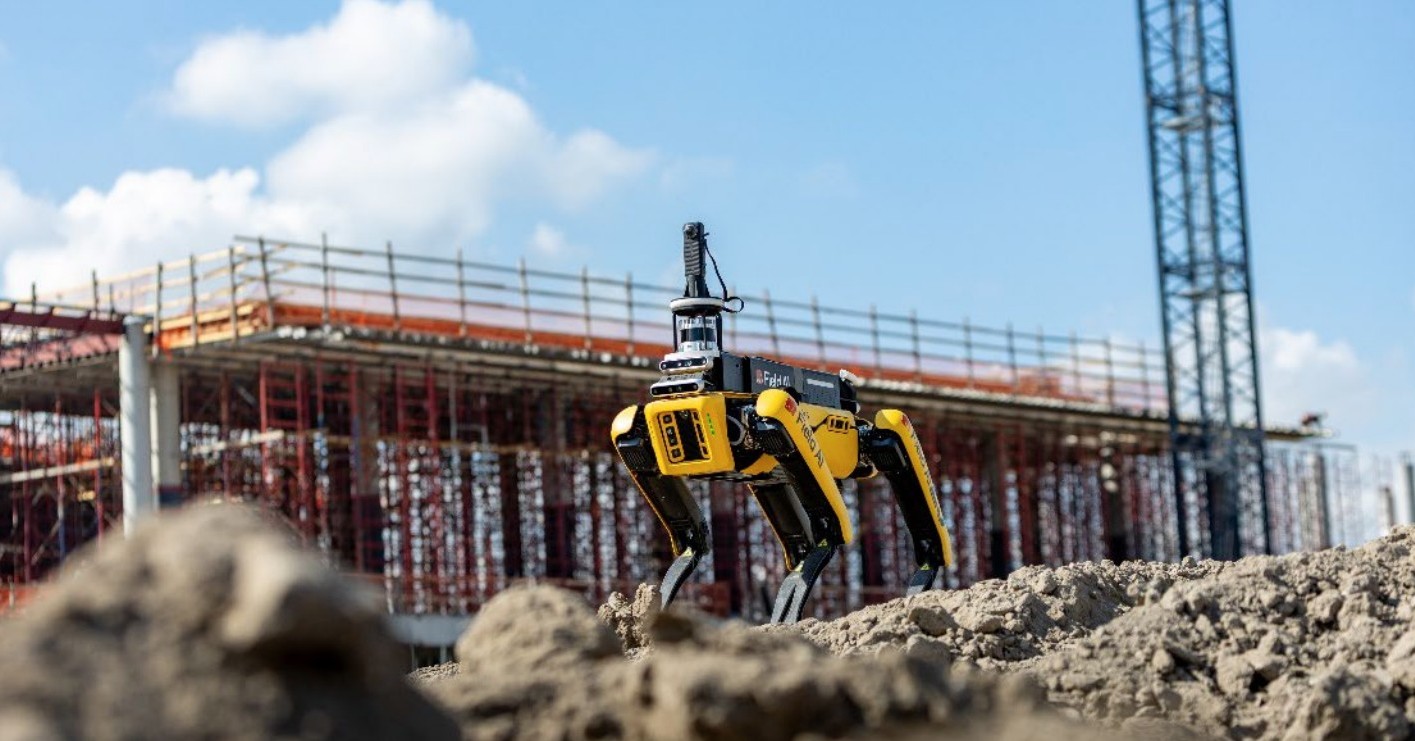
Kajima announced on November 5, 2026 that it has fully introduced fully autonomous mobile robots equipped with…
Honeywell Technologies rolled out EBI One, an AI command-and-control platform built on its EBI experience acro…

At a Nov. 5 Dallas Fed event, AT&T CFO Pascal Desroches called the idea that AI is a job killer the biggest mi…
Andre Mansour, head of AI for Wells Fargo's wealth and investment management arm, said AI Teammate launched la…

Politico reports Democrats see a winning 2028 message in voters' tech unease; progressives want a pause on adv…

GE Vernova, Vertiv and Bloom Energy have lost between 10% and 24% over the past week