AIToday
Yahoo Finance AIPublished: Aug 2, 2026, 19:00 JST4 min read

Rocket Lab wins $266M Space Force contract for hypersonic missile tests

Rocket Lab wins $266M Space Force contract for hypersonic missile tests

Key takeaway

  • The U.S. Space Force has awarded Rocket Lab $266 million to conduct at least 12 suborbital rocket launches as part of its effort to develop hypersonic missile defense capabilities.

  • Combined with earlier contracts—including a $190 million deal signed in March for 20 HASTE test flights with defense partner Kratos Defense—the company is pivoting from a pure space launcher toward defense contracting, potentially addressing Russian and Chinese hypersonic threats.

3 Key Points

  1. What happened

    The U.S. Space Force awarded Rocket Lab $266 million to conduct at least 12 suborbital rocket launches under its Rocket Systems Launch Program (RSLP) from a new launch base in Kodiak, Alaska. The contract may expand to as many as 18 launches.

  2. Why it matters

    Rocket Lab is shifting from a pure space company toward defense contracting. The company has already won $190 million from the Department of Defense in March for 20 HASTE test flights with Kratos Defense over four years, and prior contracts worth $816 million and $515 million for missile warning satellites. The new RSLP launches suggest the Space Force may be tasking Rocket Lab to develop hypersonic missiles for defense against Russian and Chinese hypersonic weapons in development.

  3. What to watch

    Rocket Lab CEO Peter Beck indicated the launches are tied to "maturing America's missile defense capabilities," suggesting future military orders could nearly double the company's current business. The first launches are scheduled from the Pacific Spaceport Complex–Alaska facility in Kodiak.

In Depth

Read the full story

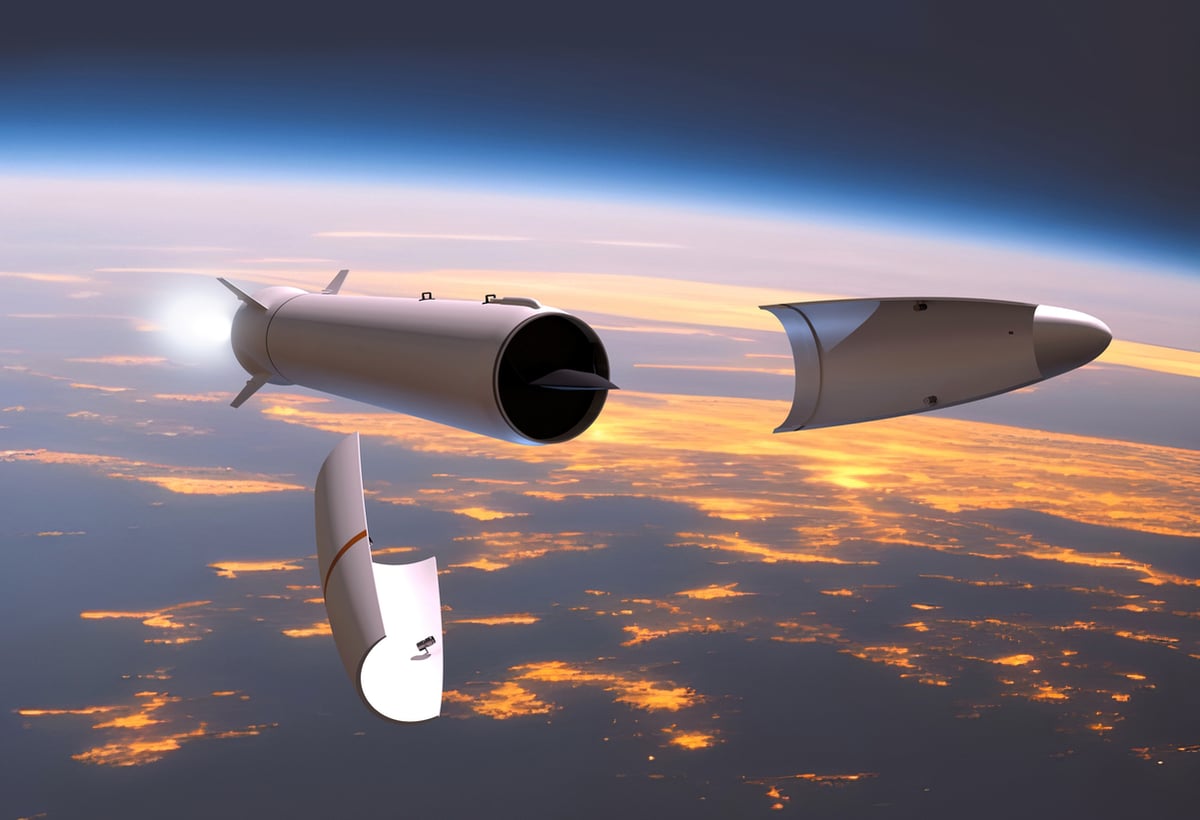
Rocket Lab, which began its existence as a commercial space company conducting its first satellite launch a little over eight years ago, has been steadily increasing launches of its small Electron rockets for both commercial and government customers. In 2025 alone, the company set a company record with 21 launches, three of which were HASTE (Hypersonic Accelerator Suborbital Test Electron) test flights for the U.S. military.

The company's military business accelerated in March when Rocket Lab signed what was then its largest contract ever: a $190 million agreement with the Department of Defense (in cooperation with defense company Kratos Defense & Security Solutions) to conduct 20 HASTE launches over the next four years. That contract valued each launch at $9.5 million—roughly a 13% premium to the company's standard Electron launch cost. The suborbital nature of these HASTE tests suggested Rocket Lab was demonstrating its ability to use the Electron rocket as a hypersonic weapons platform for military use.

But even before the HASTE contract, Rocket Lab had already secured major missile defense work. The company previously won an $816 million contract to build 18 missile warning satellites for the Space Force, and before that, a $515 million contract for additional missile defense satellites. These earlier wins established Rocket Lab's credibility in defense applications.

Last week, the Space Force announced a new $266 million contract—its largest yet—for Rocket Lab to conduct at least 12, and potentially as many as 18, suborbital rocket launches under the Rocket Systems Launch Program (RSLP). The launches will operate from a new Rocket Lab facility at the Pacific Spaceport Complex–Alaska (PSCA) in Kodiak, Alaska. While the Space Force has not explicitly detailed the program's objectives, CEO Sir Peter Beck provided a significant clue, stating that "cadence, iteration, and relentless execution are essential to maturing America's missile defense capabilities." This language suggests the Space Force is asking Rocket Lab not just to test launch capabilities, but to develop an operational family of hypersonic missiles for defense—likely against Russian and Chinese hypersonic weapons systems currently in development. If accurate, this contract signals Rocket Lab's full transformation from a space company into a defense contractor, with future military revenue potentially nearly doubling the company's business.

Context & Analysis

Rocket Lab's trajectory over the past year reveals a dramatic pivot in its business identity. Founded as a small-satellite launch company that conducted its first commercial launch over eight years ago, the company has steadily built credibility with the U.S. military through successive contracts focused on missile detection and space-based defense. The $816 million and $515 million contracts for missile warning satellites established Rocket Lab as a trusted partner for space-based defense infrastructure. The March contract for $190 million to conduct HASTE (Hypersonic Accelerator Suborbital Test Electron) flights—in which Rocket Lab conducted three such test missions in 2025—represented a shift toward active demonstration of military capabilities using its Electron rocket platform.

The latest $266 million RSLP contract appears to mark the next escalation: from building satellites that warn of incoming threats to developing actual hypersonic missile systems for defense. CEO Peter Beck's statement that "cadence, iteration, and relentless execution are essential to maturing America's missile defense capabilities" strongly implies the Space Force intends Rocket Lab to develop a family of hypersonic missiles, likely in response to Russian and Chinese hypersonic weapons development. If this interpretation is correct, the company has shifted from primarily commercial space launch into a dual-use contractor position, with military orders potentially nearly doubling in value.

FAQ

How much is Rocket Lab being paid for these launches?
The Space Force awarded Rocket Lab $266 million to conduct at least 12 suborbital rocket launches under the Rocket Systems Launch Program (RSLP), with the contract potentially expanding to as many as 18 launches.
Where will the launches take place?
The launches will be conducted from a new Rocket Lab launch base at the Pacific Spaceport Complex–Alaska (PSCA) in Kodiak, Alaska.
What other military contracts has Rocket Lab won recently?
In March, Rocket Lab signed a $190 million contract with the Department of Defense (in cooperation with Kratos Defense) to conduct 20 HASTE test launches over four years. Earlier, the company won an $816 million contract to build 18 missile warning satellites for the Space Force and a $515 million contract for additional missile defense satellites.
Yahoo Finance AIRead Original Article

Get AI news like this every morning

AI-summarized, only the topics you pick — one digest a day via Email, Slack, or Discord.

Free · takes 30 seconds · unsubscribe anytime

Ask AI

Ask AI anything about this article. Q&As are published on this page for other readers too.

Next article1 in 4 Japanese believe AI will replace friends, family — Jiji poll

The AI news that matters, in one minute each morning.

Sign up free
