What happened
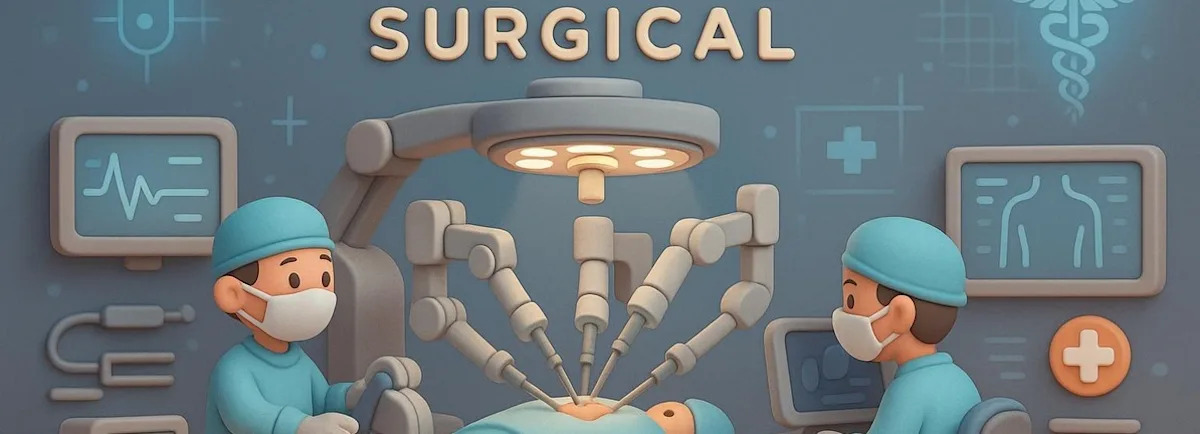
Intuitive Surgical revealed a five-layer AI framework for its surgical platforms and demonstrated a live real-time telesurgical collaboration across distant facilities, showing how it plans to integrate AI into clinical workflows rather than as a standalone feature.
Why it matters
The roadmap may influence how hospitals and surgeons adopt AI in surgery, shape partnerships, and affect investor views of Intuitive Surgical's long-term positioning in computer-assisted surgery—particularly as the stock has fallen 40.9% year to date and faces pressure.
What to watch
Hospital responses in terms of system placements, procedure volumes, and any disclosed AI-related service revenue in coming quarters; execution risks include regulatory comfort, data security, and surgeon adoption for AI-assisted and remote procedures.
Ask the AI about this article →
Summaries like this, in your inbox every morning.
Intuitive Surgical's announcement of a five-layer AI framework and live telesurgical demonstration arrives at a critical moment for the company's stock, which has declined 40.9% year to date and 33.0% over the past year. The timing reflects a deliberate effort to reaffirm the company's leadership in surgical robotics and provide clarity on how AI will shape future products and services. Rather than adding AI as a standalone feature, Intuitive is positioning it as fundamentally embedded in clinical workflows—a distinction that could meaningfully influence how hospitals, surgeons, and investors evaluate the company's differentiation and long-term value.
The framework and telesurgical demo serve multiple audiences. For hospitals and surgeons assessing AI adoption at scale, this roadmap offers a concrete view of capabilities and safety considerations. For investors, it addresses concerns about the company's strategic direction amid broader market headwinds. The body identifies key metrics to monitor—system placements, procedure volumes, and disclosed AI-related service revenue in coming quarters—as indicators of market acceptance. However, the success of this strategy hinges on execution: regulatory approval, data security assurance, and surgeon willingness to adopt AI-assisted and remote procedures remain material risks that could shape the speed and scope of adoption.
For example, today's edition would include:
AI-summarized, only the topics you pick — one digest a day via Email, Slack, or Discord.
Free · 30 seconds with Google · unsubscribe anytimeWhat is AIToday? →
Ask AI anything about this article. Q&As are published on this page for other readers too.
A Yahoo Finance analysis predicts Advanced Micro Devices and ASML Holding will reach $1 trillion market caps b…

Research firm SemiAnalysis, in a September 11, 2026 note, projected NVIDIA could accumulate roughly $1.4 trill…

Skild AI, with NVIDIA and Foxconn, is deploying Skild Brain on dual-arm manipulators for high-precision assemb…
ElevenLabs released Music v2.5 for ElevenMusic, also available via API, with free tier (five lossless download…

Pichai said on the July 22, 2026 earnings call that Q2 Google Cloud revenue rose 82% year over year and its ba…

Black Lake founder Yuxiang Zhou ran an experiment giving salespeople a pin that recorded their conversations…