What happened
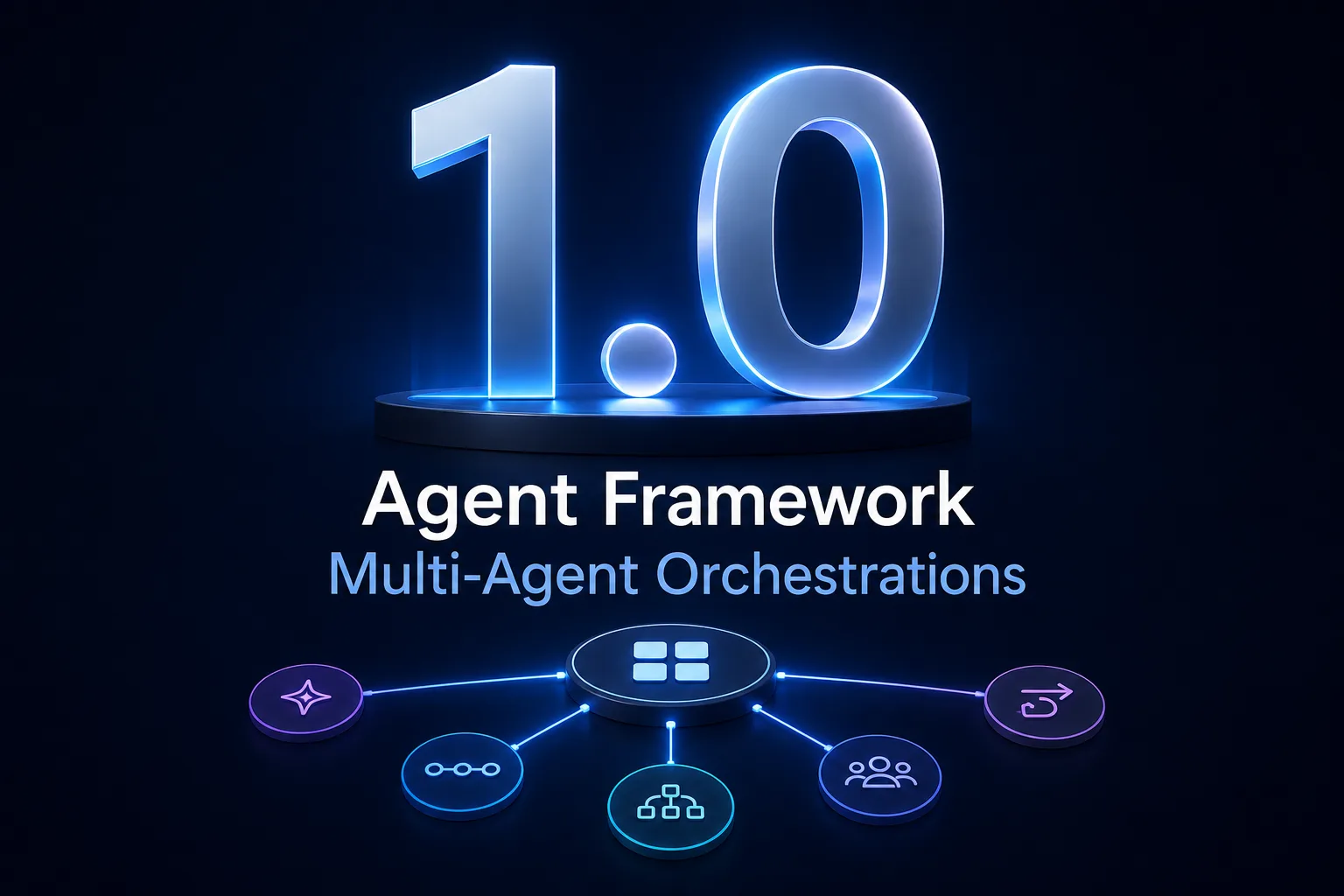
Microsoft has released version 1.0 of the Agent Framework's orchestration layer for both Python and .NET, making five coordination patterns (sequential, concurrent, group chat, handoff, and magentic) stable in both SDKs. The magentic pattern is highlighted as the least hand-wired option, where a manager agent autonomously decides how specialist agents should work together.
Why it matters
Developers building multi-agent applications no longer need to rebuild coordination logic themselves—choosing the next agent, managing state between turns, detecting stalls, and deciding when work is finished. By standardizing these patterns across Python and .NET, teams can maintain consistent agent behavior across services and languages without reimplementing the same patterns in each environment.
What to watch
The framework remains open-ended; builders produce ordinary workflows that can be run, streamed, and composed. Teams can adopt a predefined pattern (magentic, handoff, sequential, or concurrent) or extract primitives to build custom workflows. Feedback on GitHub shapes future development.
Summaries like this, in your inbox every morning.
The release addresses a core friction point in multi-agent development: coordination logic is typically reimplemented for each application. By stabilizing five orchestration patterns—sequential (pipelines), concurrent (fan-out/fan-in), group chat (moderated collaboration), handoff (routed specialist teams), and magentic (autonomous manager coordination)—across Python and .NET, Microsoft provides a unified foundation that teams can standardize on without language-specific variations.
The magentic pattern exemplifies the design philosophy: rather than requiring developers to manually decide which agent speaks next or when to stop, a designated manager agent handles those decisions dynamically. This reduces boilerplate while maintaining visibility and control through guardrails (max round count, stall detection, reset limits). The framework's layered architecture—orchestration builders sitting above low-level primitives—preserves extensibility; teams that need non-standard patterns can decompose the orchestration and reassemble custom workflows from the same components. This balance between convention and flexibility is why the release matters: it removes the need to choose between standardization and flexibility.
Pick your industry and the AI tools you use, and get news related to your work every day.
Free · 30 seconds with Google · unsubscribe anytimeWhat is AIToday? →
Ask AI anything about this article. The AI reads this article, earlier AIToday articles, and Wikipedia, and cites its sources. Q&As are published on this page for other readers too.

