What happened
Meta released Glimmer, an open-weight AI model anyone can download and run on their own hardware, this week. The release coincided with a 6,500-word letter from Mark Zuckerberg arguing AI should be 'for everyone' rather than controlled by a handful of labs, in contrast to Meta's more powerful model Muse Spark, which is locked behind Meta's own APIs.
Why it matters
The move mirrors an industry-wide push to democratize AI access, but the juxtaposition between Glimmer's open availability and Muse Spark's API lock highlights tensions in Meta's stated vision. For businesses and developers, the contrast between open-weight and proprietary models shapes where they can affordably deploy AI—Glimmer enables local control, while Muse Spark requires ongoing API access.
What to watch
TechCrunch's Equity podcast examined whether Zuckerberg's "for everyone" rhetoric fully aligns with Meta's product strategy, signaling this is an emerging tension point in how the industry defines and practices AI democratization.
Summaries like this, in your inbox every morning.
Meta's release of Glimmer represents a direct play in the open-source AI movement, which has gained momentum as a counter-narrative to the proprietary AI models developed by well-capitalized labs. By publishing an open-weight model, Meta positions itself as a champion of accessibility. However, the simultaneous operation of Muse Spark—a proprietary, API-gated model—complicates that narrative. The body does not specify the performance difference between the two or Zuckerberg's strategic reasoning, but the placement of these releases together suggests an intentional separation: Glimmer serves users who value local control and cost efficiency, while Muse Spark caters to those requiring greater capability and accepting ongoing API dependency. Zuckerberg's 6,500-word manifesto underscores his public commitment to democratization, yet the product architecture raises a fair question about whether the vision applies equally to all AI capability tiers or only to the entry-level model.
Pick your industry and the AI tools you use, and get news related to your work every day.
Free · 30 seconds with Google · unsubscribe anytimeWhat is AIToday? →
Ask AI anything about this article. The AI reads this article, earlier AIToday articles, and Wikipedia, and cites its sources. Q&As are published on this page for other readers too.
The Motley Fool argues Amazon is the AI company of the two, since AWS was just 21% of first-half 2026 revenue…

Hewlett Packard Enterprise stock is down 5% at $55.87

Cammarata reinterprets InceptionV1's cat-car neuron as a V-shape detector, not two unrelated concepts

Google Deepmind's Gemini 4 Argon scored 97.5 percent on ARC-AGI-3 at a cost of $4,800, second only to GPT-6 As…
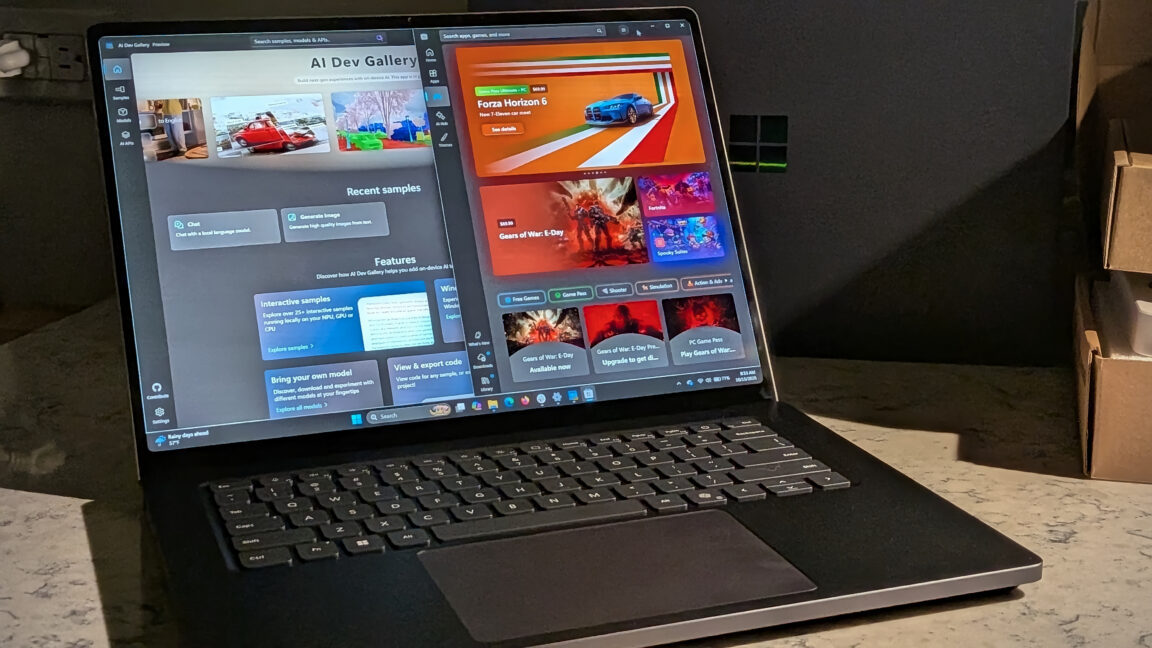
Microsoft's Surface Laptop Ultra, using Nvidia's RTX Spark platform, starts at $2,599 (up to $5,899)
Meta's new commercial terms, effective October 30th, appear to let it crawl and train AI on content from websi…