
What happened
An AI researcher dismissed the author's focus on regulatory and clinical-trial bottlenecks in medicine, confident that AI (specifically AGI) will soon become persuasive enough to solve real-world problems. The author argues the researcher, and much of Silicon Valley, misunderstands what actually blocks progress.
Why it matters
Even as AI capabilities advance, medicine and other fields remain bottlenecked by governance, data access, and institutional friction—not raw intelligence. Clinical trials consume over $1 billion per drug and seven years; the FDA took 12 years to validate a bone mineral density biomarker despite data being available. China's biotech surge ahead of the U.S. came not from better science but from regulatory reforms enabling faster iterative learning. Faster trials could make some drug development 10 times cheaper and quicker, but AI alone cannot unlock that without policy change.
Why it matters
The patent system itself disincentivizes risk-taking on novel biology. Companies and investors pour billions into AI-for-molecule-optimization startups (Chai Discovery is valued at $3.8 billion), which optimize chemistry for known, de-risked targets. But validating new targets—where the real gain to society lies—earns no patent reward once a first competitor succeeds, so firms herd onto proven targets instead. Even AI-driven companies respond to economic incentives, not just capability.
What to watch
Real-world adoption lags capability. Customer service, despite LLM agents and complex applications, remains poorly automated; GDP growth has not spiked despite recent AI advances; entry-level employment has largely held steady or grown. The bottleneck is diffusion and institutional absorption, not intelligence—a pattern economist Tyler Cowen predicted in 2023 and which data have borne out so far.
Summaries like this, in your inbox every morning.
The author's core argument rests on a distinction often overlooked in Silicon Valley: the difference between intelligence and real-world change. The piece draws on two domains—medicine and general technology diffusion—to show that capability alone does not translate to impact. In biomedicine, the evidence is stark. Eroom's Law (the inverse of Moore's Law) documents that despite exponential gains in scientific tools, drug approval rates have declined for decades. The author traces this not to lack of computational power but to the grinding, unsexy work of clinical governance: trials lasting seven years and costing over $1 billion per drug; data access delays; and regulatory validation timelines measured in years even when underlying evidence exists. China's ascent in biotech—now capturing more than half of major Western pharma licensing deals—reinforces this: the shift came from regulatory reform enabling faster trials, not superior basic science.
The patent system further illustrates how incentives, not intelligence, shape outcomes. Because patents protect specific molecules rather than biological insights, companies avoid the target risk inherent in discovering new biology. Once a target is validated (the hardest part), fast followers design competing molecules and capture patent value, incentivizing herd behavior around de-risked targets. Even AI-for-biology startups—despite access to unprecedented computational tools and billion-dollar valuations—respond to these incentives, focusing on molecule optimization rather than the riskier, higher-impact work of validating novel targets. The author notes that surrogate endpoints and AI-driven biomarkers could theoretically make some trials 10 times faster and cheaper, but even this gain requires governance changes (faster FDA validation, easier data access) that lie outside the AI lab.
Beyond medicine, the author observes a broader pattern: real-world adoption of AI lags far behind headline capabilities. LLMs can generate complex code and spawn agents, yet customer service chatbots remain frustrating; GDP growth has not spiked despite recent advances; entry-level employment has held steady or grown despite repeated automation prophecies. Economist Tyler Cowen made exactly this prediction in 2023—that capabilities would arrive faster than real-world changes, GDP growth would disappoint, and job displacement would not materialize—and data have borne him out. The core insight is that diffusion is hard: a technology existing is not the same as being absorbed into institutions and translated into outcomes people care about. The author attributes Silicon Valley's blind spot on this to community insularity and the success bias of those who have bet on ideas that once looked insane, lending them outsized credibility on matters where lived experience in governance, policy, and institutional friction would serve better.
Pick your industry and the AI tools you use, and get news related to your work every day.
Free · 30 seconds with Google · unsubscribe anytimeWhat is AIToday? →
Ask AI anything about this article. The AI reads this article, earlier AIToday articles, and Wikipedia, and cites its sources. Q&As are published on this page for other readers too.
In Q2, billionaires or their funds sold six 'Magnificent Seven' AI stocks

Nvidia was rising early Friday, even as the wider chip sector kept falling, Barron's reported

ElevenLabs completed a $300 million employee tender at a $22 billion valuation, and co-founder Mati Staniszews…
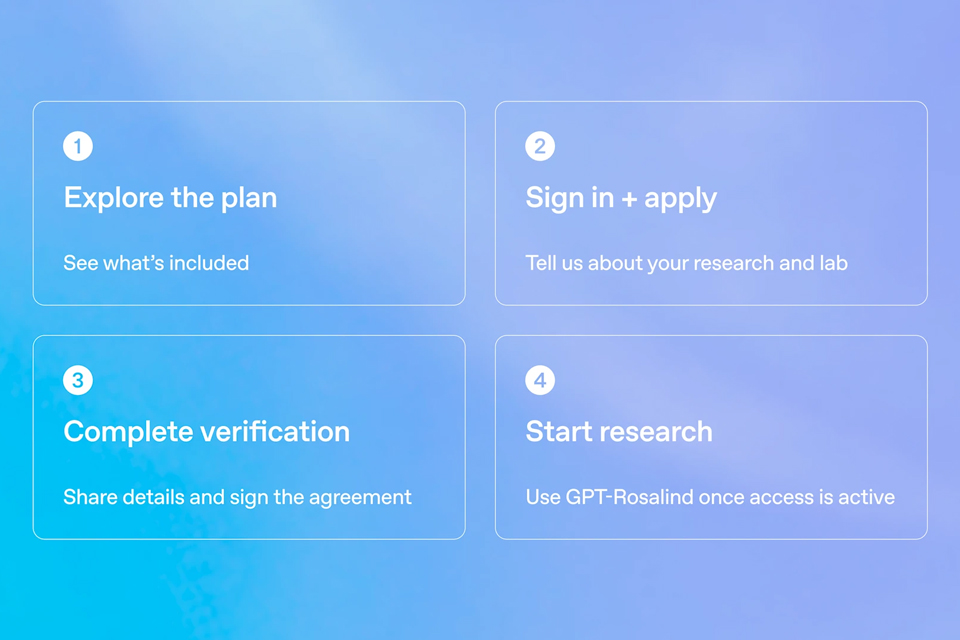
On October 15, OpenAI announced the Rosalind Academic Plan, giving approved US university labs free access to…
Neostellar Capital principal Evan Schlossman said CoreWeave's $103.7 billion in remaining performance obligati…
A Qiita article compared automated red-teaming methods for LLM apps — GCG, PAIR, and TAP — using mock implemen…


