
Microsoft is launching its Maia 300 AI chip this fall and securing TSMC capacity for over 300,000 chips for 2027 delivery.
The move aims to reduce dependence on Nvidia amid an industrywide memory shortage.
However, Microsoft started its chip effort years after rivals Google and Amazon, and Maia remains seen as less mature than their competing chips.
What happened
Microsoft is preparing to launch its Maia 300 AI chip this fall, possibly next month, and is already negotiating with TSMC to secure manufacturing capacity for more than 300,000 chips for delivery in 2027, with an ultimate goal of capacity for more than a million chips.
Why it matters
Microsoft introduced its first Maia chip in November 2023 but has lagged Google and Amazon in scaling up custom silicon. Owning more of its own AI chip supply is significant now because the industry faces a severe memory shortage that is driving up the cost of Nvidia's GPUs. Maia 300 follows the second-generation Maia 200, which started rolling out earlier this year and is built by TSMC on 3-nanometer technology with a heavy dose of fast SRAM memory.
What to watch
Microsoft is pushing major cloud customers, including Anthropic, to adopt the chip—a move that would turn Maia from an internal cost-saver into an actual product line. However, Anthropic already has deals in place for a million Amazon Trainium chips and Google TPUs combined, so it is unclear how much room is left for Maia. Capacity negotiations with TSMC are ongoing and could still constrain how fast Microsoft can scale.
Ask the AI about this article →
Microsoft's move to scale its custom silicon marks a turning point after years of reliance on Nvidia. The company introduced its first Maia chip in November 2023, but meaningful progress has been slow compared to rivals. The second-generation Maia 200, which began rolling out earlier this year on TSMC's 3-nanometer process, represents incremental maturity. The new Maia 300 arrives at a moment when the industry is grappling with a severe memory shortage that has inflated GPU costs—a pressure that makes owning proprietary silicon more strategically valuable.
Yet Microsoft faces a credibility challenge. Booking capacity for over 300,000 chips, with a stated ambition for over a million, signals real commitment rather than a science project, as Azure Maia general manager Andrew Wall suggested the reported figures "don't reflect the scale of our program." However, the company declined to share specific production numbers, leaving outsiders uncertain about the reality behind the negotiations. Capacity negotiations with TSMC are still ongoing and could constrain scaling speed. More immediately, major customers Microsoft is courting—like Anthropic—already hold commitments to Amazon and Google's AI chips, which limits the addressable market for Maia as a product line beyond Microsoft's own cloud infrastructure.
For example, today's edition would include:
AI-summarized, only the topics you pick — one digest a day via Email, Slack, or Discord.
Free · takes 30 seconds · unsubscribe anytimeWhat is AIToday? →
Ask AI anything about this article. Q&As are published on this page for other readers too.
Israeli startup DataAgent Ltd

Taoyuan is positioning itself as a northern hub for AI data centers (AIDC), citing the Tatan area and an LNG c…
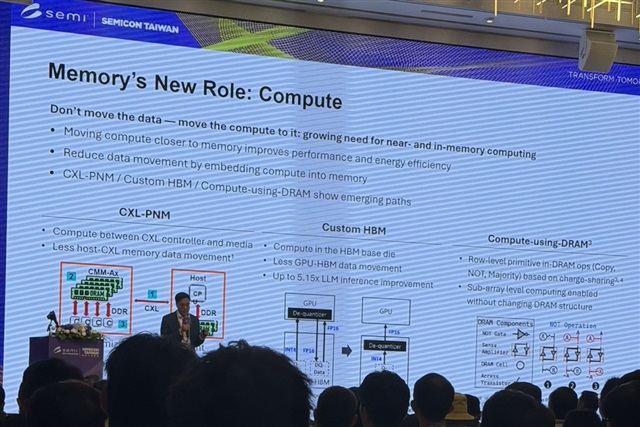
SK Hynix presented a custom HBM concept at SEMICON Taiwan 2026, where compute functions are placed in the base…
The U.S. Department of Defense announced on August 31 that it has deployed ChatGPT Mil, a customized version o…

Nvidia reported earnings that were both remarkable and boring, reflecting its focus on avoiding a consolidated…

Anthropic has agreed to a $35bn cloud-computing contract with Lambda, a Nvidia-backed cloud provider