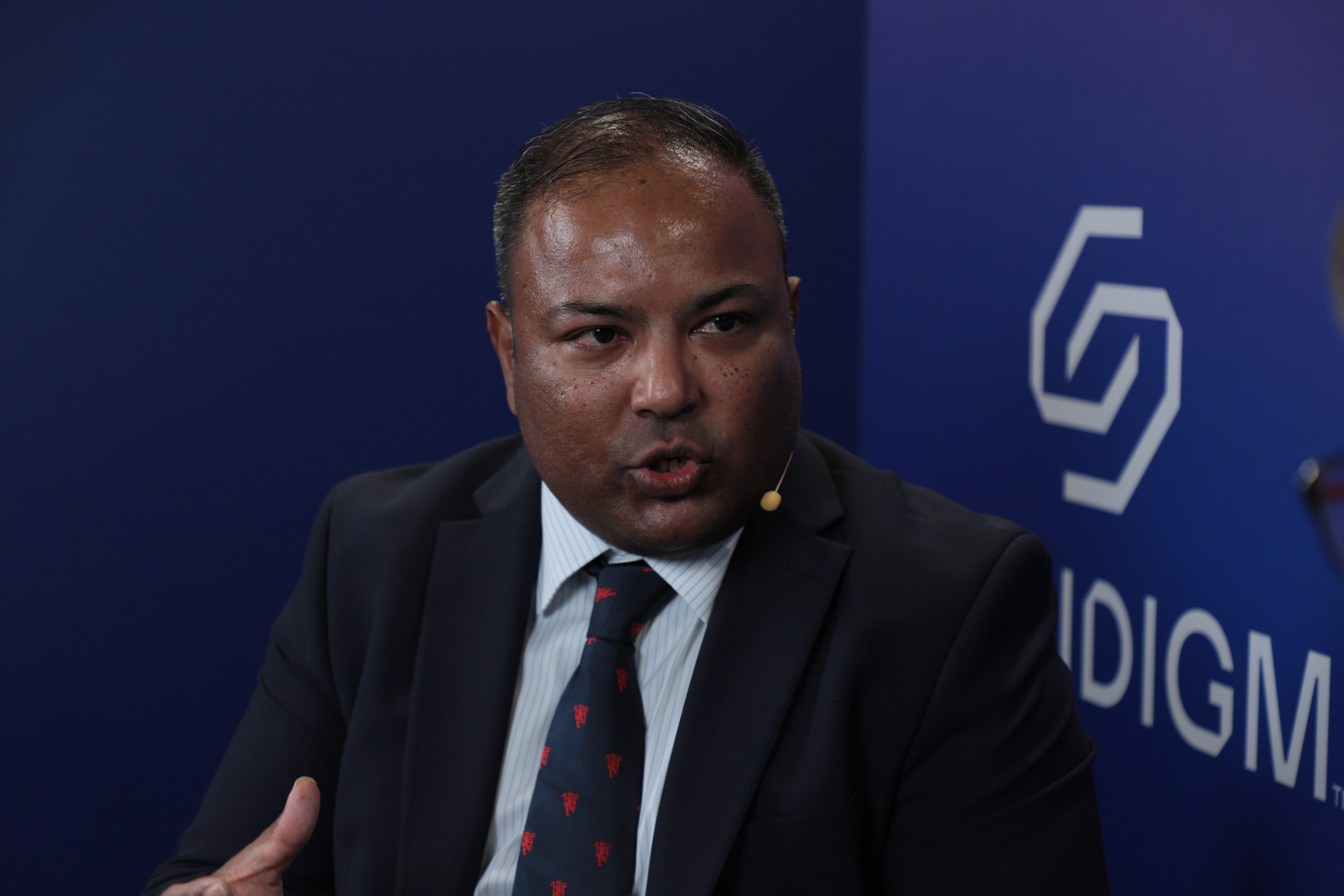
Token per watt is replacing raw compute as the primary efficiency metric for AI data centers, making storage a critical bottleneck rather than an afterthought. As agentic AI expands context memory demands, Solidigm argues that efficient storage directly determines whether GPUs remain productive or sit idle waiting for data. The company's 122-terabyte SSDs consolidate hard drive racks into single units with 80–90% lower power consumption, reclaiming power for GPU processing.
Summaries like this, in your inbox every morning.
Sign up free →What happened
Token per watt—not raw compute power—is emerging as the key efficiency measure for AI data centers, with storage now playing a critical role. Solidigm's vice president Avi Shetty explained that as agentic AI drives demand for larger context memory, solid-state storage has become central to keeping GPUs productive. A simple prompt like "top five restaurant recommendations in Paris" translates to around 13 gigabytes of data when accounting for system and tool activities, and cache rebuilds can leave GPUs idle.
Why it matters
Storage efficiency directly determines whether expensive GPU hardware sits idle or stays busy processing tokens. Solidigm's 122-terabyte D5-P5336 SSD achieves what would require 12 racks of hard drives in just one 1U rack, with an 80% to 90% reduction in power consumption—power that can be redirected to GPUs. For data center operators, this metric shift means storage is no longer an afterthought but a bottleneck that determines overall cost and performance.
What to watch
Solidigm's AI Central Lab has demonstrated linear performance scaling from one node up to 32 nodes at exabyte capacity using NVIDIA H100, B200 and B300 hardware with software partners MinIO, Weka and NetApp. The company also co-designed the world's first liquid-cooled SSD with NVIDIA to support fanless data center architectures, and plans to double its storage density going into next year.
The shift toward token per watt reflects a fundamental realization in AI infrastructure: GPU utilization is no longer constrained by compute alone, but by how fast data can flow to and from storage. As agentic AI systems expand context windows—the amount of information an AI model can reference when responding—the demand for fast, dense storage has exploded. A simple restaurant recommendation request becomes 13 gigabytes of data once system and tool activities are accounted for, and any cache eviction forces GPUs to wait while the system rebuilds, destroying productivity. Solidigm's argument is that the industry has been optimizing the wrong metric. Traditional SSD benchmarks measure random read/write speeds in abstract conditions; token per watt asks how much useful AI output you get per watt of power in a real production workload.
Solidigm's product portfolio and AI Central Lab approach reflect this philosophy. The 122-terabyte D5-P5336 prioritizes density and power efficiency over traditional performance metrics, achieving an 80–90% reduction in power consumption compared to equivalent hard drive configurations. By consolidating storage into fewer, denser units, the company reclaims power for GPUs—the expensive parts of the system. The AI Central Lab, a small-scale replica of a megawatt data center, validates these designs against real NVIDIA GPUs and software partners (MinIO, Weka, NetApp) at scale, rather than relying on synthetic benchmarks. Linear scaling from one to 32 nodes at exabyte capacity demonstrates that the storage architecture can grow with demand without performance cliffs. The liquid-cooled SSD co-designed with NVIDIA further reflects the intensity of modern AI workloads, where fanless architectures and extreme performance create thermal constraints that traditional cooling cannot handle.
No comments yet. Be the first to share your thoughts!
Log in to join the discussion


Get curated AI news from 200+ sources delivered daily to your inbox. Free to use.
Get Started FreeFree · takes 30 seconds · unsubscribe anytime
1 minute a day. The AI essentials.
200+ sources · Email / LINE / Slack
