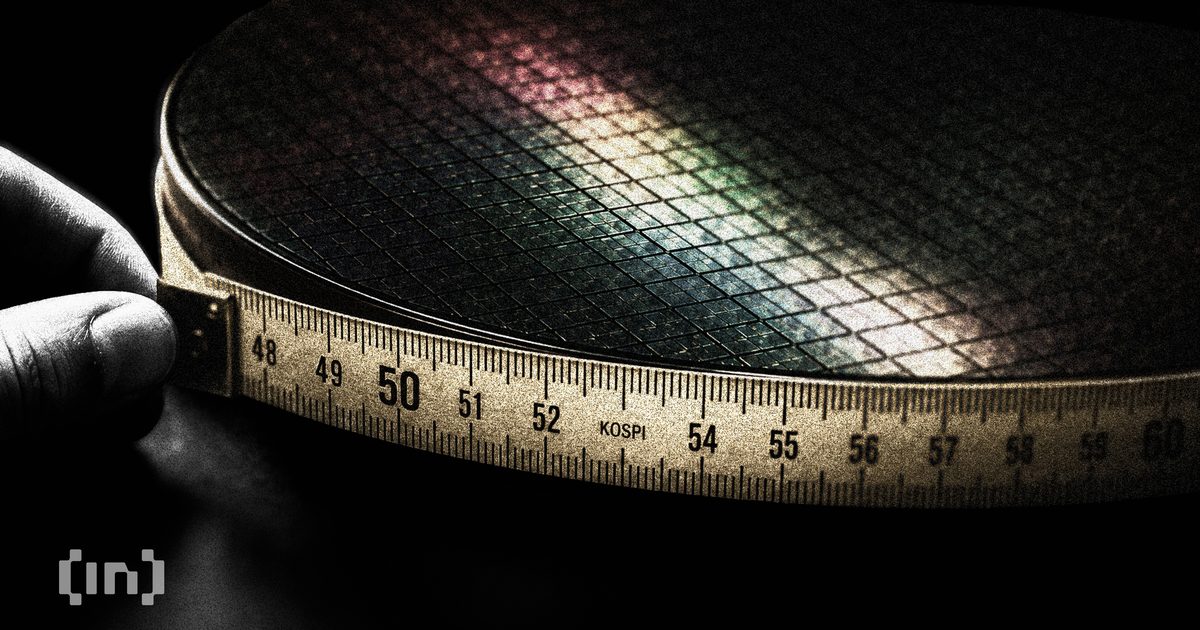
South Korea's KOSPI index plunged 8.10% on Tuesday as semiconductor stocks collapsed across Asia, with memory chip makers SK Hynix and Samsung Electronics leading declines of 11.01% and 9.45% respectively. The rout extends a US selloff in chip stocks driven by investor doubts about tech giants' heavy AI spending, despite SK Hynix and Samsung's recent $950 billion(約150兆円) AI deal announcements. SK Hynix's earnings report on Wednesday, July 29—its first since a record Nasdaq debut—could determine whether the market regains confidence or deepens the decline.
Summaries like this, in your inbox every morning.
Sign up free →What happened
South Korea's KOSPI index fell 8.10% to 6,208.34 on Tuesday morning, with memory chip makers leading losses—SK Hynix dropped 11.01% and Samsung Electronics fell 9.45%. Japan's Nikkei 225 lost 3.90% and the Topix shed 2.49%, driven by steep declines in chip suppliers including Kioxia (down 16.5%), Tokyo Electron (down over 9%), and Advantest (down 8%). The selloff follows Monday weakness in US chip stocks, where the VanEck Semiconductor ETF lost over 2%, with AMD and Teradyne falling 5% and 4% respectively.
Why it matters
The rout reflects investor skepticism about tech giants' heavy AI spending, coming days after SK Hynix and Samsung announced $950 billion(約150兆円) AI deals. The timing intensifies pressure on earnings—SK Hynix reports Wednesday (July 29), the same day as Microsoft, Meta, and a Fed rate decision, followed by Apple and Amazon on Thursday. SK Hynix's report is its first since a record Nasdaq debut, and results may either restore confidence or confirm the doubts driving the selloff.
What to watch
SK Hynix earnings on Wednesday, July 29, and the broader Big Tech earnings reports (Microsoft, Meta, Apple, Amazon) landing the same week. US futures pointed to further weakness, with S&P 500, Nasdaq 100, and Dow futures down 0.1%, 0.42%, and 0.04% respectively at press time. Bitcoin (BTC) traded near $63,199, down 2.9% over 24 hours, signaling spillover into crypto markets.
South Korea's KOSPI index suffered a sharp 8.10% decline to 6,208.34 on Tuesday morning, with memory chip manufacturers at the center of the selloff. SK Hynix sank 11.01% and Samsung Electronics dropped 9.45%, deepening what had begun as a global semiconductor rout. The Korea Exchange triggered a sell-side sidecar mechanism after the open—the 22nd such circuit-breaker activation this year—and a similar mechanism tripped on the Kosdaq shortly afterward, which was down 6.6% at press time.
The weakness spread rapidly across Asia. Japan's Nikkei 225 lost 3.90% overall, while the Topix shed 2.49%. Chip supplier Kioxia cratered 16.5%, Tokyo Electron dropped over 9%, Advantest slid 8%, and SoftBank Group, which holds an AI-linked stake in Arm, fell nearly 5%. The selloff extends a Monday rout in US chip stocks, where the VanEck Semiconductor ETF lost over 2%. AMD and Teradyne led US declines, falling 5% and 4% respectively. According to the article, investors remain skeptical about tech giants' heavy AI spending despite SK Hynix and Samsung having announced $950 billion(約150兆円) in combined AI deals just days earlier.
The timing intensifies the stakes. SK Hynix is scheduled to report quarterly earnings on Wednesday, July 29, marking its first earnings announcement since a record Nasdaq debut. That same day brings earnings reports from Microsoft and Meta, as well as a Fed rate decision. Apple and Amazon complete Big Tech's earnings week on Thursday. The article notes that whether Wednesday's SK Hynix results restore confidence or confirm the doubts driving the unwind may set the tone for the entire week. Pressure has also spilled into crypto markets, where Bitcoin (BTC) traded near $63,199, down 2.9% over 24 hours. US futures pointed to further weakness, with S&P 500, Nasdaq 100, and Dow futures down 0.1%, 0.42%, and 0.04% respectively.
The KOSPI's 8.10% plunge on Tuesday reflects a synchronized rout across semiconductor-heavy Asian markets, with memory chip makers—the sector most exposed to artificial intelligence capex cycles—bearing the brunt. SK Hynix and Samsung, which recently announced $950 billion(約150兆円) in combined AI deals, have become focal points for investor anxiety about whether tech giants' spending justifies the valuations. The spillover to Japan's Nikkei and Topix, and the sharp declines in chip suppliers like Kioxia and Tokyo Electron, signals that skepticism is not confined to memory producers but spreads through the entire semiconductor value chain.
The timing compounds the pressure: SK Hynix's Wednesday earnings report is its first since achieving a record Nasdaq debut, and arrives on a day crowded with other Big Tech results and a Fed rate decision. Whether that confluence of catalysts alleviates or deepens the selloff depends on whether SK Hynix can demonstrate that AI capex translates to near-term demand and profitability. The article suggests Wednesday's results may set the tone for the week—a statement that underscores how much the market's confidence in the AI spending cycle now hinges on concrete earnings evidence rather than forward guidance.
AI-summarized, only the topics you pick — one digest a day via Email, Slack, or Discord.
Free · takes 30 seconds · unsubscribe anytime
No comments yet. Be the first to share your thoughts!
Log in to join the discussion

Get curated AI news from 200+ sources delivered daily to your inbox. Free to use.
Get Started FreeFree · takes 30 seconds · unsubscribe anytime
