What happened
China's commerce ministry accused the United States on Monday of threatening Chinese AI companies with investigations, sanctions, and trade restrictions over allegations they used "distillation" to copy advanced U.S. AI models. The ministry said these threats lack factual or legal grounds.
Why it matters
The U.S. and China are in dispute over what constitutes legitimate AI development versus intellectual property theft. U.S. officials distinguish between standard model distillation—a widely used AI training technique where developers use outputs from capable models to train other systems—and large-scale extraction they view as theft. China's formal complaint signals escalating tension over AI technology control between the two countries.
What to watch
China threatened countermeasures in response to U.S. investigation and sanction threats, though the ministry did not specify what those measures would be.
Summaries like this, in your inbox every morning.
The dispute reflects a fundamental disagreement between the United States and China over what constitutes legitimate AI development versus intellectual property theft. Model distillation is a standard, widely accepted practice in AI training, but U.S. officials have begun drawing a distinction between routine distillation and what they characterize as large-scale extraction—a line China contests. By invoking "AI hegemonism" on Monday, China's commerce ministry signaled that it views the U.S. position as an attempt to use its technological advantage to restrict Chinese competitors rather than as a genuine intellectual property protection measure. The threat of countermeasures, though unspecified, indicates Beijing intends to escalate the dispute rather than concede.
Pick your industry and the AI tools you use, and get news related to your work every day.
Free · 30 seconds with Google · unsubscribe anytimeWhat is AIToday? →
Ask AI anything about this article. The AI reads this article, earlier AIToday articles, and Wikipedia, and cites its sources. Q&As are published on this page for other readers too.
Supermicro Computer appointed Mark Long as chief financial officer, bringing an experienced technology finance…

Holtek Semiconductor unveiled its 2026 product roadmap on October 15, focusing on four core areas: smart prote…
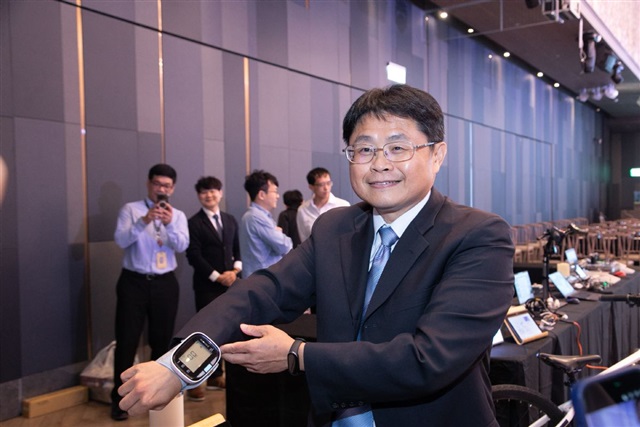
TSMC reported about NT$763.1b in Q3 net profit and confirmed that demand for advanced processors is running ah…

Taiwan is considering much stricter export controls on AI chip sales to China, part of a greater alignment wit…

Nvidia-backed CoreWeave steadied Thursday after a sharp slump, as investors worried about the debt financing b…
Weathernews said on October 15 it implemented its own AI weather-forecasting model, AI-Nowcast, in its Weather…