What happened
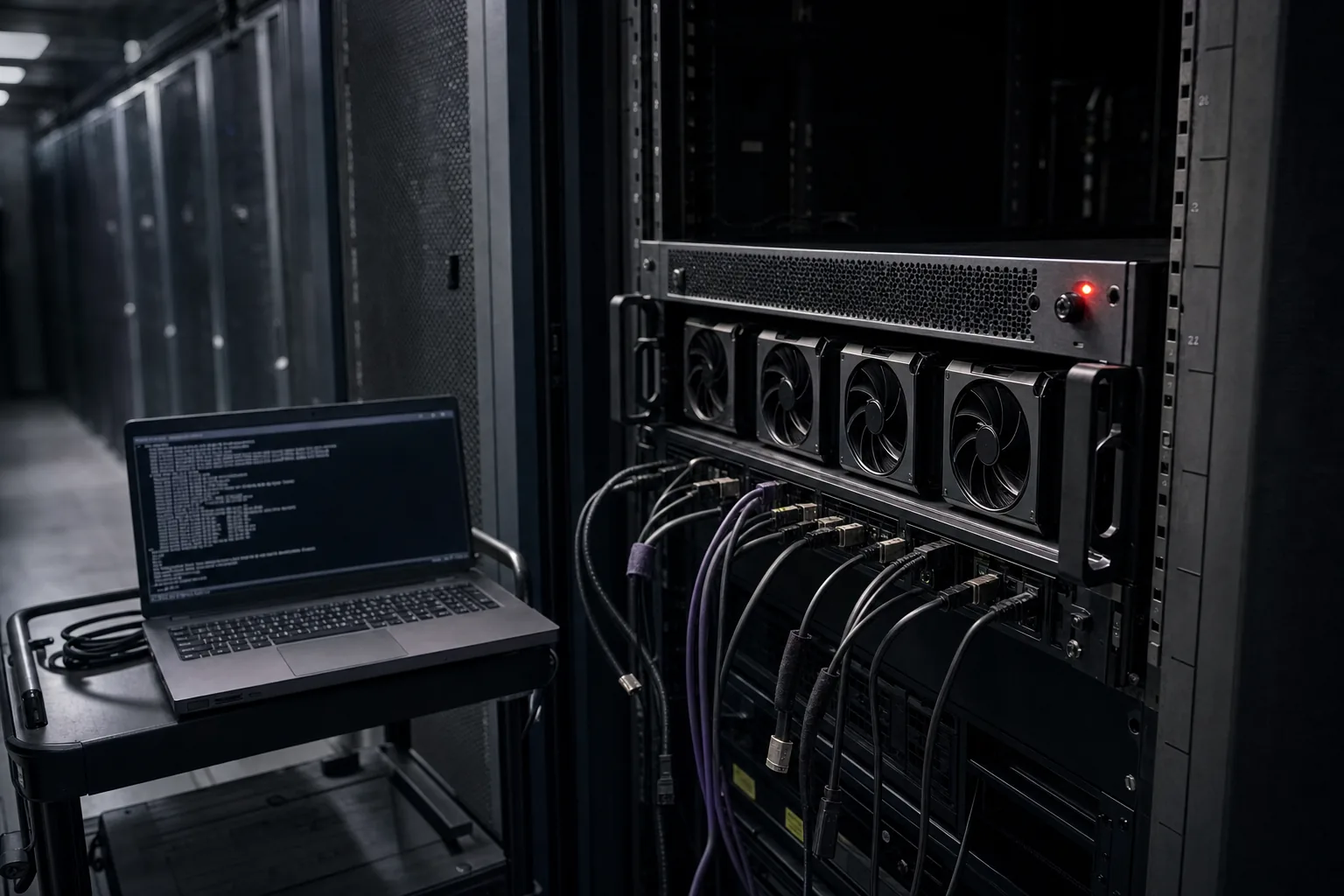
The developer released Ghost in the Log, a Halloween-themed game where players investigate three fictional incidents and the AI returns candidate causes, supporting lines, and open questions.
Why it matters
Players practice separating evidence from plausible-sounding story, since the game gives only a fixed set of fictional incidents and the AI outputs candidate causes rather than confirmed diagnoses.
Summaries like this, every morning.
Ghost in the Log grew out of a concrete worry: log-reading tools tend to invite pasting real production logs, and those logs often carry secrets or personal data. The developer narrowed the entry point instead—only three fictional incidents are selectable, and no real logs can be entered—so the public version could still run AI behind the scenes while keeping inputs fixed. The build sequence shows the same caution. An AI-free demo went live on October 29, data moved to Neon and hosting to Vercel on October 30, and only then did the developer open access after a gated test confirmed the model returned causes, supporting lines, and open questions from fictional database logs. The model path changed too: an early test ran Gemma on Modal, but per-call GPU startup added time-based cost, so the public version moved to calling an open-weights model through an API. The developer is explicit that these measures guard against unexpected input and runaway calls, not against wrong answers.
Pick your industry and the AI tools you use, and get news related to your work every day.
Free · 30 seconds with Google · unsubscribe anytimeWhat is AIToday? →
Ask AI anything about this article. The AI reads this article, earlier AIToday articles, and Wikipedia, and cites its sources. Q&As are published on this page for other readers too.
Mistral published open weights for Mistral Large 4, a 1.05T-total, 52B-active model with 1M context and text+i…

A builder released Cubic Doggo 07B Wouf, a ROS2-controlled 12-DOF untethered quadruped using 12 ST-3215-C018 s…
Aries Zhou released Howler, an open-source macOS app that summons a parchment-style letter with Option+H, writ…
With encoder weights frozen, I-JEPA's ViT-H/14 hit 79.3% ImageNet top-1 after 300 pre-training epochs, while M…

On Qwen2.5-0.5B-Instruct with a fixed matched workload, TKintegers K5 reached 3,402.85 tokens/s prefill and 26…

vLLM published fixes in 0.31.0 on October 5 and 0.32.0 on October 18 for eight advisories, including GHSA-h3rc…