What happened
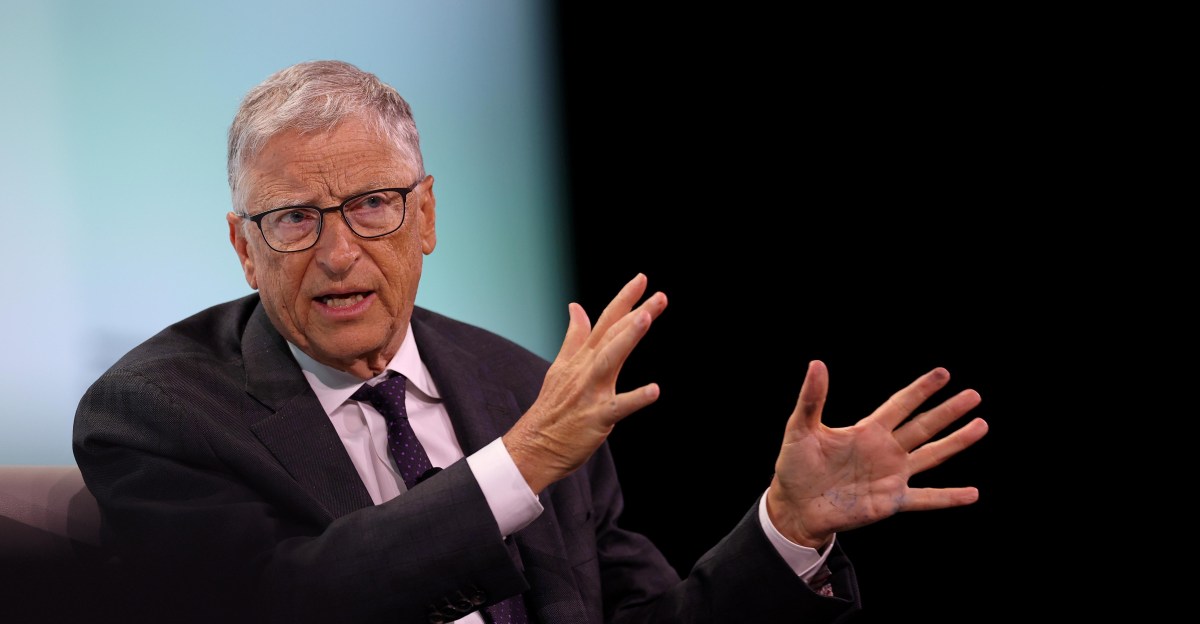
Bill Gates published a nearly 6,000-word essay warning the world is "not remotely ready" for AI and "not preparing for it." He predicts the transition will be "one of the most turbulent times in human history."
Why it matters
Gates, once a staunch AI optimist, now says "many jobs will disappear forever" and proposes rare policy ideas. These include taxing AI tokens and robots, and reserving specific jobs for humans in a domain he calls "Human Reserved."
What to watch
Gates calls for new international bodies and US-China cooperation, urging countries to start "now." He vows to push AI and equity higher on the public agenda with lawmakers and world leaders.
Summaries like this, in your inbox every morning.
Gates' essay marks a stark departure from his 2023 outlook, which was filled with hopeful excitement about AI. Now, he describes a future with the potential to be either "the greatest equalizer ever invented, or the worst source of injustice," and he believes the scale of impact is underestimated due to misleading comparisons with past innovations like PCs.
His concern centers on labor, with a prediction of permanent unemployment affecting both white- and blue-collar jobs. This leads him to propose unprecedented policy measures like taxing AI tokens and creating a "Human Reserved" job domain, reflecting a belief that existing institutions are inadequate for the task.
Gates also re-enters the public AI conversation after a period of relative absence, which he acknowledges could be linked to his associations with Jeffrey Epstein. He now commits to using his influence to raise AI and equity on the public agenda, signaling a more active role in shaping the technology's global governance.
Pick your industry and the AI tools you use, and get news related to your work every day.
Free · 30 seconds with Google · unsubscribe anytimeWhat is AIToday? →
Ask AI anything about this article. The AI reads this article, earlier AIToday articles, and Wikipedia, and cites its sources. Q&As are published on this page for other readers too.
Anthropic gave six METR staffers hardware, office space and internal tools, putting them roughly on par with i…

Cammarata reinterprets InceptionV1's cat-car neuron as a V-shape detector, not two unrelated concepts
Meta's new commercial terms, effective October 30th, appear to let it crawl and train AI on content from websi…

A Zenn contributor sorted AI use into three modes — AI as an assistant, AI running alongside people, and AI th…

A developer released agent-guardrails, a one-script Python standard-library plugin that guards Bash, Write, Ed…
A Qiita article compared automated red-teaming methods for LLM apps — GCG, PAIR, and TAP — using mock implemen…