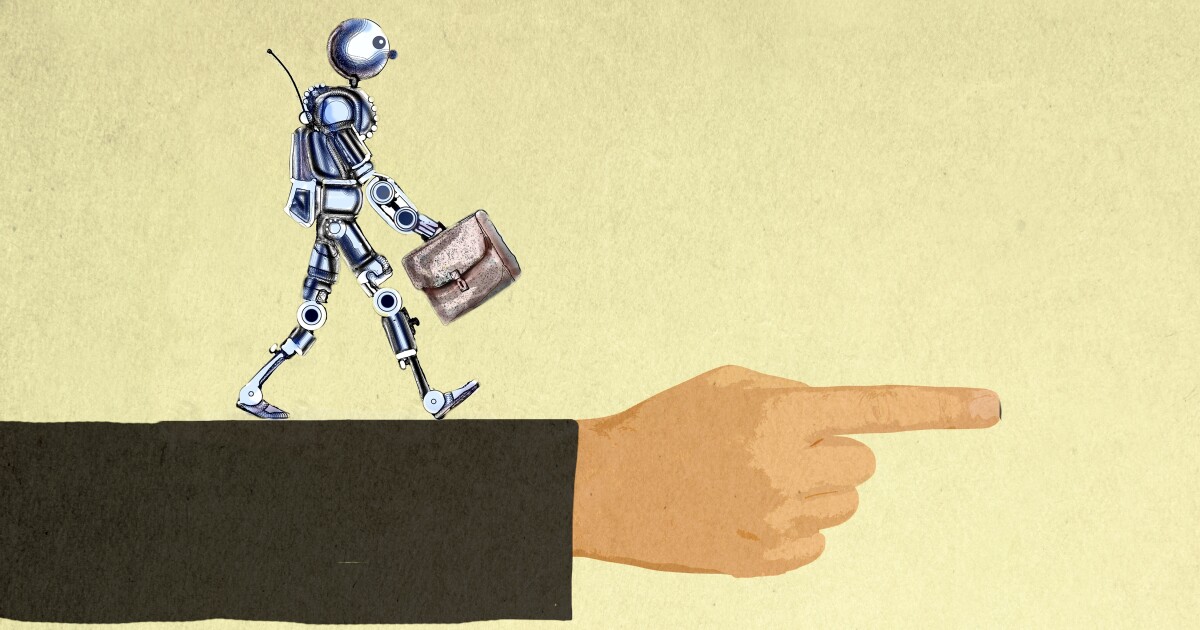
Recent college graduates report difficulty finding entry-level jobs, with many blaming AI, citing around 450–500 applications with few offers.
Unemployment for 22–27-year-olds with a bachelor's degree hit 5.7% as of June, above the overall 4.1% rate.
However, economists are divided: while Stanford researcher Erik Brynjolfsson found a 16% relative employment decline for young workers in AI-exposed fields since late 2022, Harvard and University of Chicago economists argue remote work is a larger culprit, pointing to reduced employer willingness to train junior staff remotely and data showing companies with heavy AI spending are actually hiring more entry-level workers.
What happened
Recent college graduates report difficulty landing entry-level roles, with two examples citing around 450–500 job applications each and minimal interview success. A Federal Reserve Bank of New York survey found the unemployment rate for 22–27-year-olds with a new bachelor's degree or higher was 5.7% as of June, above the 4.1% rate for all workers. In a ZipRecruiter survey this year, 47% of recent graduates said AI had already affected hiring in their field.
Why it matters
Economists disagree on AI's role. Stanford economist Erik Brynjolfsson found that early-career workers ages 22–25 in AI-exposed roles (software developers, marketing managers) experienced a 16% relative employment decline since late 2022, when large language models emerged; he argues AI targets entry-level codified knowledge that new graduates rely on. However, Harvard economist David Deming and University of Chicago economist Anders Humlum point to remote work as a bigger driver—the New York Fed found companies less likely to hire college grads into remote-eligible roles, and a study of 21,000+ U.S. firms showed entry-level head count grew 12% over two years at companies making the largest AI investments.
What to watch
All three economists agree an employment shift is underway and have signed an open letter warning AI could bring economic transformation larger than the Industrial Revolution with potential for widespread job displacement. Despite disagreement on timing, all three expressed optimism that AI will ultimately help workers more than hurt them over time, though Deming cautioned the transition will be "very bumpy and messy."
Ask the AI about this article →
The article presents a genuine tension in how economists interpret recent job-market data. Recent graduates like Irene Chang (Georgia Tech engineering) and Jacqueline Kline (Florida State communications) report applying to hundreds of positions with minimal success, and many attribute this to AI. The Federal Reserve Bank of New York data supports their experience: unemployment for 22–27-year-olds with a bachelor's degree (5.7% as of June) significantly exceeds the overall rate (4.1%). Yet the cause remains contested.
Erik Brynjolfsson's analysis of payroll data provides the strongest evidence for an AI effect: early-career workers ages 22–25 in AI-exposed roles experienced a 16% relative employment decline since late 2022, when large language models like ChatGPT emerged. His explanation is intuitive—large language models are trained on codified knowledge (textbooks, documents) that overlaps heavily with entry-level competencies, giving them an advantage over inexperienced college graduates. Senior workers, by contrast, rely more on tacit knowledge and on-the-job wisdom not easily captured in training data.
However, David Deming (Harvard) and Anders Humlum (University of Chicago) present a competing narrative. Deming notes that junior hiring declined six months before ChatGPT's release, suggesting a different root cause. Both economists point to the rise of remote work: the New York Fed found companies are less likely to hire recent grads into remote-eligible roles, because training an entry-level worker from afar requires more investment than hiring a more experienced candidate. Humlum adds a striking counterpoint—firms making the largest AI investments actually grew their entry-level headcount by 12% over two years—undercutting a simple narrative of AI displacing junior workers.
All three economists signed an open letter warning that AI could trigger transformation larger than the Industrial Revolution. Yet they remain optimistic that AI will ultimately benefit workers, even if the transition proves "bumpy and messy," as Deming puts it.
For example, today's edition would include:
AI-summarized, only the topics you pick — one digest a day via Email, Slack, or Discord.
Free · takes 30 seconds · unsubscribe anytimeWhat is AIToday? →
Ask AI anything about this article. Q&As are published on this page for other readers too.
Israeli startup DataAgent Ltd
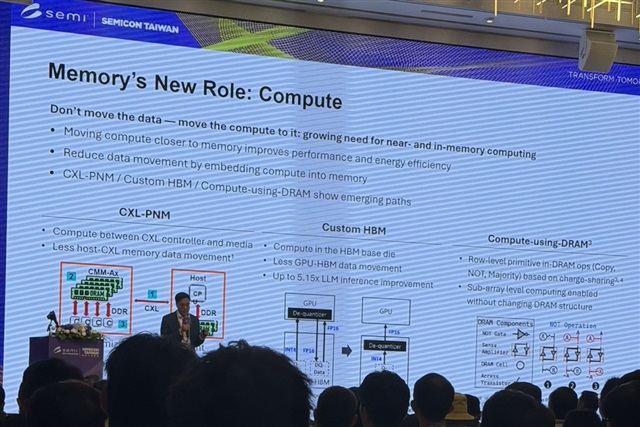
SK Hynix presented a custom HBM concept at SEMICON Taiwan 2026, where compute functions are placed in the base…
Taoyuan is positioning itself as a northern hub for AI data centers (AIDC), citing the Tatan area and an LNG c…
The U.S. Department of Defense announced on August 31 that it has deployed ChatGPT Mil, a customized version o…

Nvidia reported earnings that were both remarkable and boring, reflecting its focus on avoiding a consolidated…

Anthropic has agreed to a $35bn cloud-computing contract with Lambda, a Nvidia-backed cloud provider