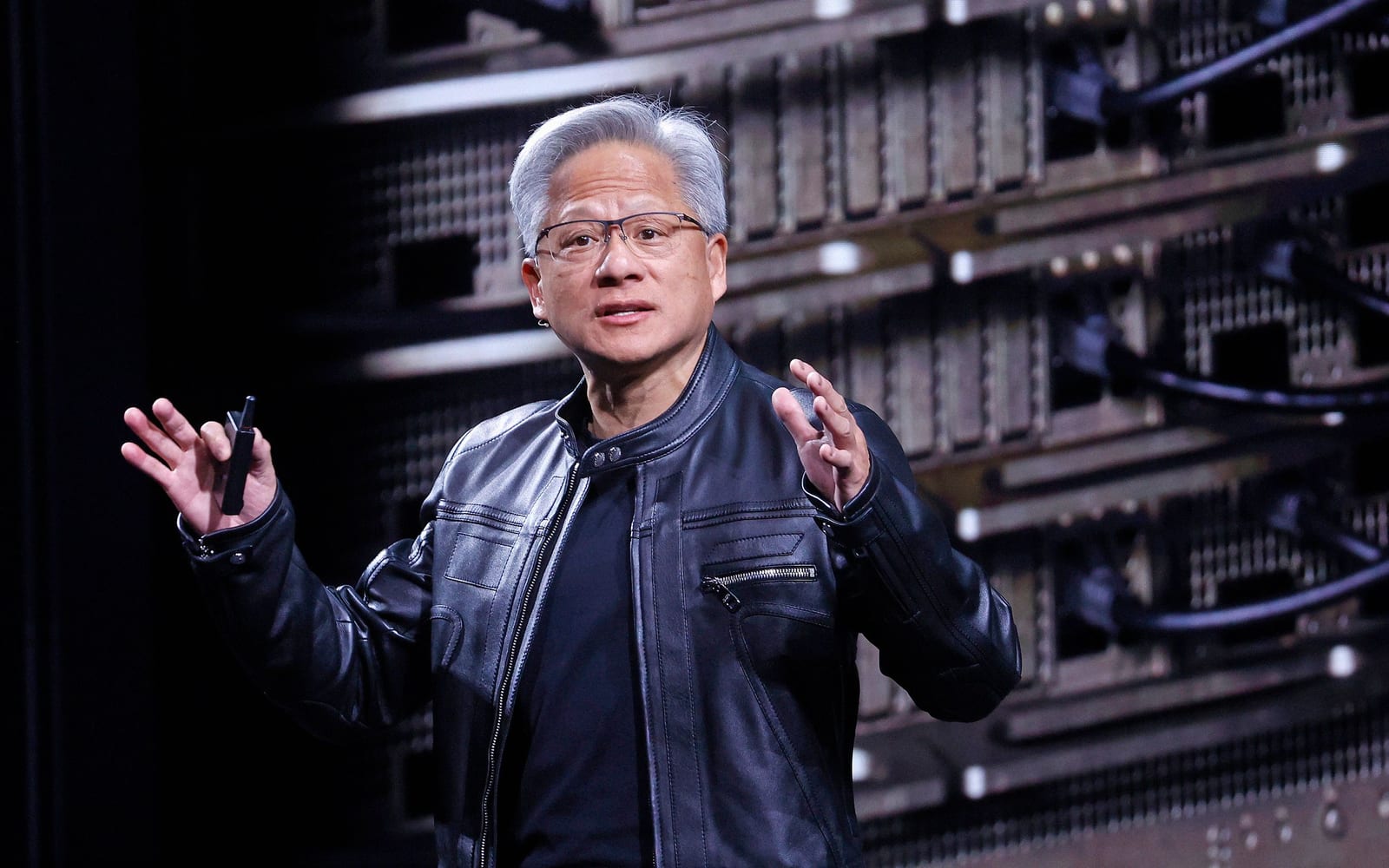
What happened
Nvidia's board said it will investigate after CEO Jensen Huang admitted an affair with Alice Huang, an executive at a Singapore-based company whom US intelligence services concluded was a Chinese intelligence asset. The board said Huang "fully supports the review and has committed to cooperating with it."
Why it matters
Huang is an at-will employee who can be let go anytime without severance, and the incident at least puts his position at risk at a company he cofounded in 1993. Nvidia shares fell more than 4 percent on Monday, even as broader stock market indices rose.
WHO IT HITSNvidia's roughly 60,000 staffers and the AI companies that buy its chips face uncertainty over leadership, while policymakers weighing chip export rules to China may face new scrutiny of Huang's influence.
Summaries like this, every morning.
Huang's position atop Nvidia rests on a concentration of influence unmatched in the AI era: he cofounded the company in 1993, it controls 90 percent of the market for chips used in training frontier AI models, and it has invested billions in the very companies buying those chips, such as OpenAI and Anthropic. That centrality is why the board's review carries weight beyond a personnel matter. As David Yoffie of Harvard Business School puts it, "He's the person who decides who gets the chips and who doesn't."
Nvidia has no other executive anywhere close to Huang's prominence and no apparent potential successor. Ryan Fedasiuk of the Foundation for American Innovation frames the tension: Huang is "irreplaceable" as the visionary behind the GPU, yet "has to be replaceable as the CEO of the world's largest company, at $4 trillion in capex." The board's investigation will most likely focus on whether Huang violated company policies, according to Yoffie, while the FBI could examine whether laws were broken and Congress may probe whether the affair influenced US chip policy toward China.
The political context sharpens the stakes. Both the first Trump administration and the Biden administration imposed export controls to limit China's access to Nvidia chips; in his second term, Trump loosened them, letting China access older generations on the argument that reliance on US technology was preferable. Huang had been outspoken against more aggressive controls, and his credibility on the topic could be permanently in doubt. Sam Bresnick of Georgetown's Center for Security and Emerging Technology expects the scandal to accelerate efforts to crack down on chip exports, with more scrutiny from the Commerce Department likely.
Pick your industry and the AI tools you use, and get news related to your work every day.
Free · 30 seconds with Google · unsubscribe anytimeWhat is AIToday? →
Ask AI anything about this article. The AI reads this article, earlier AIToday articles, and Wikipedia, and cites its sources. Q&As are published on this page for other readers too.
Microsoft is investing $2.5 billion in a new organization with about 6,000 FDEs, part of a broader push by maj…

Meta released Muse Ember, its smallest and most efficient AI model, available from April 9 as muse-ember-1.0 o…

Alphabet lost about $500 billion in market cap with shares down about 12%, after capex exceeded $51 billion an…

Jensen Huang acknowledged an affair with Megaspeed executive Alice Huang, identified in US intelligence report…
On Paramount Skydance's earnings call, CEO David Ellison said AI could be the 'biggest creative unlock in mode…

Yahoo Finance published an article titled "Arista Networks And 2 Other AI Infrastructure Stocks To Own," flagg…