
What happened
Five government officials say Tokyo is reviewing whether spending on AI, satellites, R&D and infrastructure like ports and railways can count as defense-related costs, to approach defense spending equal to 3.5% of GDP.
Why it matters
Broadening what counts as defense-related could let Japan move closer to the 3.5% level the U.S. has urged allies to achieve, without a sharp increase in narrowly defined military outlays.
WHO IT HITSThis affects Japanese government budget planners and defense policymakers, who would need to reclassify existing and planned spending across AI, satellite, R&D and infrastructure programs. It may also concern bond market participants watching Japan's record budget demands and debt issuance.
Summaries like this, in your inbox every morning.
The review comes as Tokyo balances U.S. calls for more defense spending against fiscal constraints. Japan is already dealing with record budget demands: total requests for the next fiscal year have exceeded ¥143 trillion ($910 billion). Market pressure has forced Prime Minister Sanae Takaichi to pledge to keep issuance of deficit-covering bonds at around ¥40 trillion, after her tax-cut and big spending plans jolted bond markets over fears of adding to Japan's debt pile, the largest among the world's major economies. Broadening the definition of security-related expenditures could help Japan move toward the 3.5% of GDP level without a proportional increase in narrowly defined military outlays, though officials cautioned that no decisions have been made. One official framed the challenge simply: “The key issue is how much can be included as defense-related spending.” Chief Cabinet Secretary Minoru Kihara added that “the important thing is not the amount of money itself but the substance of our defense capabilities,” suggesting the debate may hinge on how capabilities are defined and measured.
Pick your industry and the AI tools you use, and get news related to your work every day.
Free · 30 seconds with Google · unsubscribe anytimeWhat is AIToday? →
Ask AI anything about this article. The AI reads this article, earlier AIToday articles, and Wikipedia, and cites its sources. Q&As are published on this page for other readers too.
Startups Electric Twin, Artificial Societies, GWI and Toluna are using data from real focus groups and surveys…
DeepSeek raised around $15 billion in one of China's biggest-ever financing rounds, after twice increasing its…
Gov. Kathy Hochul announced the AI Jobs Institute, a Long Island City hub that nonprofit Pursuit will design a…

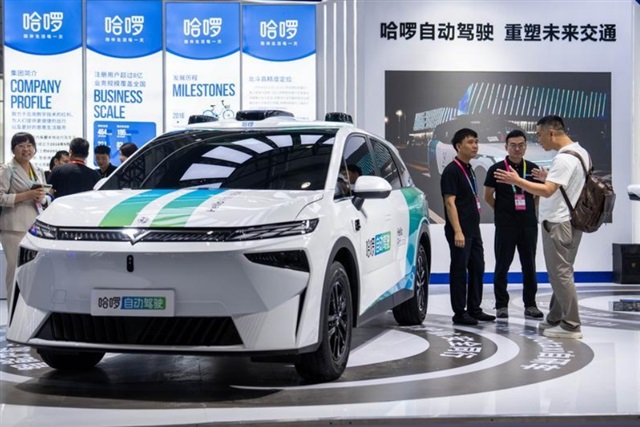
Level 3 (L3) autonomous driving penetration in China is forecast to exceed 35% by 2030, supported by falling s…
OpenAI is updating its Usage Policies effective November 20, 2026, and requiring services like model routers o…

Two US senators launched an inquiry into Google's AI push in schools, citing 'grave concerns' in an exclusive…