
What happened
Taiwan Semiconductor Manufacturing reported Q2 revenue growth of 36% year over year (in New Taiwan Dollars) and earnings per share growth of 77%, and announced plans to invest another $100 billion(約16兆円) in Arizona fabrication facilities. CEO C.C. Wei stated that strong chip demand will persist through 2029 or 2030.
Why it matters
TSMC's outlook signals the AI hardware buildout is far from complete, which means sustained demand for chips from companies like Nvidia and Broadcom. For investors, this suggests these three semiconductor stocks remain undervalued despite recent gains—TSMC is down about 15% from its all-time high, Nvidia more than 10%, and Broadcom more than 20%.
What to watch
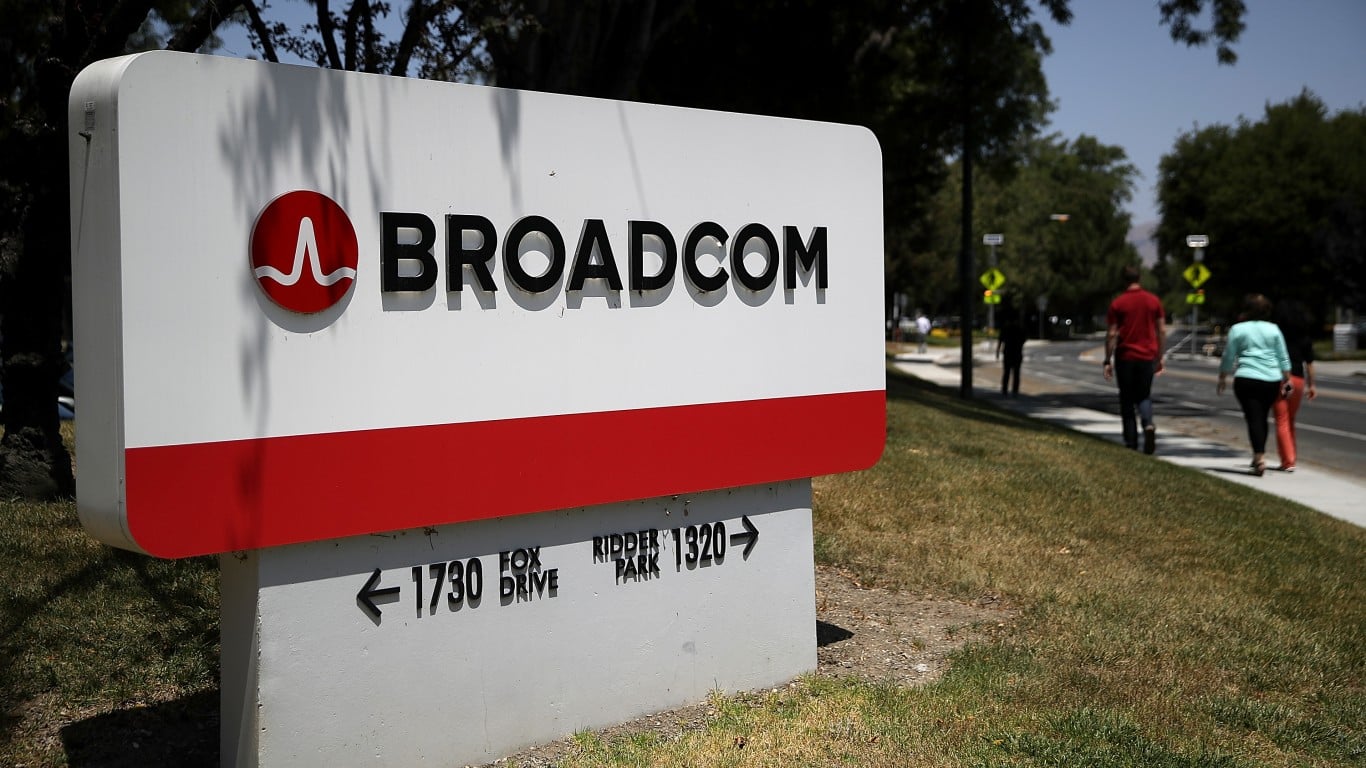
Broadcom's custom AI chip division is expected to generate $100 billion(約16兆円) in AI semiconductor revenue next year, up from $10.8 billion(約1.7兆円) last quarter—a figure that signals whether the company can deliver the explosive growth priced into its forward valuation of 19 times FY 2027 earnings.
Ask the AI about this article →
Summaries like this, in your inbox every morning.
TSMC's second-quarter results have reignited conviction in the multi-year semiconductor cycle tied to artificial intelligence infrastructure. The 36% revenue growth and 77% earnings per share growth underscore the company's pricing power and operational efficiency gains as it captures the bulk of advanced chip production for AI workloads. Critically, the company's willingness to invest another $100 billion(約16兆円) in Arizona capacity—a massive commitment—signals that management expects demand to remain strong well into the next decade. CEO C.C. Wei's explicit guidance that chip demand will persist through 2029 or 2030 effectively rules out an imminent slowdown in the AI buildout, a concern that had weighed on valuations earlier in the year.
This outlook has immediate implications for Nvidia and Broadcom. Nvidia's forecast for 82% revenue growth for the remainder of the fiscal year and 42% growth next year is underpinned by TSMC's continued capacity and reliability as a supplier. Broadcom, meanwhile, is undergoing a more dramatic transformation: its custom AI chip business is expected to generate $100 billion(約16兆円) in revenue next year, up from $10.8 billion(約1.7兆円) last quarter—a trajectory that positions the company as a direct beneficiary of intensifying AI chip demand. Despite recent sell-offs across all three names, the constellation of strong guidance, massive capital investment, and forward earnings estimates suggests the market has not fully priced in the length and breadth of the AI cycle.
For example, today's edition would include:
AI-summarized, only the topics you pick — one digest a day via Email, Slack, or Discord.
Free · 30 seconds with Google · unsubscribe anytimeWhat is AIToday? →
Ask AI anything about this article. Q&As are published on this page for other readers too.
Caterpillar's power generation backlog grew 92% year over year to more than $72 billion in Q2 2026, driven by…

Jabil's shares have risen 36.2% year to date, beating the Electronic Manufacturing Services industry's 23.6% g…

San Jose is positioning itself as a hub for physical AI (AI that operates in the real world, such as robotics)…

AMD's Q2 FY2026 revenue hit $11.54 billion, up 50.1% year over year, with Data Center revenue at $6.72 billion…
Nvidia Corp. CEO Jensen Huang said artificial general intelligence has arrived, following OpenAI's launch of G…

Saudi Arabia's state-backed AI company HUMAIN, led by CEO Tareq Amin, is positioning itself as a neutral hub f…