What happened
Anthropic announced that Claude will use invisible watermarks on generated text to comply with the EU's AI Act, adopting 'a version' of Google DeepMind's open-source SynthID-Text system. The watermarks work by embedding undetectable patterns in word choices that occur naturally during text generation—selecting between equally plausible words (e.g., 'overcast' vs. 'grey') in a way that leaves a detectable signature only to those with the decoding key.
Why it matters
The EU's AI Act requires synthetic text, images, video, and audio to include machine-readable marks so artificially generated content can be identified. Anthropic says the watermarks will not increase costs for users or affect output quality or content, making compliance invisible to end users. Other major AI developers, including Google (already supporting SynthID-Text since 2024) and OpenAI, face the same transparency requirements under European law.
What to watch
The watermarking is part of Anthropic's broader compliance effort, which also includes C2PA support for Claude-processed images. As an open-source approach, SynthID-Text is available for other developers to adopt, potentially creating an industry standard for AI-generated content detection under the EU's rules.
Summaries like this, in your inbox every morning.
The watermarking announcement reflects a broader shift in AI regulation, particularly in Europe. The EU's AI Act has set a new standard for transparency by requiring all synthetic media—text, image, video, and audio—to carry machine-readable marks that identify artificially generated content. Anthropic's choice to adopt Google DeepMind's open-source SynthID-Text approach signals both practical alignment with existing technology and a willingness to move toward industry standardization. Since Google's Gemini has already supported SynthID-Text since 2024, Anthropic's adoption reinforces the solution's viability at scale.
The technical elegance of the watermarking approach lies in its invisibility: by leveraging the natural randomness in large language model word selection, the system leaves no perceptible trace for end users while remaining detectable to authorized parties. This design sidesteps the tension between compliance and user experience—Anthropic has explicitly stated there will be no cost or quality trade-off. However, OpenAI's absence from the watermarking conversation is notable; while ChatGPT will also face EU transparency requirements, the company has not yet detailed its text watermarking plans in its AI Act compliance roadmap, potentially leaving a gap in the regulatory landscape.
Pick your industry and the AI tools you use, and get news related to your work every day.
Free · 30 seconds with Google · unsubscribe anytimeWhat is AIToday? →
Ask AI anything about this article. The AI reads this article, earlier AIToday articles, and Wikipedia, and cites its sources. Q&As are published on this page for other readers too.
Taiwan is considering much stricter export controls on AI chip sales to China, part of a greater alignment wit…

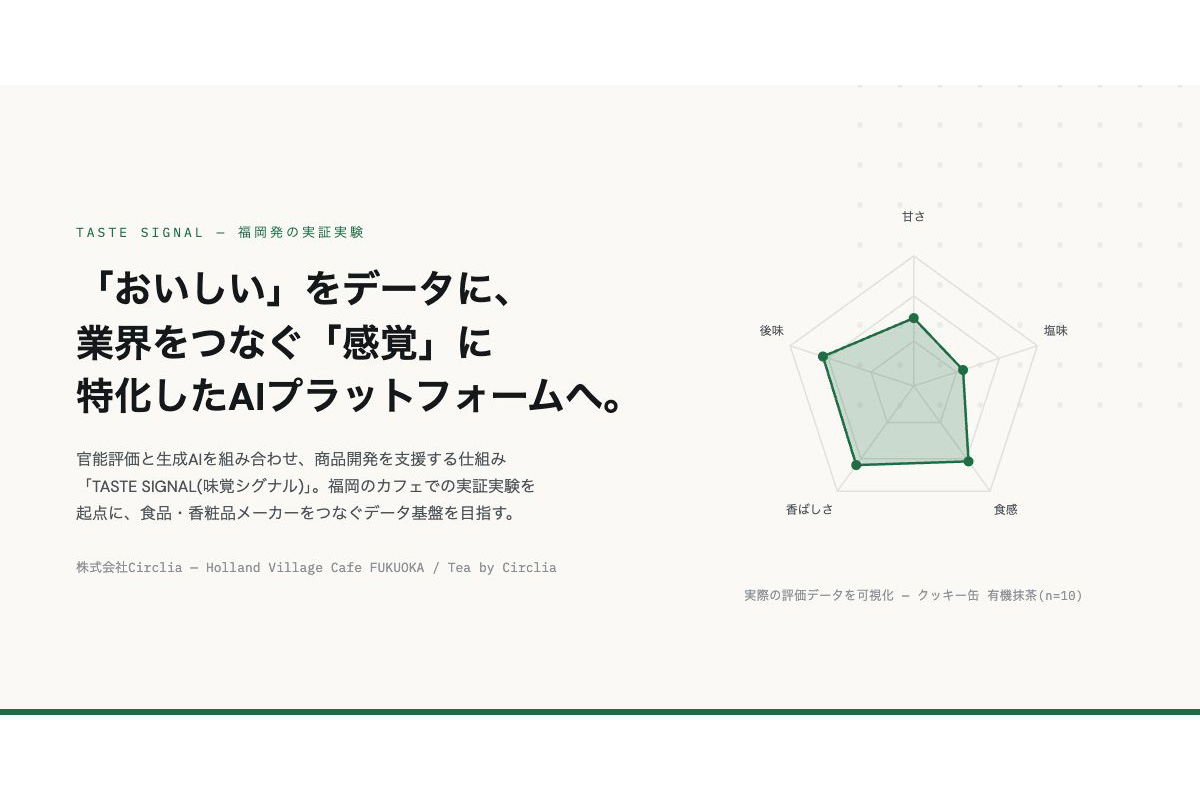
Circlia started a proof-of-concept for TASTE SIGNAL: visitors to Holland Village Cafe FUKUOKA taste cookies an…
In a webinar hosted by French Mathematical Society president Isabelle Gallagher, Fields Medal winner Hugo Dumi…

NVIDIA released Nemotron 3.5 Super VL, an open-weight model with 120 billion parameters that handles text, ima…

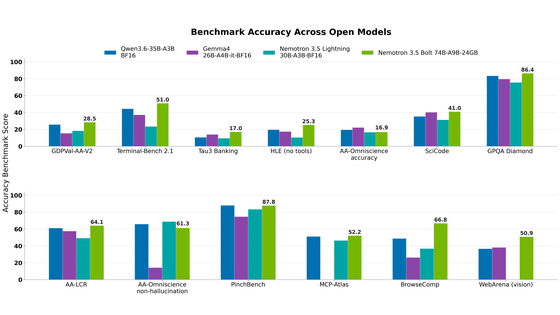
NVIDIA released Nemotron 3.5 Bolt 74B-A9B 24GB, an AI model for local agents that hits over 80 tokens per seco…
Anthropic said on October 15 it has started giving METR's six staff company devices, office space and access t…