CoreWeave stock surged nearly 16% after beating second-quarter earnings expectations with $2.58 billion in revenue and a $104 billion revenue backlog.
The news was amplified by an analyst noting that CoreWeave has signed an Nvidia A100 GPU contract extending through 2029, suggesting older AI accelerators can remain profitable nearly a decade after launch—longer than the two-year lifecycle traditionally assumed—and improve returns on infrastructure spending.
What happened
CoreWeave shares rose nearly 16% in after-hours trading after reporting second-quarter revenue of $2.58 billion (above the $2.56 billion analyst forecast) and an adjusted loss of $1.03 per share (narrower than the expected $1.22 loss). Revenue more than doubled from a year earlier, rising about 112.5%. The company ended the quarter with a $104 billion revenue backlog, up more than threefold year over year, and reported more than $25 billion in additional customer commitments secured early in the third quarter.
Why it matters
An analyst highlighted CoreWeave's A100 contract extending through 2029—GPUs launched in 2020—as evidence that older Nvidia hardware can "still generate revenue nearly a decade later." This challenges the conventional assumption of a two-year lifecycle for AI accelerators and suggests longer equipment life improves returns on infrastructure investments for cloud providers. That longer earning life appears to improve visibility into near-term revenue: about $42 billion of the backlog is expected to convert within 24 months, up from roughly $15 billion a year ago.
What to watch
CoreWeave guides third-quarter revenue of $3.45 billion to $3.6 billion and capital expenditures of $11.5 billion to $13.5 billion.
CoreWeave Inc. reported second-quarter results on Tuesday that beat analyst expectations and triggered a nearly 16% jump in its stock price in after-hours trading. The AI cloud provider posted revenue of $2.58 billion, slightly ahead of the $2.56 billion consensus forecast, while its adjusted loss of $1.03 per share came in narrower than the expected $1.22 loss. More striking was the growth trajectory: revenue more than doubled from the prior year, rising about 112.5%.
The quarter's standout metric was CoreWeave's revenue backlog, which reached $104 billion, up more than threefold year over year. The company disclosed an additional $25 billion in customer commitments secured early in the third quarter, bringing total forward visibility beyond the backlog figure. For the third quarter, CoreWeave expects revenue of $3.45 billion to $3.6 billion and capital expenditures of $11.5 billion to $13.5 billion.
Analysts seized on a detail in the results: CoreWeave had signed a contract for Nvidia A100 GPUs extending through 2029. Analyst Daniel Newman, CEO of the Futurum Group, called out the contract as evidence challenging the industry's conventional two-year lifecycle assumption for GPU hardware. Futurum strategist Shay Boloor elaborated, noting that the contract showed Nvidia GPUs launched in 2020 could "still generate revenue nearly a decade later," extending the earning life of infrastructure and improving returns. Boloor also praised CoreWeave's improving contract quality: about $42 billion of the backlog is now expected to convert within 24 months, up from roughly $15 billion a year ago, giving the company greater visibility into near-term revenue and reducing execution risk.
CoreWeave's earnings beat and 16% stock surge reflect investor confidence in the AI cloud infrastructure market and, more specifically, in the durability of hardware economics. The headline story—a $104 billion revenue backlog rising threefold year over year—signals sustained demand for GPU compute; the backlog had been a key question for investors assessing whether AI demand would stay as strong in 2026 as it was in 2025.
The A100 contract extending through 2029 introduces a secondary but significant narrative: that older GPU generations remain economically viable far longer than the two-year replacement cycle that had been assumed in the industry. Analyst Shay Boloor underscored this point, noting that GPUs launched in 2020 can still generate revenue nearly a decade later. This matters because it means cloud providers are not forced into constant capital recycling; infrastructure depreciation is slower and longer-duration revenue streams are possible. The fact that about $42 billion of CoreWeave's backlog is expected to convert within 24 months—up from roughly $15 billion a year ago—also points to improving visibility and less volatility in near-term cash generation, a concern that had haunted AI infrastructure stocks earlier in 2026.
AI-summarized, only the topics you pick — one digest a day via Email, Slack, or Discord.
Free · takes 30 seconds · unsubscribe anytime
Ask AI anything about this article. Q&As are published on this page for other readers too.
Supermicro reported a sharp recovery in gross margins and issued fiscal 2027 revenue guidance that exceeded Wa…

IBM and Together AI announced a collaboration to deploy a dedicated Nvidia-powered inference cluster on IBM Cl…

Siliconware Precision Industries (SPIL), a subsidiary of ASE Technology Holding, held a groundbreaking ceremon…
CoreWeave reported second-quarter fiscal 2026 revenue of US$2.6 billion, up 112% year-over-year and 24% sequen…
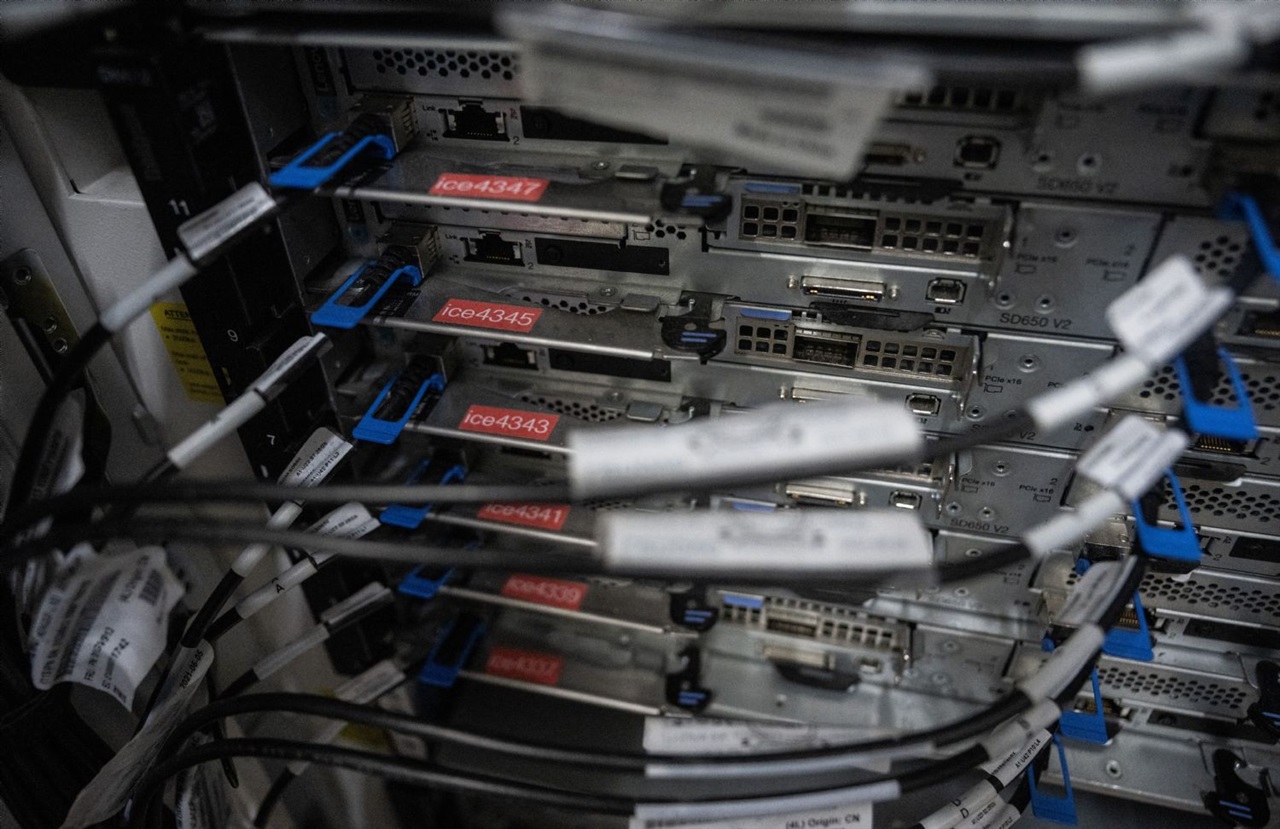
CoreWeave, an AI cloud provider, more than doubled its second-quarter revenue while managing a $104 billion ba…
Palantir Technologies reported second-quarter revenue up 93% year over year to $1.94 billion on Aug

The AI news that matters, in one minute each morning.
Sign up free