
Enterprise AI agents are moving from pilot projects into production systems where they automate workflows and make business decisions, but their reliability depends on seven infrastructure pillars: scalable computing, structured data access, comprehensive security, stable integrations, observability, human control, and failure resilience.
Without these foundations in place before deployment, agents may fail when connected to live systems, larger datasets, and more users.
What happened
Enterprise AI agents are moving from experimental pilots into live corporate systems, where they track workflows, generate reports, retrieve data, coordinate tasks, and make decisions across applications. However, this expansion is straining technical environments and exposing infrastructure gaps.
Why it matters
Without robust infrastructure—scalable computing, structured data access, comprehensive security, reliable integrations, observability, human oversight, and failure resilience—agents perform well in labs but lose reliability when connected to live systems, larger datasets, and more users. Organizations that build these foundations early can automate more without sacrificing control.
What to watch
Companies must prioritize seven core pillars before scaling: scalable computing (cloud platforms, workload orchestration, resource monitoring), structured data access (catalogs, standardized formats, permission controls), security covering all agent actions (minimum permissions, transitory credentials, monitoring of access and alterations), stable integrations (API validation, retry limits, intermediaries for legacy systems), observability into reasoning and tool usage, defined human approval workflows and escalation mechanisms, and resilience through backup models and graceful failure responses.
Ask the AI about this article →
Enterprise AI agents are transitioning from controlled experimental environments into production systems where they operate across multiple corporate applications and datasets. This shift introduces operational challenges that traditional IT infrastructure was not designed to handle. Unlike conventional systems where access and actions follow fixed pathways, agents act across many systems on behalf of users or departments, requiring security models that go far beyond traditional system-access controls. The article emphasizes that without proper infrastructure foundations, the very advantages agents offer—speed, autonomy, cross-system coordination—become liabilities when deployed at scale.
The core issue is that pilot success does not predict production reliability. An agent may execute a workflow correctly in a controlled test environment with clean, limited data, but fail when exposed to live systems with inconsistent data, multiple concurrent requests, and the need to make decisions in ambiguous situations. The article identifies seven interdependent infrastructure requirements: scalable computing to handle growing workloads without cost explosion, data governance to ensure agents can distinguish current records from outdated material, security that enforces minimum permissions and audits every action, integration resilience that prevents legacy systems from becoming weak links, observability that tracks reasoning and detects anomalies before they impact customers, human oversight mechanisms that define approval thresholds and escalation paths, and failure recovery that allows agents to continue operating when external services or model providers go down. Organizations that build these foundations early—rather than retrofitting them after production failures—can scale agent automation while maintaining control and reliability.
For example, today's edition would include:
AI-summarized, only the topics you pick — one digest a day via Email, Slack, or Discord.
Free · takes 30 seconds · unsubscribe anytimeWhat is AIToday? →
Ask AI anything about this article. Q&As are published on this page for other readers too.
Israeli startup DataAgent Ltd
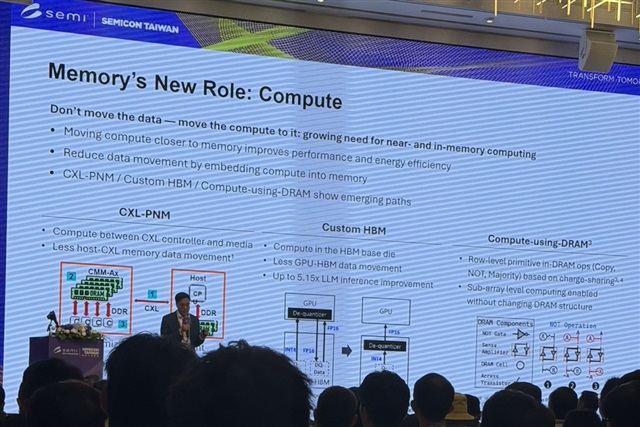
SK Hynix presented a custom HBM concept at SEMICON Taiwan 2026, where compute functions are placed in the base…
Taoyuan is positioning itself as a northern hub for AI data centers (AIDC), citing the Tatan area and an LNG c…
The U.S. Department of Defense announced on August 31 that it has deployed ChatGPT Mil, a customized version o…

Nvidia reported earnings that were both remarkable and boring, reflecting its focus on avoiding a consolidated…

Anthropic has agreed to a $35bn cloud-computing contract with Lambda, a Nvidia-backed cloud provider