What happened
Circuit Mind raised $25 million in two rounds — an $18.5 million Series A led by Norwest Venture Partners plus a previously unannounced seed round — and launched its Agentic Verification Engine, available now on its website.
Why it matters
The tool hands design review to a swarm of AI agents that trace every circuit connection and bus for mismatches, and nothing reaches an engineer until the system has critiqued its own findings — aimed at catching errors that otherwise stay hidden until a prototype is built.
WHO IT HITSHardware and electronics engineering teams that design printed circuit boards stand to benefit, since the platform targets the months engineers spend reading datasheets and the errors that surface only after a prototype is built. Circuit Mind also cites customers including Los Alamos National Laboratory, Schneider Electric and Emerson Electric.
Summaries like this, every morning.
Circuit Mind is betting that general-purpose large language models cannot do this work alone, since they have never been trained on professionally designed circuits. Its answer is to layer AI agents over a patented, physics-based engine that tests each design decision against electrical limits, drawing on its own machine-readable models of components and each customer's engineering rules, down to its list of approved manufacturers. That approach dates back to the company's founding in London in 2018 by CEO Tomide Adesanmi and Chief Technology Officer Basilio Gentile, and it now has $33.4 million in total backing behind it.
Much of the evidence the company cites predates today's launch. At Schneider Electric, early evaluations point to a cut of more than 90% in the effort spent exploring electronic architectures, according to Daniel Gheno, its chief technology officer for energy management. Charlie Eastberg, a director of hardware engineering at Emerson Electric, said both of Circuit Mind's applications have sped up his team's move from system architecture to schematic. Circuit Mind also says users have brought bill of materials costs down by 25%.
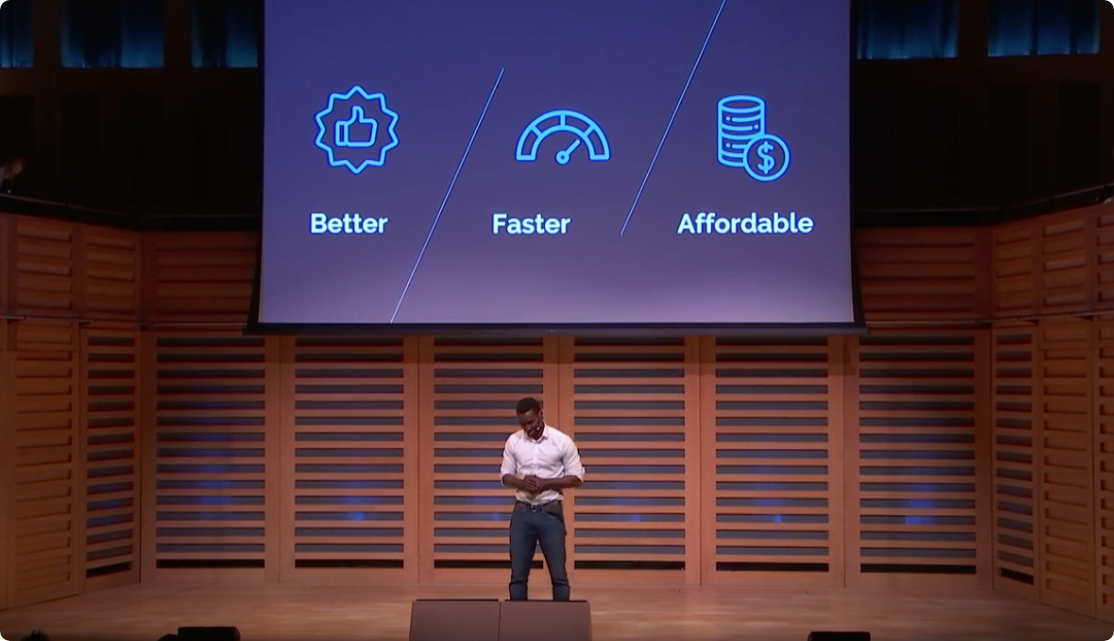
Adesanmi frames the opportunity by contrast: electronics design "hasn't changed in 40 years," he said, even as AI has let software teams ship far faster, and he pitched Circuit Mind as hardware's answer to coding tools such as Cursor and Claude Code. Norwest's Dave Zilberman, who joins the board, said pairing AI with physics-based models could "fundamentally improve how engineers design electronics." Where the company goes next is testing and firmware, along with a U.S. headquarters for North American customers.
Pick your industry and the AI tools you use, and get news related to your work every day.
Free · 30 seconds with Google · unsubscribe anytimeWhat is AIToday? →
Ask AI anything about this article. The AI reads this article, earlier AIToday articles, and Wikipedia, and cites its sources. Q&As are published on this page for other readers too.
At the 73rd Listed Company Club on September 18, Bengoshi Dotcom CEO Taichiro Motoe traced an eight-year push…

AMD bought $2.5 billion of Anthropic stock at the $83 IPO price as part of a $5 billion commitment, and Anthro…
Levent Alpöge said he and Claude proved the Riemann Hypothesis and the Generalized Riemann Hypothesis; the Lea…

The Nasdaq 100 fell 5.6 percent on Friday and 10.4 percent for the week, its worst showing since the Covid-19…

A Fortune commentary notes OpenAI's terms leave delivery and returns with merchants and keep existing card dis…

Google said K-12 accounts that block its AI tools will lose Google Search entirely, with VP for education Chri…