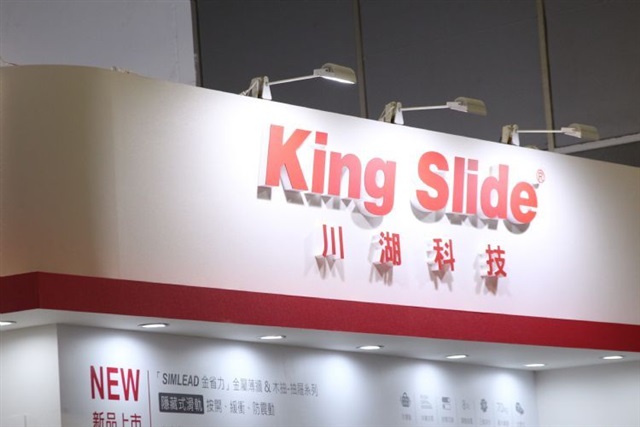
Taiwanese server rail manufacturer King Slide has announced plans to begin US production in September, bolstered by confidence in its near-term and three-year outlook following the release of second-quarter 2026 results.
The move represents a significant shift for the company as it looks to serve North American data center operators more directly.
What happened
Taiwanese server rail manufacturer King Slide released its second-quarter 2026 financial results on August 6 and held an earnings call on August, expressing confidence in operations for the second half of 2026 and the next three years, with plans to launch US production in September.
Why it matters
Server rails are critical infrastructure for data centers that power cloud computing and AI workloads; King Slide's expansion into US manufacturing signals growing demand and reduces dependence on Taiwan-based production amid geopolitical supply-chain concerns.
What to watch
The September US production launch—whether it meets the timeline and achieves planned capacity will determine King Slide's ability to serve large cloud and AI customers closer to their facilities.
Taiwanese server rail manufacturer King Slide released its second-quarter 2026 financial results on August 6 and held an earnings call in early August. During these communications, the company's leadership expressed strong confidence in its operations for the second half of 2026 as well as for the next three years. A key strategic initiative King Slide outlined is the launch of US-based production in September, marking the company's first manufacturing footprint outside Taiwan. This move signals the company's intent to serve North American customers more directly and reduce logistics costs, while also diversifying its manufacturing risk away from a single geography.
King Slide's announcement reflects a strategic shift in the server rail supply chain. By moving production to the United States, the company is responding to the geography of demand—large cloud and AI data center operators increasingly operate facilities across North America—while also mitigating supply-chain risk tied to Taiwan's geopolitical position. The company's expressed confidence in operations over both the near term (second half of 2026) and the longer three-year horizon suggests that management sees sustained demand for its products, likely tied to continued data center expansion driven by AI workloads.
AI-summarized, only the topics you pick — one digest a day via Email, Slack, or Discord.
Free · takes 30 seconds · unsubscribe anytime
Ask AI anything about this article. Q&As are published on this page for other readers too.
Tech companies are raising unprecedented sums for AI infrastructure—$194 billion so far in 2026 by just four f…

Nvidia has partnered with Apollo, BlackRock, Blackstone, Brookfield, Goldman Sachs, and KKR to raise $500bn in…

Nvidia has signed letters of intent with Apollo, BlackRock, Blackstone, Brookfield, Goldman Sachs, and KKR to…

Anthropic has signed the EU AI Act Code of Practice and will embed invisible watermarks in Claude-generated te…

Anthropic has agreed to pay $9.1 billion over 20 years to Riot Platforms Inc., a Bitcoin miner turned data cen…

Samsung is accelerating efforts to qualify its Taylor, Texas fabrication plant for 2-nanometer chip production…

The AI news that matters, in one minute each morning.
Sign up free