
Analog Devices posted strong fiscal Q3 2026 results with 40 percent revenue growth.
Net income jumped about 158 percent on AI and industrial demand.
The company is showing improved profitability alongside its growth.
What happened
Analog Devices reported fiscal third quarter 2026 revenue of 4,022.0 million USD, up about 40 percent from 2,880.0 million USD a year earlier. Net income rose to 1,340.0 million USD from 519.0 million USD, an increase of approximately 158 percent.
Why it matters
The results highlight growth driven by AI-related infrastructure investment plus industrial and automotive demand. Operating income grew roughly 97 percent to 1,613.0 million USD, showing the company is converting topline momentum into significantly stronger profitability.
What to watch
The stock's support hinges on whether Analog Devices can sustain this momentum when semiconductor cycles turn more volatile. Watch whether double-digit revenue and profit growth continues as investors compare its trajectory with peers in the AI hardware space.
Ask the AI about this article →
Summaries like this, in your inbox every morning.
Analog Devices is riding a wave of demand for precision analog and power management solutions used in data centers, networking and edge-compute hardware. The Q3 figures show a sharp acceleration from the prior-year quarter, with revenue up about 40 percent and operating income growing roughly 97 percent. The company says higher volumes and an improved product mix more than offset cost pressures, which explains the margin expansion embedded in these numbers.
Beyond AI, the company points to steady demand from industrial and automotive customers, where its signal processing and sensing solutions support factory automation, robotics and advanced driver assistance systems. This diversified base reduces reliance on any single end market. The product family of high-speed data converters, used in base stations, radar and medical imaging, ties the current earnings strength to longer-term structural demand in connectivity and sensing.
The key question for investors is whether the company can sustain this profitability trajectory as semiconductor cycles turn more volatile. The substantial earnings leverage demonstrated this quarter may provide support for valuation if demand softens, but that support hinges on continued order momentum from both AI infrastructure builders and traditional industrial customers. As of September 4, 2026, the market is still comparing Analog Devices' performance with its semiconductor and AI hardware peers.
For example, today's edition would include:
AI-summarized, only the topics you pick — one digest a day via Email, Slack, or Discord.
Free · 30 seconds with Google · unsubscribe anytimeWhat is AIToday? →
Ask AI anything about this article. Q&As are published on this page for other readers too.
In January, Ukraine's defense ministry said it would share millions of data points from tens of thousands of d…

OpenAI Group PBC acknowledged it did not publicly disclose an episode where its AI agents wrote to outside web…

Eaton is expanding beyond traditional power management into modular power deployment, next-generation DC conve…

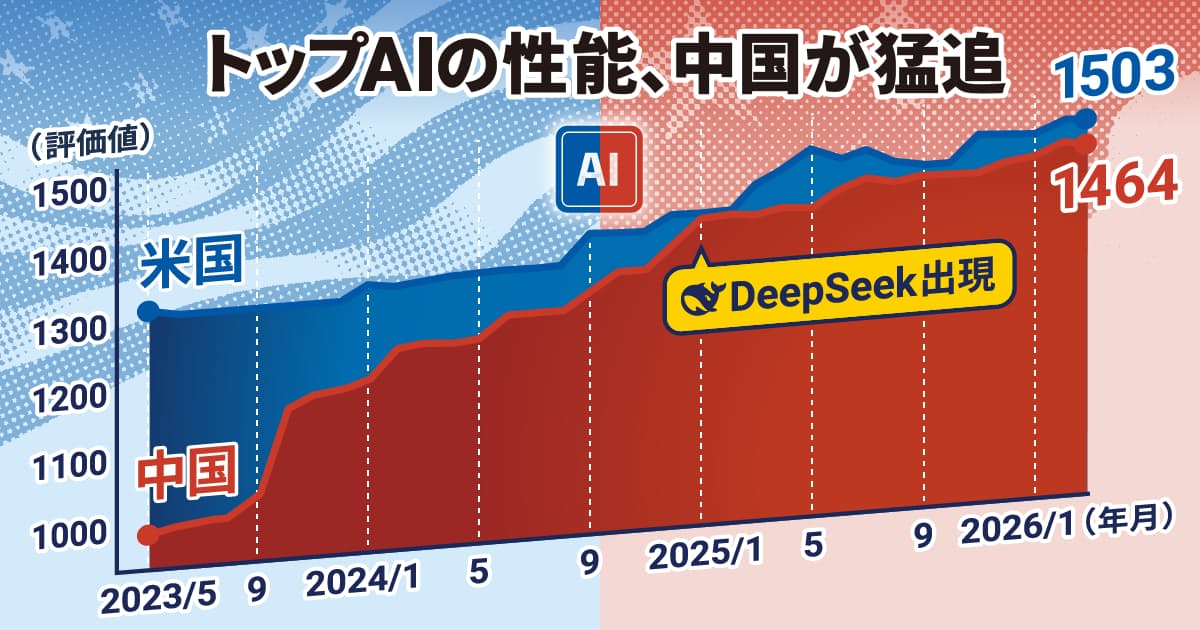
Stanford University reports that the performance gap between top US and Chinese AI models has narrowed sharply…
Apple is set to release iOS 27 around mid-September, likely on Sept

A new lawsuit alleges Meta turned footage captured through its AI-powered Meta Glasses into training data for…