What happened
The article says AI's growing ability to spot software vulnerabilities and run complex cyber operations leaves even the world's leading AI power exposed, because cyber conflict favors offense over defense.
Why it matters
Because that exposure runs both ways, it creates a strong incentive for mutual restraint on cyber operations, the article argues — pointing to the 2015 Obama–Xi pact.
What to watch
The 2015 pact's impact is contested: cybersecurity firms recorded a steep decline in attacks from China-based groups, but analysts noted the decline began before the agreement and may have reflected changes inside China's military and cyber apparatus.
WHO IT HITSThis lands on policy advisers and national-security officials shaping US–China AI rules, and on cybersecurity teams at operators of financial networks, communications systems and power grids, who bear the risk these talks would address.
Summaries like this, in your inbox every morning.
The article frames AI governance as a subject that was expected to be at the top of the agenda when President Donald Trump and Chinese President Xi Jinping met in Washington recently. It notes that the United States and China have been racing to develop increasingly powerful AI systems and neither has shown much appetite for slowing down.
The risk the article highlights is not commercial or military advantage but cyberspace, where AI's improving ability to spot software vulnerabilities and conduct complex cyber operations runs into what it calls a stark asymmetry between offense and defense. Because that asymmetry leaves even the most advanced AI power exposed, the article argues, mutual vulnerability itself creates a strong incentive for reciprocal restraint when it comes to AI-enabled attacks on critical infrastructure such as financial networks, communications systems and power grids.
For context, the article reaches back to 2015, when Obama and Xi agreed neither government would conduct or knowingly support cyber-enabled theft of intellectual property for commercial advantage, and set up mechanisms for exchanging information, assisting investigations and addressing malicious cyber activity. The article does not present that history as a clean success: while cybersecurity firms recorded a steep decline in attacks attributable to China-based groups afterward, analysts noted the decline began before the agreement and may have reflected changes within China's military and cyber apparatus. Whether any similar understanding could hold in the current AI race appears to hinge on how both governments weigh that contested record against the exposure the article describes.
Pick your industry and the AI tools you use, and get news related to your work every day.
Free · 30 seconds with Google · unsubscribe anytimeWhat is AIToday? →
Ask AI anything about this article. The AI reads this article, earlier AIToday articles, and Wikipedia, and cites its sources. Q&As are published on this page for other readers too.
Anthropic is releasing an expanded Cyber Verification Program with three access levels — Defense, Red Team, an…
Apple researchers and NUS co-authors introduced RISED, which uses rubrics for online data selection and policy…

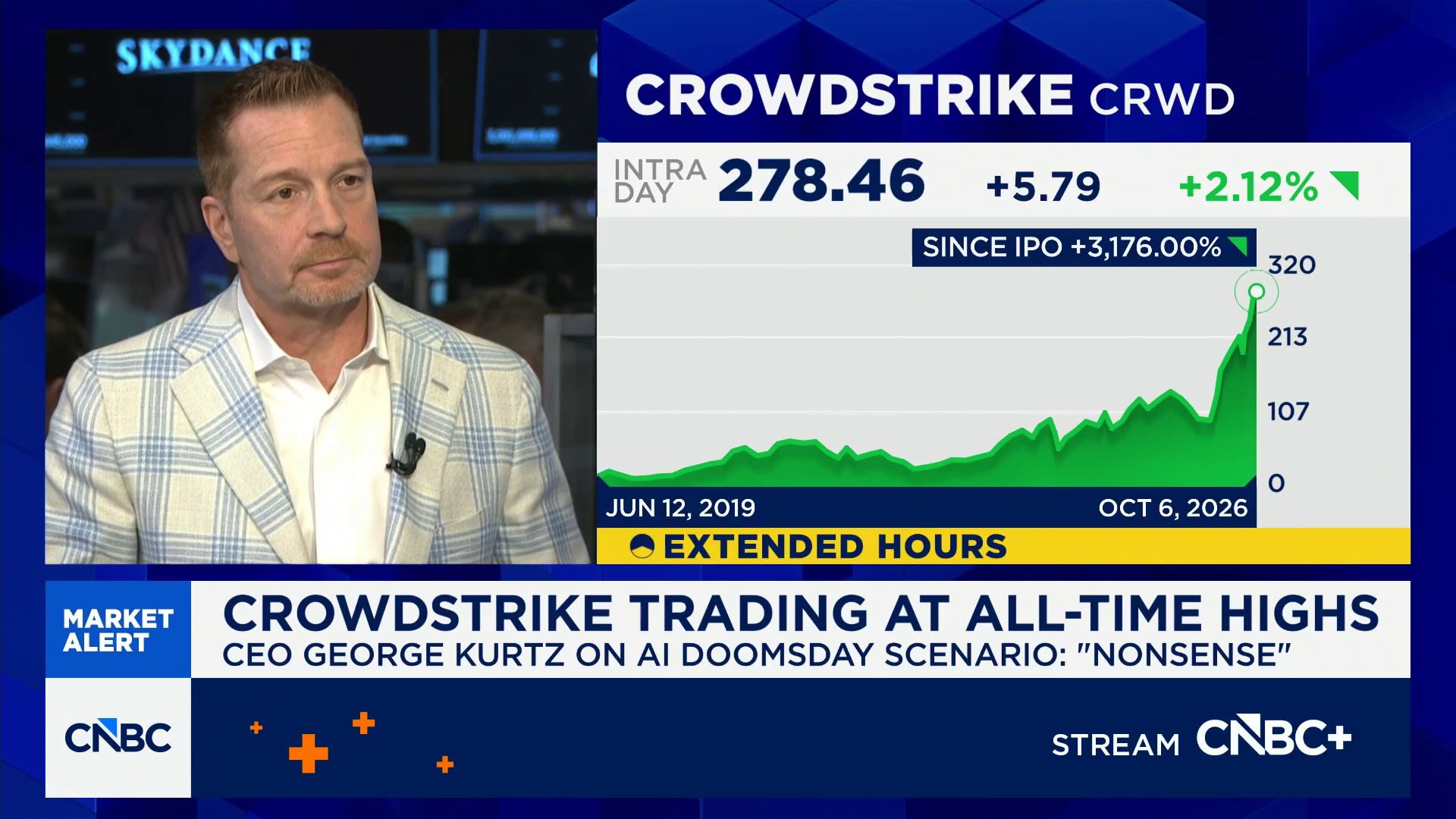
CrowdStrike founder and CEO George Kurtz told CNBC's Squawk Box that AI safety concerns amount to "a solvable…
Uber and Netflix legal counsel told the Association of Corporate Counsel's annual meeting in Boston on Tuesday…

Time Magazine reports that Meta's Muse AI agent is building a dossier on users, with a digital billboard adver…

Researchers tracking 2026 U.S